Taiwan's Regulatory Stance: Implications for Payments Industry
Taiwan's Financial Supervisory Commission (FSC) has issued a directive, instructing banks to deny virtual asset providers (VASPs) the status of merchants for credit card transactions. This move signals Taiwan's cautious...
Archive context
Older archive item. Useful for background and entity history, but not a fresh market-moving signal.

Taiwan's Financial Supervisory Commission (FSC) has issued a directive, instructing banks to deny virtual asset providers (VASPs) the status of merchants for credit card transactions. This move signals Taiwan's cautious approach to cryptocurrencies, creating a significant ripple in the global financial landscape. As a result, credit card usage for cryptocurrency purchases is effectively blocked in Taiwan, prompting discussions on the broader implications for the payments industry.
FSC's Concerns and Equations with High-Risk Transactions
The FSC's directive, circulated to the Banking Association, highlights concerns over the speculative and high-risk nature of virtual assets. The regulator emphasizes that credit cards should primarily serve as consumer payment tools, not as vehicles for investment, wealth management, or high-risk speculative transactions. Drawing parallels with prohibited activities like online gambling and stock trading, the FSC underscores its perception of the potential risks associated with digital assets. This regulatory stance prompts a critical examination of how it may impact consumer choice in the payments sector.
Compliance Challenges for Taiwanese Banks and Global Debate on Digital Assets
Taiwanese banks are given a three-month compliance window, during which they must align with the new regulations. Post this period, internal audits and compliance reports submission to the FSC become mandatory. This directive adds another layer to the FSC's historical skepticism towards cryptocurrencies, as it follows prior warnings about the risks linked to virtual assets. The global debate on the regulatory landscape for digital assets intensifies, with implications for how financial institutions, particularly in the payments sector, navigate the complexities of this evolving space.
Taiwan's Broader Regulatory Landscape and Central Bank Digital Currency (CBDC) Program
This directive is part of Taiwan's broader efforts to tighten control over cryptocurrency transactions. The introduction of enhanced anti-money laundering regulations for crypto exchanges in July 2021 aligns with global standards set by the Financial Action Task Force. Additionally, the ongoing Central Bank Digital Currency (CBDC) pilot program, operating without interest, showcases Taiwan's commitment to exploring digital financial instruments. The FSC's directive, coupled with the CBDC initiative, paints a comprehensive picture of Taiwan's evolving stance on digital assets, influencing how payment industry players may need to adapt.
Complex Interplay Between Digital Finance and Regulatory Frameworks
The FSC's directive and Taiwan's evolving stance on digital assets underscore the intricate relationship between the digital world and legal frameworks. As decentralized platforms and cryptocurrencies gain prominence, the challenge of effectively regulating these new financial frontiers becomes more pronounced. The implications for the payments industry are substantial, as regulators globally grapple with striking a balance between innovation and risk mitigation in the rapidly evolving landscape of digital finance.
Implications for the Payments Industry
The FSC's cautious approach may limit consumer choice by restricting credit card usage for cryptocurrency purchases. This regulatory stance aligns credit cards more closely with traditional consumer payment tools, potentially hindering the adoption of cryptocurrencies in everyday transactions. The prohibition draws parallels between cryptocurrency transactions and activities like online gambling and stock trading, associating digital assets with high-risk speculation. While this move aims to protect consumers, it raises questions about the extent to which regulatory caution may impede the evolution of payment methods in an increasingly digital financial landscape.
Moreover, the directive may help maintain the dominance of existing payment industry players who operate within traditional frameworks. By restricting credit card transactions for cryptocurrencies, the FSC reinforces the traditional role of credit cards in consumer payments and potentially slows down the integration of cryptocurrencies into mainstream financial channels. This could benefit established players in the payments sector, at least in the short term, by preserving the status quo and limiting disruptions from the fast-evolving world of digital assets.
This article was written by Pedro Ferreira at www.financemagnates.com.Why this matters
This cryptocurrency story adds another data point to the current market tape and is useful when read alongside nearby source coverage.
Original source
Read on Finance MagnatesRelated market context

Senate Republicans introduce crypto tax bill targeting digital assets
The bill's focus on crypto taxation may signal a shift towards detailed regulatory frameworks, influencing market sentiment and fu...

Kraken Completes Acquisition Of TradeStation Crypto Infrastructure Assets
In a major development confirmed on SEPTEMBER 30, 2026, Confirmed announcement/filing for Kraken Completes Acquisition Of TradeSta...
XRP Price Battling Resistances as BlackRock Rumors Pop
XRP price is trading near $1.51 after falling about 5% in a week, while BlackRock rumors of a spot XRP ETF resurface. The immediat...
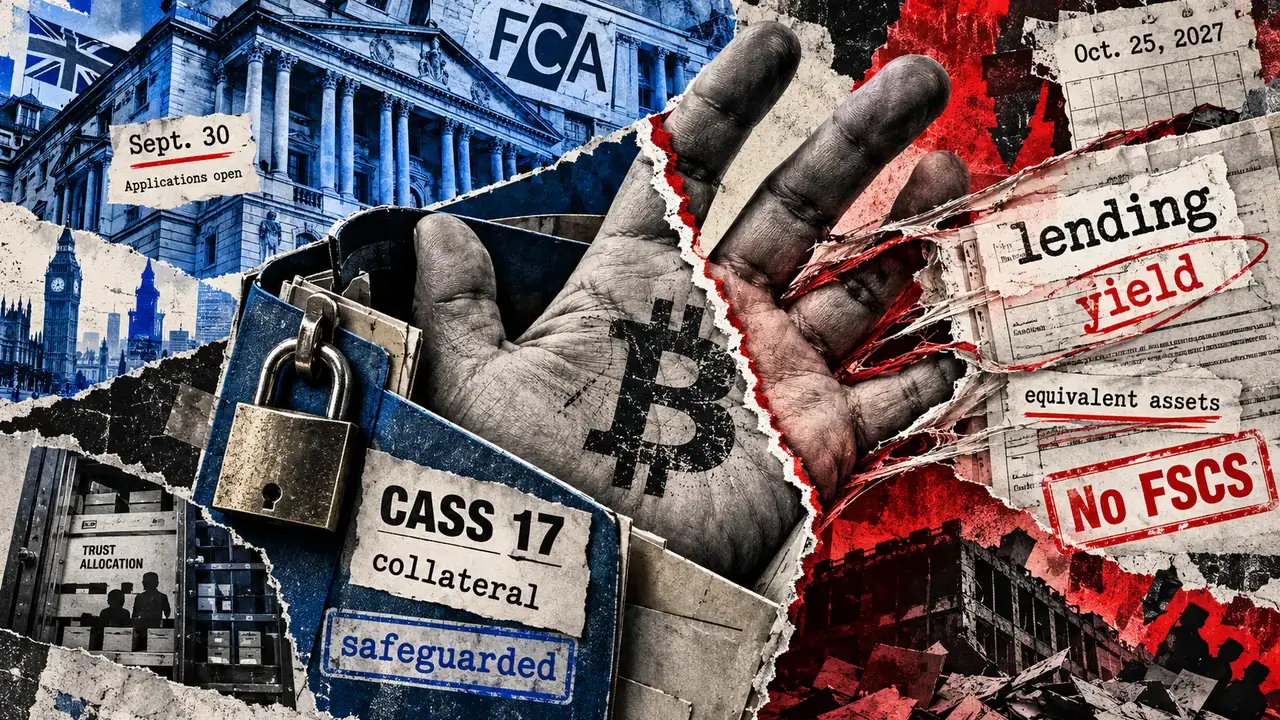
UK’s 2027 crypto rules let firms remove trust protection from Bitcoin lent for yield
UK crypto firms can now apply for authorization as of Sept. 30, bringing Bitcoin holders closer to a rulebook that will treat coin...

Brazilian Depository With $4.2 Trillion in Assets Taps XRP Ledger to Mirror Fund Shares
CSD BR, a Brazilian central securities depository with more than 22 trillion reais (about $4.2 trillion) in registered assets, wil...

Dragonfly’s Tom Schmidt sees synthetic dollars growing alongside tokenized assets
The growth of synthetic dollars alongside tokenized assets could reshape financial systems, offering new liquidity and investment...