Thailand’s Bank Acquires Local Crypto Exchange Satang
Thailand’s Kasikorn Bank (K-Bank) expanded its presence in the digital asset space with its latest acquisition of 97 percent stakes in the parent company of local crypto exchange Satang, Coindesk reported. The deal has b...
Archive context
Older archive item. Useful for background and entity history, but not a fresh market-moving signal.

Thailand’s Kasikorn Bank (K-Bank) expanded its presence in the digital asset space with its latest acquisition of 97 percent stakes in the parent company of local crypto exchange Satang, Coindesk reported. The deal has been inked at a valuation of 3.705 billion Thai baht ($102.8 million).
Capturing the Thai Crypto Market
Satang has been operating as a crypto exchange in the country since 2017 and offers an array of services, including custody, staking, and crypto payments. However, the spot trading volume on the exchange appears to be much less at roughly $430,000 in the last 24 hours, according to Coinmarketcap.com.
K-Bank made the acquisition with its subsidiary named Unita Capital, which was established with a mandate to invest in crypto companies. The Thai bank additionally launched a $100 million investment fund focused on web3, fintech, and AI. Further, in a statement shared with local media, K-Bank revealed its intentions to capture 20 percent of the Thai crypto market share by 2024.
Following the closure of the acquisition deal, the new owner will rebrand Satang to Orbix, which will have three extra subsidiaries: Orbix Custodian, Orbix Invest (a digital asset fund manager), and Orbix Technology, a blockchain technology developer.
Thai Banks Are in Favor of Crypto
The crypto market in Thailand has a lot of support from traditional financial institutions. Siam Commercial Bank (SCB), a rival of K-Bank, is also making investments in the crypto space. On top of that, SCB agreed to acquire Bitkub, the largest crypto exchange in Thailand, with a daily volume of $22.3 million but scraped the deal last year, citing unsolved regulatory issues. The Thai regulator issued multiple notices to Bitkub and imposed hefty fines.
Meanwhile, the Thai authorities are tightening rules around the operation of crypto exchanges. The country banned crypto lending services earlier this year as well as mandated risk disclosures when offering crypto trading and in all promotions.
This article was written by Arnab Shome at www.financemagnates.com.Why this matters
This cryptocurrency story adds another data point to the current market tape and is useful when read alongside nearby source coverage.
Original source
Read on Finance MagnatesRelated market context
SEC Sues Four Firms Over Alleged $15 Million Crypto Scams Run Through WhatsApp Chats
The Securities and Exchange Commission charged four entities on Tuesday over two alleged schemes that used WhatsApp group chats an...
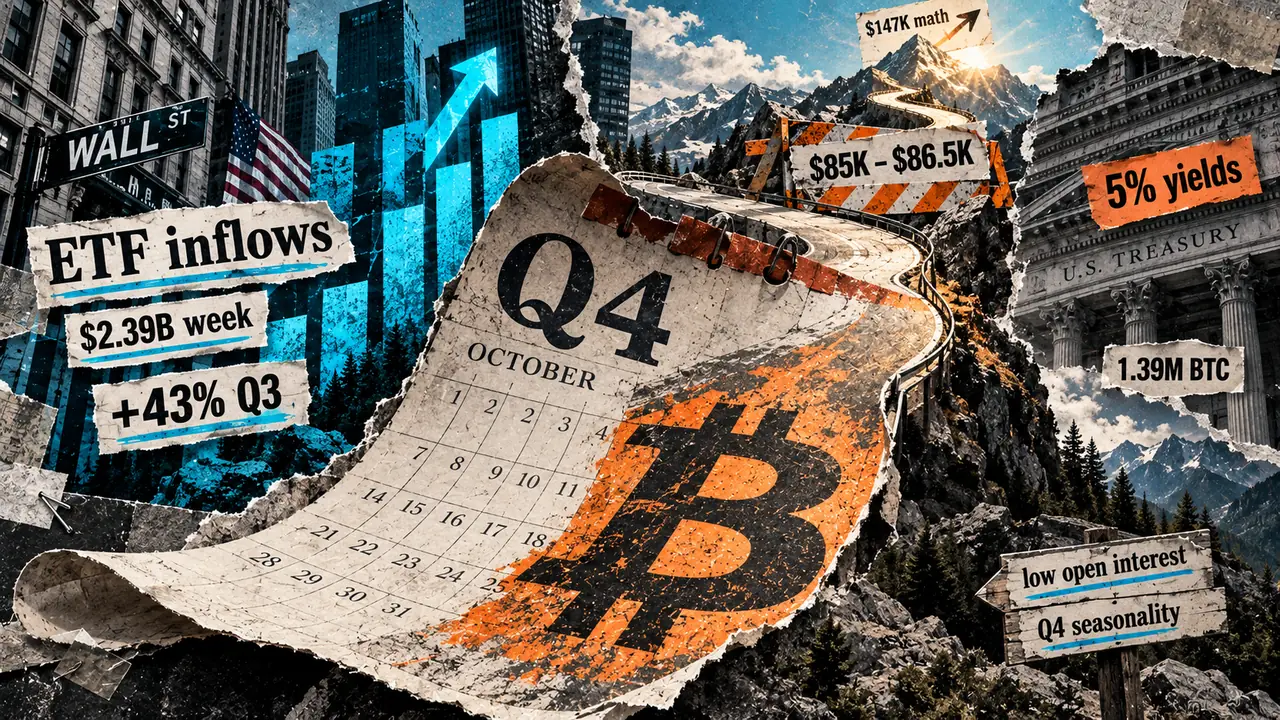
Bitcoin enters its best season after a 43% surge, with $147,000 suddenly on the math
Bitcoin is closing its strongest quarter since 2024 after leaving US stocks and gold far behind despite surging bond yields. The l...

Kraken Completes Acquisition Of TradeStation Crypto Infrastructure Assets
In a major development confirmed on SEPTEMBER 30, 2026, Confirmed announcement/filing for Kraken Completes Acquisition Of TradeSta...

Mark Moss: The Bitcoin Endgame – BTC to $1 Million by 2030
Bitcoin Magazine Mark Moss: The Bitcoin Endgame – BTC to $1 Million by 2030 The Fed just raised rates, yet Bitcoin keeps climbing....

Pokemon Crypto Case: Collector Faces Trial Over $55 Million Hack
U.S. indictment alleges two Uranium Finance crypto exploits moved through Tornado Cash before being used to buy Pokemon cards and...

Crypto Markets Digest: The Block’s Live Price Feed Underscores the News-Data Nexus in Digital Assets
The Block pairs Bitcoin and Ethereum news with live prices. We examine why crypto news and real-time data fused, and what it means...