The Metaverse: Should It Be Regulated?
The metaverse is a concept that covers a broad range of aspects of the internet and cannot be defined itself as a whole. When Facebook rebranded itself to ‘Meta’, it sparked discussions about the concept of the metaverse...
Archive context
Older archive item. Useful for background and entity history, but not a fresh market-moving signal.

The metaverse is a concept that covers a broad range of aspects of the internet and cannot be defined itself as a whole. When Facebook rebranded itself to ‘Meta’, it sparked discussions about the concept of the metaverse, and how it should impact the lives of the common internet user.
The metaverse can envision a digital economy, a virtual reality and a digital world. Nowadays, this single all-around concept remains widely discussed when we talk about web3 and emerging technologies.
The fact is that the metaverse industry keeps growing at a very fast pace, with emerging companies strengthening their business units to offer the best of this ‘world’. For the entertainment, economy and eCommerce the metaverse is here to stay.
Even mainstream companies like Meta, formerly Facebook, have started to tread waters in such a booming industry. The metaverse and NFT are concepts that are very compatible with each other and have grown in parallel across the board. So, there is a potential for an emerging technology like the metaverse to keep gaining momentum.
However, there are also discussions about the regulatory aspect surrounding the metaverse. As we discussed in our recent analysis of NFTs, there are concerns about how criminals and bad actors could rely on the metaverse to commit fraud, money laundering, and other cybercrimes, like it could happen in any other digital environment.
Challenges AheadExperts who talked with Finance Magnates agree that there are some regulatory challenges ahead for the development of the metaverse.
Jamilia Grier, Founder and CEO at ByteBao
Jamilia Grier, the Founder and CEO at ByteBao, told Finance Magnates that it presents a range of challenges for governments and lawmakers. “One key question is how to deal with crime in the virtual world. There is really no easy answer, but as this space continues to grow in popularity, it’s inevitable that some users will take advantage of others and that crimes will be committed, and sadly, we can already see some of those happening now. Just as we have laws to address crimes in the physical world, it’s also important to have laws in place to deal with crimes committed in the metaverse,” she commented.
Grier believes that now is actually the ‘best time’ for governments to create new laws or apply existing laws to regulate transgressions in virtual spaces: “Assault, for example, should be addressed on a case-by-case basis by applying the laws of relevant jurisdictions. Some jurisdictions may remain silent, while others may actively pursue bad actors in order to ensure the safety of its current and future users, including our children.”
A Regulation is NeededMargaret Paproski, Co-Founder of InvestDEFY
Also, Margaret Paproski, the COO, General Counsel and Co-Founder of InvestDEFY, agrees that the metaverse needs some form of regulation. “The challenge is establishing who should be setting those regulations, how they should be set, and what they should be. In the real world, we rely on Governments to implement safeguards, including consumer protections, privacy regulations and protection against fraud. However, these safeguards fluctuate from one country to another, which is not particularly conducive to the metaverse,” Paproski pointed out.
She said that one alternative is to create a separate metaverse government to establish appropriate rules and regulations, although she recognizes there are still challenges to address. “However, there would be challenges around enforcement that would need to be navigated. There are also countries that would not be onboard to allow its residents to be outside of its rules and regime (even virtually).”
Furthermore, experts agree that whatever approach is taken, regulating the metaverse will be a complex and ‘daunting task’ for governments around the world, as Grier highlighted.
This article was written by Felipe Erazo at www.financemagnates.com.
Why this matters
This cryptocurrency story adds another data point to the current market tape and is useful when read alongside nearby source coverage.
Original source
Read on Finance MagnatesRelated market context
Perplexity AI Predicts Insane $40 Price Target for XRP: How Did It Get There?
Perplexity AI predicts something that few analysts or other AI models do. It has produced an insanely wild bullish prediction for...
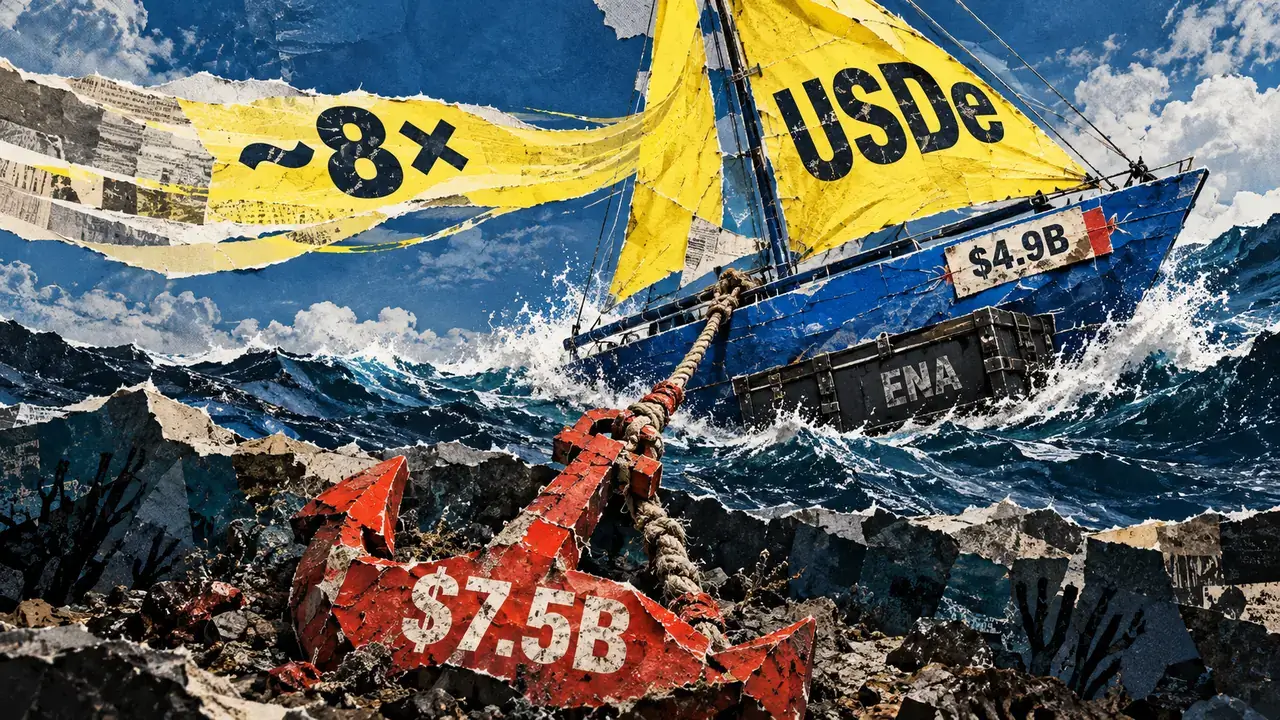
Standard Chartered says Ethena’s ENA could crush Bitcoin and Ethereum returns by 2028
Standard Chartered expects Ethena’s ENA token to rise about sevenfold by 2028, provided the protocol can rebuild its shrinking syn...

Ethereum Price Prediction: Could Aztec’s zk.money Drive ETH Higher as Zcash Fuels Privacy Narrative?
Ethereum is trading at $2,665, flat over 24 hours, leaving it below the $2,700–$2,735 resistance band as our recent price predicti...

Circle’s Arc lets AI agents pay humans in USDC for 3D world scans
Circle's Arc could reshape gig economy dynamics, raising questions about labor rights, privacy, and dependency on centralized plat...

Senate Republicans introduce crypto tax bill targeting digital assets
The bill's focus on crypto taxation may signal a shift towards detailed regulatory frameworks, influencing market sentiment and fu...

Ethereum options open interest sits at 23% of futures as traders favor leverage
The preference for leveraged futures over options in Ethereum trading could lead to increased market volatility and potential liqu...