‘Trillions by 2030’: Stellar, Centrifuge and Moody’s Outline What’s Next for Real-World Assets
Real-world assets (RWAs) on public blockchains could reach trillions by 2030, panelists said during a session moderated by CryptoNews in Rio, Brazil. Speakers from Stellar Development Foundation (SDF), Centrifuge, and Mo...
Archive context
Older archive item. Useful for background and entity history, but not a fresh market-moving signal.

Real-world assets (RWAs) on public blockchains could reach trillions by 2030, panelists said during a session moderated by CryptoNews in Rio, Brazil.
Speakers from Stellar Development Foundation (SDF), Centrifuge, and Moody’s argue that tokenization is already moving from experiments to production—and that institutions waiting “five years” risk being left behind.
What counts as an RWA—and what’s actually workingRWAs encompass anything originating off-chain and brought on-chain—receivables, funds, real estate, and more, said Lucas of Moody’s.
For now, the first movers are the “boring but compelling” yield products: U.S. Treasuries and high-quality funds, with CLOs (collateralized loan obligations) and private credit emerging as next-wave candidates, added Graham of Centrifuge.
Liz Ray, CFO at SDF, notes the importance of making previously gated instruments “widely available in small amounts,” showing up in wallets around the world. That shift, she said, is the real power of DeFi distribution.
Why TradFi can’t waitInstitutions are already piloting digital twins of funds and deposits, panelists said, citing activity from BlackRock, Fidelity, Franklin Templeton, and Goldman Sachs.
The short-run driver is simple: new on-chain liquidity hungry for RWA yield. The long-run prize is efficiency—lower costs, faster settlement and reduced counterparty risk.
Ray pointed to FX as a near-term, high-impact use case: today, it’s complex, ISDA-heavy, and slow to settle. “Bringing that on-chain where it’s instantaneous opens the market,” she said—provided there is sufficient liquidity behind the assets.
How big is the market now?Depending on the methodology, on-chain RWAs are often cited around $30 billion today, panelists said—“realistically, maybe a bit less.” But the group expects an accelerating adoption curve as capital sources deepen and regulators clarify rules, pushing the market toward the trillions sooner than many expect.
Importantly, adoption isn’t just about market cap; it’s about use. Ray pointed to the transition from “buy-and-hold” to RWAs being used as collateral and embedded in on-chain cash-flow loops—for example, CLOs parking idle cash in tokenized treasury funds.
Risk, trust, and the Moody’s lensFor investors asking how to trust the off-chain performance of on-chain tokens, Moody’s is adapting its frameworks, Lucas said.
The agency is examining four buckets: platform risk (reliability and continuity), smart-contract risk (audits and functionality), asset-representation risk (does the token legally mirror the underlying), and cyber/external risk. “An asset is an asset and credit is credit,” he said—the fundamentals don’t change, but operational risk does.
What unlocks the next leg: liquidity and interoperabilityTwo watchwords surfaced repeatedly: liquidity and interoperability. Deep, connected pools will determine which platforms win. Fragmented liquidity across chains will slow growth; interoperable rails could “unlock all the liquidity” and create stable, scalable markets.
Bold predictionsBy 2030, panelists expect everyday savings products across wallets and DeFi apps to be quietly RWA-backed, streaming yield from treasuries, CLOs, and other regulated instruments—abstracting complexity for end users.
Payments with yield-bearing stables, rapid FX, and less bureaucracy via programmable assets were flagged as high-conviction outcomes.
Bottom line: Institutions aren’t “coming”—they’re here. The next phase is stitching together compliant infrastructure, cross-chain liquidity, and transparent risk to carry RWAs from tens of billions to trillions.
The post ‘Trillions by 2030’: Stellar, Centrifuge and Moody’s Outline What’s Next for Real-World Assets appeared first on Cryptonews.
Why this matters
This cryptocurrency story adds another data point to the current market tape and is useful when read alongside nearby source coverage.
Original source
Read on CryptonewsRelated market context
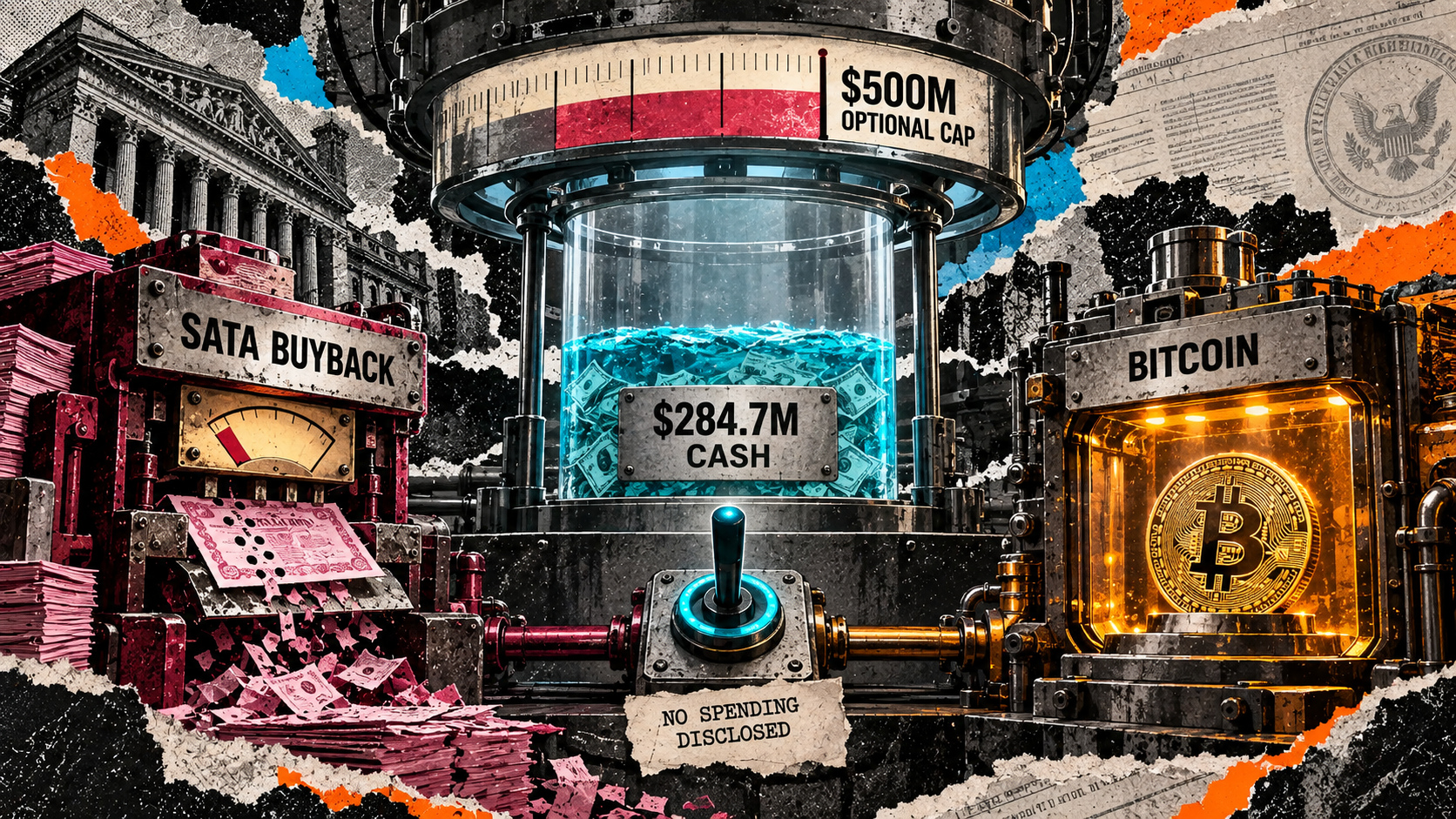
Bitcoin treasury Strive risks cash reserve to fund $500M buyback and trim dividends
Bitcoin treasury company Strive disclosed an optional program to repurchase up to $500 million of its variable-rate perpetual pref...

Japanese Bitcoin Treasury Metaplanet Sold BTC Last Quarter To Demonstrate Liquidity
Bitcoin Magazine Japanese Bitcoin Treasury Metaplanet Sold BTC Last Quarter To Demonstrate Liquidity It may have sold some of its...

US Midterms Polymarket Odds: What a 66.5% Democratic Sweep Price Means for Crypto Policy
US Midterms Polymarket odds currently price a Democratic sweep of Congress at 66.5% on October 5, with $17.81M in event volume and...

Metaplanet sold 10,000 Bitcoin in a credit-rating bid, only to buy back 11,000 BTC at a higher price per coin
Metaplanet sold 10,000 Bitcoin and later bought back 11,000 BTC to strengthen its credit profile and expand beyond accumulation du...

Ondo’s New Tokenized Notes Tie Payouts to an Unnamed Pre-IPO AI Company
Ondo Finance is extending its tokenization business from public stocks and Treasuries to companies that have not yet listed. The f...

Cardano just added the kind of token controls Wall Street wants and DeFi may hate
Cardano’s proposed programmable-token standard could let a freeze on one asset temporarily block unrelated tokens held in the same...