Trump signs bill criminalizing nonconsensual AI deepfake porn
US President Donald Trump has signed a bill criminalizing nonconsensual artificial intelligence-generated deepfake porn, which also requires websites to take down any illicit images within 48 hours.Trump signed the bill...
Archive context
Older archive item. Useful for background and entity history, but not a fresh market-moving signal.
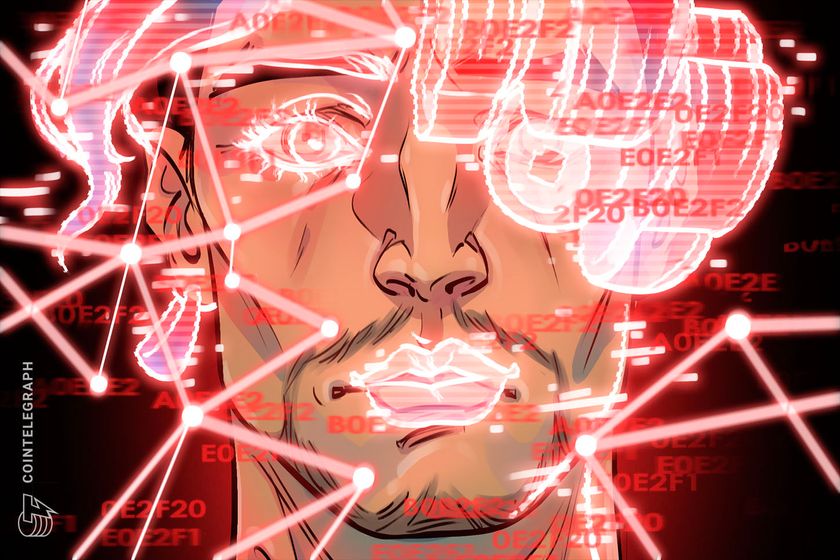
US President Donald Trump has signed a bill criminalizing nonconsensual artificial intelligence-generated deepfake porn, which also requires websites to take down any illicit images within 48 hours.
Trump signed the bill into law on May 19, known as the TAKE IT DOWN Act, an acronym for Tools to Address Known Exploitation by Immobilizing Technological Deepfakes on Websites and Networks.
The bill, backed by first lady Melania Trump, makes it a federal crime to publish, or threaten to publish, nonconsensual intimate images, including deepfakes, of adults or minors with the intent to harm or harass them. Penalties range from fines to prison.
Source: Melania TrumpWebsites, online services, or apps must remove illegal content within 48 hours and establish a takedown process.
Trump said in remarks given at the White House Rose Garden and posted to the social media platform Truth Social that the bill also covers “forgeries generated by an artificial intelligence,” commonly referred to as deepfakes.
Melania Trump had directly lobbied lawmakers to support the bill, and said in a statement that the law is a “national victory.”
“Artificial Intelligence and social media are the digital candy of the next generation — sweet, addictive, and engineered to have an impact on the cognitive development of our children,” she said.
“But unlike sugar, these new technologies can be weaponized, shape beliefs, and sadly, affect emotions and even be deadly,” she added.
Senator Ted Cruz and Amy Klobuchar introduced the bill in June 2024, and it passed both houses in April of this year.
US the latest to ban explicit deepfakesThere has been a growing number of cases where deepfakes are used for harmful purposes. One of the more high-profile instances saw deepfake-generated illicit images of pop star Taylor Swift rapidly spread through X in January 2024.
X temporarily banned searches using Taylor Swift’s name in response, while lawmakers pushed for legislation criminalizing the production of deepfake images.
Related: AI scammers are now impersonating US government bigwigs, says FBI
Other countries, such as the UK, have already made sharing deepfake pornography illegal as part of the country’s Online Safety Act in 2023.
A 2023 report from security startup Security Hero revealed that the majority of deepfakes posted online are pornographic, and 99% of individuals targeted by such content are women.
Magazine: Deepfake AI ‘gang’ drains $11M OKX account, Zipmex zapped by SEC: Asia Express
Why this matters
This cryptocurrency story adds another data point to the current market tape and is useful when read alongside nearby source coverage.
Original source
Read on CointelegraphRelated market context

Crypto industry blames Trump for failed landmark bill in Senate
The Senate's rejection of the crypto bill perpetuates regulatory uncertainty, potentially hindering U.S. competitiveness in the di...
Don Beyer opposes crypto tax bill, accuses Trump of corruption
Beyer's opposition highlights growing concerns over political ethics and the potential for financial conflicts in emerging tech se...
X brings crypto trading closer to your social feed
Crypto Twitter (now X) has always been a place where someone with an illustrated animal for a profile picture can explain why your...
ZEC’s 100% rally above $1500 sends Grayscale’s Zcash ETF within $85 million of $1 billion
Grayscale’s Zcash ETF is closing in on $1 billion in assets less than a month after its Wall Street debut. The fund, which trades...
Bitcoin faces an October 18 test as Trump prepares new Russia tariffs
President Donald Trump’s new Russia sanctions law gives Bitcoin traders another macro deadline to watch: Oct. 18. On Sept. 18, Tru...
After Congress killed its landmark crypto bill, the SEC unlocked the $77 trillion US stock market through tokenization
The US Securities and Exchange Commission (SEC) has opened a five-year pathway for regulated US stocks to trade on blockchain-nati...