UAE's Emirate to Launch 'Oasis' for Crypto Companies
Ras Al Khaimah (RAK), one of the emirates that form UAE, has announced the creation of the first free economic zone fully dedicated to virtual assets and digital companies, dubbed RAK Digital Assets Oasis.UAE Opens Digit...
Archive context
Older archive item. Useful for background and entity history, but not a fresh market-moving signal.

Ras Al Khaimah (RAK), one of the emirates that form UAE, has announced the creation of the first free economic zone fully dedicated to virtual assets and digital companies, dubbed RAK Digital Assets Oasis.
UAE Opens Digital Assets Oasis
According to the Persian Gulf media outlets, the decision was made this week at the Blockchain Life 2023 conference. RAK Digital Assets Oasis aims to establish a free zone exclusively dedicated to service providers of cryptos and digital assets operating in emerging sectors such as Blockchain, NFTs, DApps, DAOs and Web3-related projects. This will be the only free zone of its kind in the world. The Oasis will open for applicants next quarter, starting in April 2023.
Sheikh Mohammed bin Humaid bin Abdullah Al Qasimi was elected the Chairman of RAK Digital Assets Oasis. He believes that the newest crypto project will boost the UAE's position as the leading destination for innovative companies.
"We are building the free zone of the future for the companies of the future. As the world's first free zone solely dedicated to digital and virtual asset companies, we look forward to supporting the ambitions of entrepreneurs from around the world with our progressive, supportive, and quick-to-adapt approach and our innovation-enabling environment," Al Qasimi commented.
RAK Digital Assets Oasis aligns with the UAE's stance as a leading hub for innovation. This free zone will provide a globally connected and remote-work-friendly environment for digital and virtual asset companies, enabling them to develop business models for the future. As a result, the Oasis members will be well-positioned to capitalize on emerging markets in the region.
"We look forward to welcoming the world's brightest Web3 minds with their most disruptive ideas that uncover new approaches to creating a better future. We are committed to empowering the next generation of global entrepreneurial talent to build transformative solutions and create impact while shaping the future of businesses and economies," Dr Sameer Al Ansari, the CEO of RAK International Corporate Centre and CEO of Digital Assets Oasis, added.
Ras Al Khaimah joins Dubai and Abu Dhabi, as another of the seven emirates that introduced their own cryptocurrency laws. In March 2022, Dubai introduced a new regulatory body, the Dubai Virtual Assets Regulatory Authority, which oversees all virtual assets like Bitcoin and non-fungible tokens (NFTs) in the emirate.
UAE Presents FIT Programme and Bets on Digital Assets
The United Arab Emirates is accelerating its efforts to become the next global crypto hub. As part of the Financial Infrastructure Transformation Programme (FIT) recently introduced by the Central Bank of the United Arab Emirates (CUBUAE), the apex bank will introduce a central bank digital currency (CBDC) among its nine initiatives.
"With a full integration set for 2026, the FIT Programme creates an important platform in support of the country's 'We the UAE 2031' vision and National Digital Economy Strategy. It also further reinforces the CBUAE's mission to enhance monetary and financial stability and consumer protection through robust financial infrastructure and the adoption of digital technologies," CBUAE stated.
According to the bank, the FIT program was created to bolster the country's financial services industry and position it for global competitiveness.
In 2020, the UAE collaborated with the Saudi Central Bank on a joint CBDC pilot project that lasted for one year. The project demonstrated the advantages of utilizing a distributed payment system instead of a centralized payment structure.
Crypto Firms Moves to UAE
Confirmation of the UAE's growing importance on the cryptocurrency world map is the increasing number of digital asset companies that are applying for local licenses. For example, CAPEX.com, a prominent retail brokerage brand, received in-principle approval for a cryptocurrency license from the United Arab Emirates' regulator, Abu Dhabi Global Markets (ADGM), in November 2022.
Similar licenses have been obtained in the past by cryptocurrency exchange Kraken, social trading platform eToro, cryptocurrency-focused SEBA Bank, and the world's largest crypto exchanges, Binance and Crypto.com.
This article was written by Damian Chmiel at www.financemagnates.com.Why this matters
This cryptocurrency story adds another data point to the current market tape and is useful when read alongside nearby source coverage.
Original source
Read on Finance MagnatesRelated market context

Senate Republicans introduce crypto tax bill targeting digital assets
The bill's focus on crypto taxation may signal a shift towards detailed regulatory frameworks, influencing market sentiment and fu...
Brazilian Depository With $4.2 Trillion in Assets Taps XRP Ledger to Mirror Fund Shares
CSD BR, a Brazilian central securities depository with more than 22 trillion reais (about $4.2 trillion) in registered assets, wil...

Crypto Markets Digest: The Block’s Live Price Feed Underscores the News-Data Nexus in Digital Assets
The Block pairs Bitcoin and Ethereum news with live prices. We examine why crypto news and real-time data fused, and what it means...
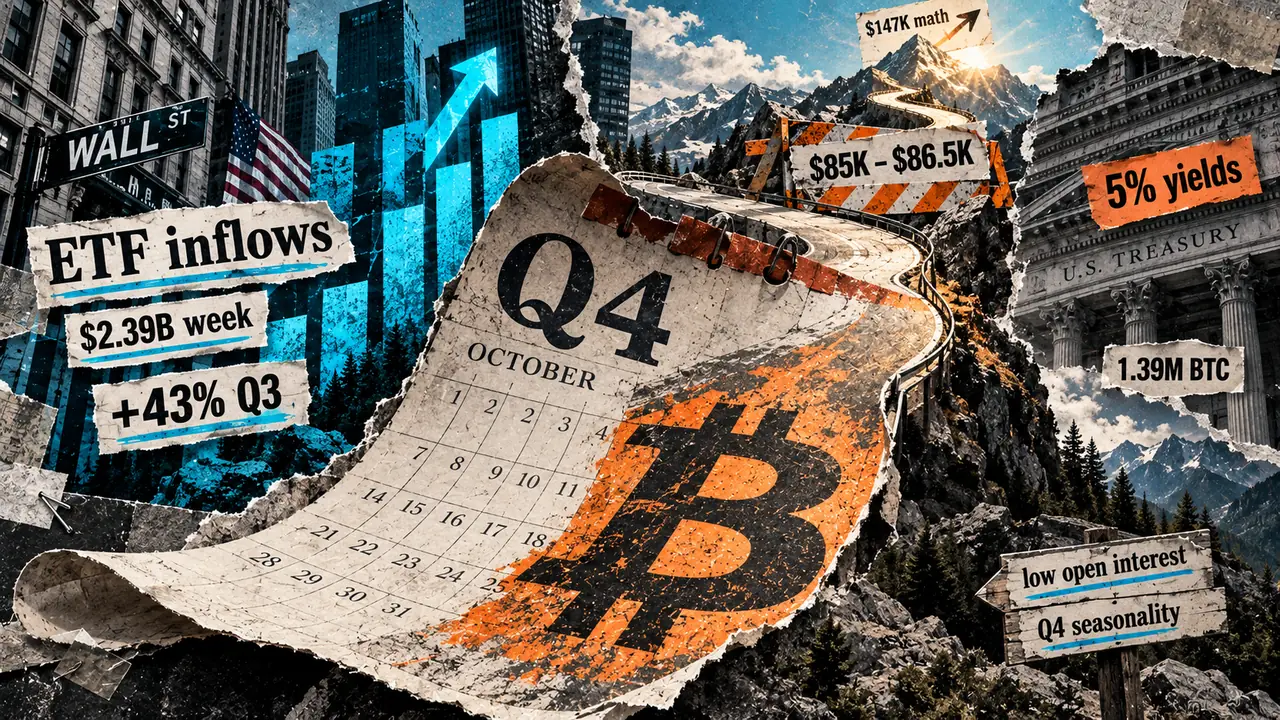
Bitcoin enters its best season after a 43% surge, with $147,000 suddenly on the math
Bitcoin is closing its strongest quarter since 2024 after leaving US stocks and gold far behind despite surging bond yields. The l...

Kraken Completes Acquisition Of TradeStation Crypto Infrastructure Assets
In a major development confirmed on SEPTEMBER 30, 2026, Confirmed announcement/filing for Kraken Completes Acquisition Of TradeSta...

Standard Chartered says Ethena’s ENA could crush Bitcoin and Ethereum returns by 2028
Standard Chartered expects Ethena’s ENA token to rise about sevenfold by 2028, provided the protocol can rebuild its shrinking syn...