US senators target cryptocurrency use in child abuse trade
Senators Elizabeth Warren and Bill Cassidy are asking federal agencies about their technical capacity to combat crypto payments in the sale of child abuse material.
Archive context
Older archive item. Useful for background and entity history, but not a fresh market-moving signal.

Senators Elizabeth Warren and Bill Cassidy are asking federal agencies about their technical capacity to combat crypto payments in the sale of child abuse material.
Why this matters
This cryptocurrency story adds another data point to the current market tape and is useful when read alongside nearby source coverage.
Original source
Read on CointelegraphRelated market context

US targets $17 billion Russia-linked crypto payment network using USDT as an escape route
The US sanctioned the Russia-linked A7 Network and proposed new restrictions to cut its crypto intermediaries off from global mark...

Citi Sets $113K Bitcoin Price Target, Expects $5 Billion in Crypto ETF Inflows
Citi projects $5 billion in cryptocurrency investment product inflows over the next 12 months as advisors gradually increase alloc...

Crypto’s billions are back, but the premiums aren’t
Kalshi seeks a $40 billion valuation, while Blockchain.com targets an IPO and crypto treasury companies struggle to maintain their...

Crypto hackers have taken $2.7 billion in 2026 and the losses are alarmingly concentrated
Crypto firms and users have lost nearly $2.7 billion to security incidents this year, with North Korea-linked thefts exceeding $1...
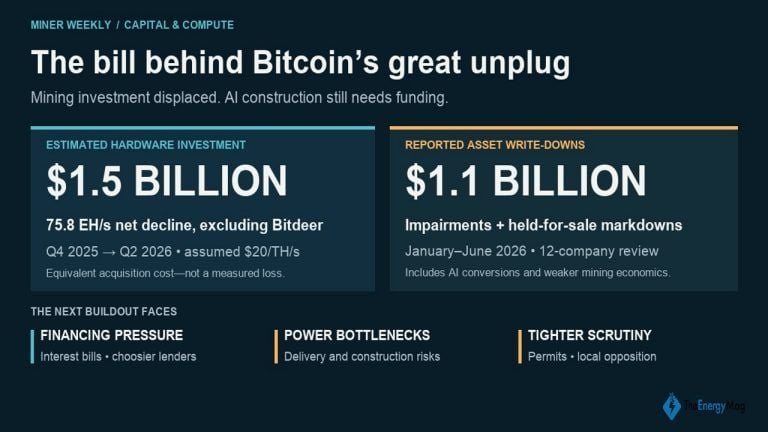
Bitcoin’s Great Unplug: $1.5 Billion in Hardware Behind the AI Pivot
The hashrate public bitcoin miners shed in the first half of 2026 carries an uncomfortable price tag: roughly $1.5 billion in equi...

XRP Ledger Targets Oct. 9 for Upgrade Bundling 8 Transactions
The XRP Ledger is targeting Oct. 9 for a Batch upgrade that could coordinate payments and asset transfers in one operation. A sepa...