US Treasury Clarifies How to Comply With Regulations on Sanctioned Crypto Mixing Service Tornado Cash
The U.S. Department of the Treasury has answered some questions on regulatory compliance relating to Tornado Cash, a recently sanctioned crypto mixer. The answers include how to withdraw crypto or complete transactions i...
Archive context
Older archive item. Useful for background and entity history, but not a fresh market-moving signal.
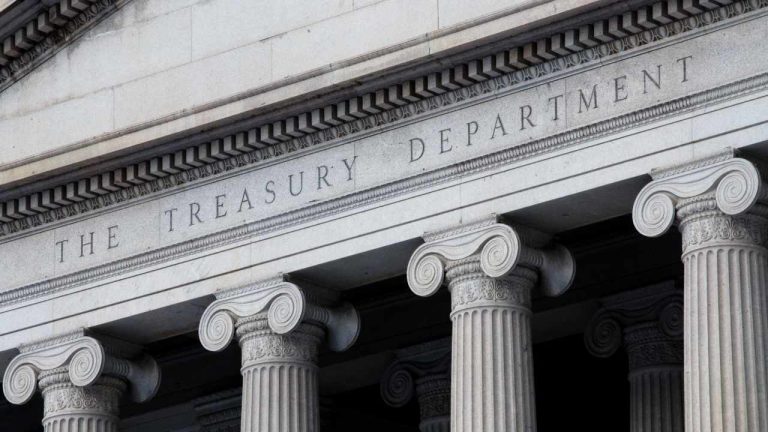
The U.S. Department of the Treasury has answered some questions on regulatory compliance relating to Tornado Cash, a recently sanctioned crypto mixer. The answers include how to withdraw crypto or complete transactions initiated using Tornado Cash prior to its sanction and how to deal with “dusting” transactions.
Treasury Department Publishes Tornado Cash FAQsThe U.S. Department of the Treasury answered some frequently asked questions Tuesday about the sanctioned cryptocurrency mixing service Tornado Cash.
On Aug. 8, the Treasury’s Office of Foreign Assets Control (OFAC) sanctioned the Ethereum-based mixer and prohibited U.S. persons from “engaging in any transaction with Tornado Cash or its blocked property or interests in property.”
One of the questions concerns how to complete transactions involving Tornado Cash that were initiated prior to the sanction. In order to complete the transactions or withdraw cryptocurrency without violating U.S. sanctions regulations, the Treasury Department explained:
U.S. persons or persons conducting transactions within U.S. jurisdiction may request a specific license from OFAC to engage in transactions involving the subject virtual currency.
“U.S. persons should be prepared to provide, at a minimum, all relevant information regarding these transactions with Tornado Cash, including the wallet addresses for the remitter and beneficiary, transaction hashes, the date and time of the transaction(s), as well as the amount(s) of virtual currency,” the Treasury added.
Another question relates to reporting obligations of “dusting” transactions. The Treasury noted that the OFAC is aware that “certain U.S. persons may have received unsolicited and nominal amounts of virtual currency or other virtual assets from Tornado Cash, a practice commonly referred to as ‘dusting.'”
While cautioning that “Technically, OFAC’s regulations would apply to these transactions,” the Treasury explained that if these dusting transactions have no other sanctions nexus besides Tornado Cash:
OFAC will not prioritize enforcement against the delayed receipt of initial blocking reports and subsequent annual reports of blocked property from such U.S. persons.
The Treasury stressed that “U.S. persons are prohibited from engaging in transactions involving Tornado Cash, including through the virtual currency wallet addresses that OFAC has identified.” However, the authority clarified:
Interacting with open-source code itself, in a way that does not involve a prohibited transaction with Tornado Cash, is not prohibited.
Lawyer Jake Chervinsky shared his thoughts on the OFAC’s clarification in a series of tweets. He noted that the FAQs “don’t fully address the collateral damage caused by the designation.” Commenting on the OFAC requiring “each person to file their own individual license request,” Chervinsky said: “That shouldn’t be necessary: U.S. persons shouldn’t have to ‘apply’ for their own money.”
Regarding dusting, he said since victims are required to file initial blocking reports and subsequent annual reports, “Enforcement remains on the table if those reports are delayed.” The lawyer stressed:
Deprioritizing prosecution isn’t enough: OFAC shouldn’t consider prosecuting victims at all.
Following the sanction of Tornado Cash, Coin Center, a non-profit focused on the policy issues facing cryptocurrencies, said that the OFAC has exceeded its statutory authority.
What do you think about the Treasury’s clarification regarding the mixing service Tornado Cash? Let us know in the comments section below.
Why this matters
This cryptocurrency story adds another data point to the current market tape and is useful when read alongside nearby source coverage.
Original source
Read on Bitcoin NewsRelated market context

CertiK flags Tornado Cash deposits tied to wallet behind $1.58 million drain
The recurring use of mixers like Tornado Cash for laundering highlights ongoing challenges in crypto security and the need for imp...

X100 Exploiter Sends 420.8 ETH to Tornado Cash
Four holding wallets still contain about 1,602 ETH, while the distributor that sent the mixer deposits has been nearly emptied.......

Strive’s Bitcoin Treasury Reaches 43,000 BTC as It Files a $1 Billion SATS ATM
Strive bought 6,182 bitcoin between Oct. 17 and Oct. 23 at an average price of about $82,732 each, including fees, lifting its hol...

Ducat brings its UNIT stablecoin to Cashu ecash as Turbo UNIT
Turbo UNIT's integration into Cashu ecash enhances privacy and efficiency in stablecoin transactions, impacting Bitcoin's financia...

Grayscale credits Zcash’s 20% developer funding with a decade of innovation
Zcash's developer funding model fosters sustained innovation, influencing network security economics and governance perceptions lo...

Strive is 1,001 Bitcoin away from surpassing Metaplanet as second-largest Bitcoin treasury
Strive's aggressive Bitcoin acquisition strategy highlights the intensifying competition among corporate treasuries, impacting mar...