Venezuelan Currency Plunges Almost 40% Against the US Dollar, Analysts Cite Crypto Drought as Part of the Problem
The Venezuelan fiat currency, the bolivar, has lost almost 40% in its exchange rate against the U.S. dollar in a month. According to reports, the seasonal payments that the government has to make, and the lack of liquidi...
Archive context
Older archive item. Useful for background and entity history, but not a fresh market-moving signal.
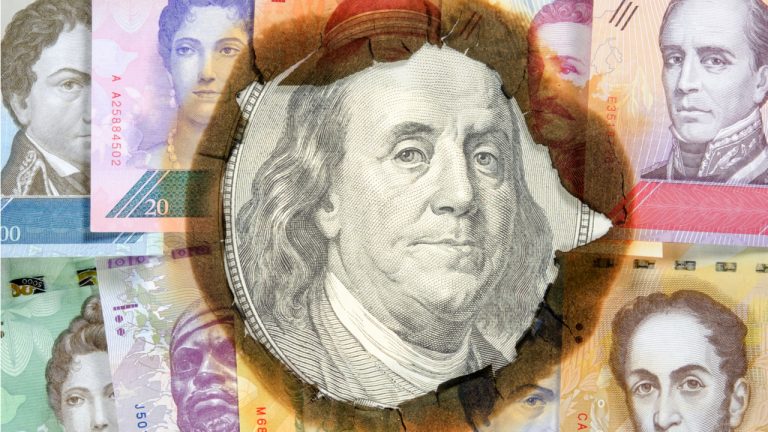
The Venezuelan fiat currency, the bolivar, has lost almost 40% in its exchange rate against the U.S. dollar in a month. According to reports, the seasonal payments that the government has to make, and the lack of liquidity of the government to intervene in the currency market are part of the equation leading to this, however, some also include crypto as part of the problem.
Venezuelan Currency Takes a NosediveThe Venezuelan currency, the bolivar, has been losing its value at an alarming rate after enjoying a period of relative stability recently. The currency has lost almost a 40% against the U.S. dollar in parallel markets, with citizens being alarmed at the accelerated pace of the devaluation. According to the popular price index Monitordolar, each dollar had a price of 9.05 bolivares on Oct. 25. The exchange rate increased to 12.63 bolivares per dollar on No. 26.
There are several explanations for this plunge. According to analysts, this nosedive was expected due to the elevated spending that is common in the Christmas season, a consequence of the elevated liquidity put into the market due to the bonuses and payments that the government and other companies deliver to workers.
This is the part of the theory that Venezuelan economist Jose Guerra has formulated on this issue. Guerra stated:
Demand for bolivars has fallen due to high inflation so when bolivars go into circulation, the public turns to buy goods and dollars to hedge against inflation and devaluation.
Asdrubal Oliveros, head of Ecoanallitica, an economics research firm, also explains that the Central Bank of Venezuela has not been able to intervene by injecting liquidity into the official exchange market. This is due to the lack of dollar inflows for different causes, including sanctions that difficult the movement of these funds that are mostly collected in cash for the sale of oil. In August, the Venezuelan currency also lost 35% of its value against the dollar in just one week.
Crypto’s InfluenceHowever, apart from the usual suspects, Oliveros also believes that there is a crypto element that makes this situation more severe. Oliveros states that most of the parallel currency market, which does not depend on government intervention, was currently being fed by market makers that used cryptocurrency exchanges as a way of injecting these funds into the country.
However, due to the ongoing downtrend that the cryptocurrency market faces, and the lack of confidence in centralized exchanges associated with the downfall of FTX, one of the biggest cryptocurrency exchanges in the world, these market makers have limited their exposure, leaving the market illiquid and contributing to the scarcity of dollars.
The economist expects the exchange rate to keep rising as these problems go bigger in the next few days, qualifying the situation as a “perfect storm” for devaluation to keep growing.
What do you think about the recent plunge of the Venezuelan Bolivar against the U.S. dollar? Tell us in the comments section below.
Why this matters
This cryptocurrency story adds another data point to the current market tape and is useful when read alongside nearby source coverage.
Original source
Read on Bitcoin NewsRelated market context

Swell Freezes swETH and rswETH Withdrawals Until It Corrects Their Exchange Rates
Holders of Swell‘s swETH and rswETH cannot deposit or withdraw through the protocol after the team said at 2:39 a.m. ET Friday it...
Sygnum Launches Bitcoin Loans With Collateral Keys Shared Across Parties
TL;DR: Sygnum and Debifi have launched MultiSYG, a Bitcoin-backed lending service using segregated multisignature wallets. The arr...
Bybit Wins Dubai VARA Approval For Spot Crypto Exchange Services
TL;DR: Bybit says its Dubai entity has secured a VARA virtual-asset service provider licence covering spot exchange activity; deri...
Bloomberg Adds Basel Crypto Exposure Classification For Banks And Asset Managers
TL;DR: Bloomberg has expanded its crypto analytics to classify bank exposure under Basel standards, including indirect holdings hi...

Austin Griffith Demonstrates How Fast Bots Can Drain Weak Ethereum Keys
Austin Griffith of the Ethereum Foundation put about $1 in an Ethereum wallet whose private key was the number 6969, and bots went...
Bank of Korea Wants Stablecoins Written Into Forex Law as Crypto Bill and Tax Fight Come to a Head
Bitcoin Magazine Bank of Korea Wants Stablecoins Written Into Forex Law as Crypto Bill and Tax Fight Come to a Head The Bank of Ko...