Wallet User Acquisition Through Gaming and Gambling Proves Most Expensive, Study Finds
Acquiring crypto wallet users through gaming and gambling campaigns is proving to be the most costly marketing strategy in the Web3 industry, according to recent data published by Web3 marketing firm Addressable.In a rep...
Archive context
Older archive item. Useful for background and entity history, but not a fresh market-moving signal.

Acquiring crypto wallet users through gaming and gambling campaigns is proving to be the most costly marketing strategy in the Web3 industry, according to recent data published by Web3 marketing firm Addressable.
In a report shared on X, Addressable co-founder Asaf Nadler revealed that crypto gambling and gaming campaigns have the highest median cost per wallet (CPW) at $8.74, with the lower quartile sitting at $3.40.
CPW is a metric that measures the cost of attracting users who already have a crypto wallet installed—considered a more “qualified” user base likely to engage with crypto products.
Axie Infinity Co-Founder Sees High User Acquisition Costs as Opportunity for Strategic GrowthHowever, not all industry figures view the high costs as a drawback.
Axie Infinity co-founder Jeff “JiHo” Zirlin encouraged teams to embrace the current climate as a period for strategic growth.
“Create new games and product lines, consolidate our market share, and get ready for the next market expansion,” he posted on X, calling it a “coiling phase” before potential explosive growth.
This is some interesting research.
Basically, the amount of money it costs to onboard someone into web3 increases during bear markets and decreases during bulls.
This was the case for every single region tested, except for Southeast Asia.
This is likely why we have a stable…
In contrast, campaigns in decentralized finance (DeFi) and centralized finance (CeFi) are significantly more cost-effective.
According to the data, DeFi and CeFi campaigns posted a median CPW of $2.79, with some reaching as low as $0.10.
The insights were derived from 200 programmatic ad campaigns managed by Addressable, involving over 70 advertisers targeting around 9.5 million crypto users globally.
The report also tracks how CPW varies by region, campaign type, and market cycle.
Nadler highlighted that premium markets like the U.S. and Western Europe saw CPW surge dramatically in 2024—up to four times in the U.S. and 27 times in Western Europe from Q1 to Q3—as interest among crypto wallet users declined during market consolidation.
While these regions offer scale during bullish phases, they become expensive and less sustainable in bearish conditions.
Emerging markets like Latin America and Eastern Europe offer lower CPW during favorable periods, but with greater volatility.
Blockchain Gaming Sees More Deals but Less Funding in Q1 2025Unlike crypto casinos, the blockchain gaming sector experienced a mixed performance in the first quarter of 2025, with a notable rise in deal volume but a sharp decline in total funding.
Web3 gaming projects raised $91 million in Q1 2025, marking a 71% drop from the previous quarter and a 68% decline year-over-year, according to DappRadar’s latest State of Blockchain Gaming report.
DappRadar analyst Sara Gherghelas noted that the significant downturn highlights growing challenges for early-stage startups, especially in the current macroeconomic environment.
“Unless broader market conditions improve, 2025 may prove more difficult than previous years,” she wrote.
Last month, members of the Arbitrum decentralized autonomous organization (DAO) voted to revoke funds previously allocated to its gaming ecosystem initiative, citing insufficient progress and transparency from the program’s administrators.
The debate unfolds amid broader headwinds in the Web3 gaming sector.
ZKsync recently discontinued its liquidity rewards initiative, citing poor market conditions.
The post Wallet User Acquisition Through Gaming and Gambling Proves Most Expensive, Study Finds appeared first on Cryptonews.
Why this matters
This cryptocurrency story adds another data point to the current market tape and is useful when read alongside nearby source coverage.
Original source
Read on CryptonewsRelated market context

Samsung Wallet adds USDC transfers on Solana for US Galaxy users
Samsung's integration of USDC on Solana into its Wallet app could accelerate mainstream crypto adoption by simplifying cross-borde...

Coinbase website goes unreachable for some users after court-ordered block
Court-ordered blocks on platforms like Coinbase highlight the growing tension between digital markets and regulatory frameworks, i...

Bitso lists Western Union’s USDPT stablecoin for users in Mexico
The integration of USDPT in Mexico could reshape remittance dynamics, offering new financial options but also posing risks due to...

StarkWare launches OffMarket to let Polymarket users trade more privately
StarkWare has opened OffMarket to the public, allowing Polymarket users to trade without publicly linking positions to their accou...
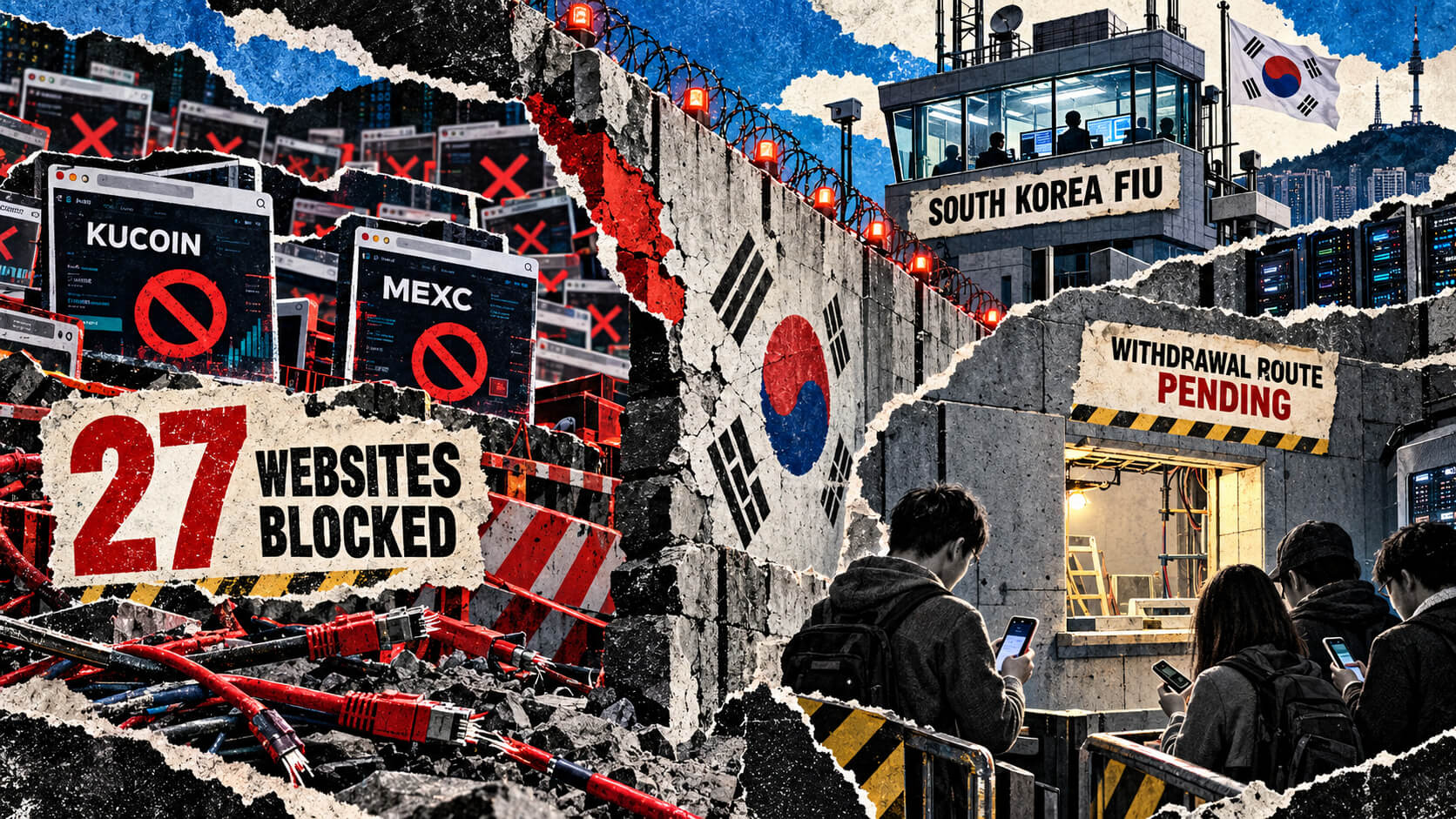
South Korea locks out crypto users as 27 exchange sites go dark
FIU plans withdrawal guidance through DAXA with operators’ cooperation as website restrictions raise access concerns for existing...

Ripple and Privy Bring XRP Wallets to XRPL After $1T Moved Across 8M Accounts
Key Takeaways: With the collaboration of Ripple, Privy offers programmable wallet infrastructure to the XRP Ledger. Developers can...