What Is Tokenomics and Why Is It Important?
Tokenomics combined the words ‘token’ and ‘economics’ in reference to the token’s economics. A crypto token is in its very essence a crypto coin that is based on a blockchain platform, and which can be exchanged with ano...
Archive context
Older archive item. Useful for background and entity history, but not a fresh market-moving signal.
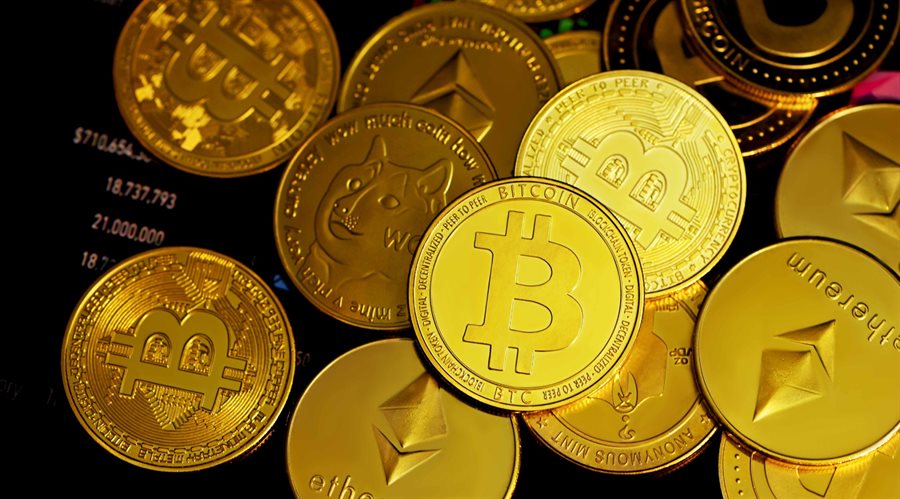
Tokenomics combined the words ‘token’ and ‘economics’ in reference to the token’s economics.
A crypto token is in its very essence a crypto coin that is based on a blockchain platform, and which can be exchanged with another blockchain, thus providing several incentives for investors to hold it.
The term points to all of the token’s features and qualities which make it interesting from an investor’s point of view.
Each crypto token should have its tokenomics thoroughly explained in its project’s whitepaper, meaning that by reading it you should grasp the token’s functionality, objective, purpose, allocation policies, and other pertinent info about it.
Since you are about to invest in a token, especially if you are very early on in the project, you will most likely be looking at it through the lens of the project’s backer.
Accordingly, there are 4 key elements which you should be taking into consideration as far as tokenomics go.
Tokenomics Explained
Allocation and Distribution
As an investor, you will need to understand just exactly the token being distributed. The two most common ways in which tokens are generated are by either being released via fair launch or being pre-mined.
Pre-mining happens when a predetermined number of tokens are generated and distributed before going public.
They usually tend to go to project developers, team members, early investors, and so forth, meaning only strictly exclusive addresses get them at first.
Opposite to a pre-mining event is what is known as a fair launch. A fair launch happens when crypto is mined, owned, earned, and also governed by its community without having early access granted to any particular party or private allocations happening before going public.
Pre-mining is tendentially more popular amongst most crypto projects, which means that before investing, one should see if there happens to be any wallets hoarding a significant number of tokens which might greatly impact the token’s price if dumped into the market.
On the other hand, if an early project seems to be distributing tokens to a significant number of participants as means of ensuring its future development, that might be a good signal.
Supply
A token’s supply is usually looked at in three different ways:
- The token’s circulating supply corresponds to the number of tokens which have been issued up to the point of one’s analysis and are circulating at the time.
- The token’s total supply corresponds to the number of tokens which exist at the time (excluding all which were or might have been burned).
- The token’s max supply is the maximum number of tokens which can ever be created. In some cases, you will run into tokens without a determined max supply.
If the circulating supply of a given token is seen to be consistently and regularly increasing by its developers, chances are that its value is bound to go up.
Opposite to that logic is when an overwhelming number of tokens get released with a seemingly abusive frequency.
Market Cap
Looking at a given token’s market capitalization will tell you the entire amount of funds which have been invested in it.
In tandem, remember to check its fully diluted market cap because that, in turn, will tell you theoretically what the token’s market cap might look like if its max supply was already in circulation.
A token with a high market cap and low circulating supply could be a hint that it might be more valuable in the future.
Inflationary or Deflationary?
It is of the utmost importance that you are aware of the token’s model.
An inflationary token will not have a max supply and, much like fiat money, can be produced throughout time.
On the other hand, a deflationary model will have a max supply set, and its max cap is guaranteed to be upheld.
Wrapping up
By looking at these 4 elements, you can begin to understand just what the project is and where it might be heading.
Understanding tokenomics is quintessential to one’s strategy as a long-term crypto investor (or project backer if you prefer to see it that way) because the factors which mold a token will certainly affect the way it behaves and is seen by the community.
This article was written by Pedro Ferreira at www.financemagnates.com.Why this matters
This cryptocurrency story adds another data point to the current market tape and is useful when read alongside nearby source coverage.
Original source
Read on Finance MagnatesRelated market context
Bitcoin Price Prediction: Michael Saylor Says BTC Will Reach $100K in 12 Months as 4-Year Bull Run Begins
Speaking on the Schwab Network, Saylor said the cryptocurrency was entering a new bull market and predicted that the broader rally...

Coinbase’s Tokenized Stocks Are Seeing About $20 Million a Week, According to John D’Agostino
John D’Agostino said on Bits + Bips that Coinbase is seeing “roughly $20 million a week” in its tokenized stocks business, a numbe...
Ripple urges SEC to finalize crypto rules, clarify when tokens cease to be securities
Ripple's push for clear crypto regulations could foster innovation and stability, reducing legal ambiguity and promoting industry...

Centralized exchanges avoid listing legacy crypto tokens without SEC immunity
Exchanges' cautious approach to legacy tokens may drive traders to decentralized platforms, impacting market dynamics and regulato...
Why centralized exchanges refuse to list legacy crypto tokens without explicit SEC immunity
Vault12 raised $17.45 million selling VGT in 2018 and says it met or dropped every promise, yet the token has never traded on a ce...

Probly Wraps Up TOKEN2049 Singapore and WHALE3RA, Strengthening Its Presence in On-Chain Prediction Markets
The British Virgin Islands, Road Town, October 2026 — Probly, an on-chain prediction market for sports, politics, crypto, finance,...