Why Do We Need Crypto?
Is it true, as naysayers and skeptics proclaim, that crypto serves no purpose, that we’d be better off without it, and that it’s all going to zero anyway? The last of those points, that it will eventually lose all value,...
Archive context
Older archive item. Useful for background and entity history, but not a fresh market-moving signal.
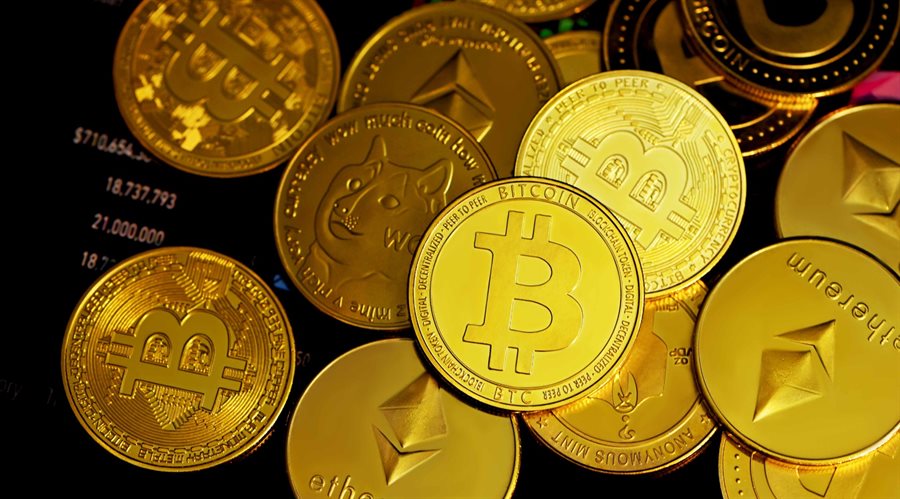
Is it true, as naysayers and skeptics proclaim, that crypto serves no purpose, that we’d be better off without it, and that it’s all going to zero anyway?
The last of those points, that it will eventually lose all value, is reliant on the first point: that it has no purpose. According to crypto critics, you can take an empty proposition and hype it up, but in the end, you’re simply playing a game of hot potato.
The longer that bitcoin and crypto stick around and grow, the more unlikely that proposition becomes, and it’s startling to see some commentary, thirteen years after bitcoin’s creation when it has a market cap of over $380 billion and is being actively utilized, still making comparisons with tulip mania.
However, that said, it’s worth emphasizing crypto’s functions, because not only is its utility clearly identifiable, but crypto is in fact an essential and timely creation as we move with increasing speed into a digital era.
Distinguishing the Different Sectors
As a catch-all term, crypto works, encompassing all areas of blockchain technology. However, at a more accurate level, it’s necessary to distinguish between the key areas of the crypto world.
Most prominently, there is Bitcoin, and its staunchest advocates will inform you that Bitcoin is not crypto. This is confusing because bitcoin definitely is a cryptocurrency. In fact, it’s the biggest and most important cryptocurrency, but the purpose of drawing a line between Bitcoin and crypto is to stress a distinction: Bitcoin is so focused on its intent that it requires a category of its own.
Ethereum and alternative Layer 1s should then be regarded as connected but separate because they share many qualities with Bitcoin, but also have some different aims. Critically, the execution of smart contracts is core to their purpose. This essentially means they can be programmed to behave in certain ways by executing coded functions under set conditions.
NFTs are a new and widely misunderstood area that is also distinct, in that, as the name (non-fungible) suggests, these are cryptocurrency tokens that are unique, rather than interchangeable, and each NFT can be traded as a one-of-a-kind asset.
Bitcoin Utility Is Emphatic
At a foundational level, bitcoin’s utility is stark and has been laid out many times: a peer-to-peer, decentralized currency that can also (as is a requirement of all stable, functional currencies) operate over time as a store of value.
This is simple and straightforward, and while it can be argued that bitcoin has not achieved this utility yet, it is plainly inaccurate to assert these potential utilities simply don’t exist.
What’s more, even the claim that utility has not yet been achieved looks questionable. There are real transactions taking place over the Bitcoin network, every day. The Lightning Network is working to make this more efficient, and bitcoin is legal tender in two countries (El Salvador and the Central African Republic).
The claim that bitcoin is not an effective store of value is also not compatible with the increase in bitcoin’s purchasing power over the last decade. The first ever BTC purchase of real-world goods was in 2010: two pizzas for 10,000 BTC. Twelve years later, a single bitcoin can buy you a new car. By comparison, the purchasing power of the dollar now is roughly 74% of what it was in 2010.
Project forward ten or twenty years, and if you wanted to protect your personal or corporate wealth, which would you bet on, bitcoin or the dollar?
Crypto Necessity in a Digital Age
We have spent the past few decades surging forward into immersive digital environments which encompass the social, commercial, financial, education, business and other areas of life.
To forego the digital online world, nowadays, would require concerted effort, and yet, it is not until recently, as cryptocurrencies gain in mainstream awareness, that questions of ownership, freedom and personal sovereignty, in a digital context, have started to come to the fore.
In the real world, we have control and ownership of ourselves and our physical assets. When we traverse public spaces, we don’t sign a contract and agree to terms and conditions. There are social norms and laws, but, assuming you don’t live in a dictatorship, these are democratic, emergent and formulated through negotiation.
If we are to switch vast areas of our business, both personal and commercial, to a digital setting, then it is essential that the fundamentals of an open, democratic, non-dictatorial society are also transferred into the digital realm.
Core to an optimal environment is property ownership and freedom from erratic, top-down rule-making. Up to now, we have not had these things in the digital space. Digital property could only be owned with the cooperation and approval of private platforms, while online spaces are under centralized control and subject to terms and conditions.
With crypto, we have a way to safeguard digital civil liberties. Bitcoin takes care of the monetary aspect, allowing us to control our own funds, while Ethereum and other Layer 1s develop the architecture upon which decentralized web applications can be constructed, removing the possibility of overbearing authorities.
With NFTs, we have the next piece of the puzzle: full personal ownership not only of digital currency but of any digital asset in the same way that we can take private ownership of any real-world asset.
This does not mean that digital assets replace physical assets, but simply that digital ownership becomes practicable, in parallel.
If we are moving further online and we want to carry across and protect the freedoms we take for granted in the real world, then Bitcoin, crypto and NFTs are essential to the process.
This article was written by Sam White at www.financemagnates.com.Why this matters
This cryptocurrency story adds another data point to the current market tape and is useful when read alongside nearby source coverage.
Original source
Read on Finance MagnatesRelated market context

Leon Wankum: The Insane Math Behind Bitcoin Demonetizing Real Estate
▶Bitcoin Magazine Leon Wankum: The Insane Math Behind Bitcoin Demonetizing Real Estate Real estate is the largest asset class in t...

Kraken wins Fintech Company of the Year – Established at the National Fintech Awards 2026
TL;DR Kraken was named Fintech Company of the Year – Established at the Business Post’s National Fintech Awards 2026 in Dublin. Th...
Bitcoin Treasury Analyst: MSTR, ASST & Metaplanet Digital Credit Outlook
▶Bitcoin Magazine Bitcoin Treasury Analyst: MSTR, ASST & Metaplanet Digital Credit Outlook Metaplanet couldn’t make preferreds wor...

How one of our clients approached estate planning and opened a Kraken account in their trust’s name
TL;DR One family set up a revocable trust, pour-over wills, a guardian and conservator nomination, and powers of attorney with an...

Quant Crypto Soars 18% as QNT Charges Toward $250
Quant crypto is back in the spotlight after QNT climbed to $216, gaining 18.7% in 24 hours. The move puts the blockchain interoper...

Sony Soneium Coin: PlayStation and GTA 6 Crypto Twist?
Soneium, the blockchain ecosystem associated with Sony Group’s Web3 strategy, announced plans to introduce its native ecosystem co...