Younger Investors Are Choosing Crypto
According to a recent study of wealthy Americans by the Bank of America, younger investors are choosing to allocate significantly more of their portfolios to crypto, and are more likely to believe that crypto offers the...
Archive context
Older archive item. Useful for background and entity history, but not a fresh market-moving signal.

According to a recent study of wealthy Americans by the Bank of America, younger investors are choosing to allocate significantly more of their portfolios to crypto, and are more likely to believe that crypto offers the greatest opportunities for growth.
In the over-42 age bracket, 41% of respondents chose domestic equities as having the best opportunities for growth, and only 7% chose cryptocurrencies and digital assets. In the 21-42 age bracket, only 12% chose domestic equities, while 29% chose cryptocurrencies and digital assets.
In terms of allocation, the older age group hold on average just 2% of their portfolios in crypto, while the younger group allocates an average of 15%. These generational differences were also clearly reflected in questions about the understanding of cryptocurrencies and the belief that cryptocurrencies will become mainstream in the next three to five years.
This should come as no surprise to anyone who has been following crypto development, and at the same time, the results should act as a wake-up call to anyone who remains dismissive of blockchain-based financial technology.
Why Might Younger Generations Choose Crypto?
The most obvious answer is the possibility of outsized returns, and the probability of, at minimum, continued growth. This is a potent combination resulting from the birth of an entirely new industry connected with fundamental social necessities: money and transactions.
Viewed from this perspective, crypto, if assessed carefully, can start to appear as the less risky option, in the sense that it is in a recognizably expansive phase.
However, that said, even if one viewed crypto as precarious, younger investors are simply less likely to be risk-averse. Resultantly, this actually causes crypto to become less risky. Essentially, the more people that back and adopt a new development, the more stable that development becomes, thereby attracting new investors, becoming still more stable, and so on.
Then there is the question of crypto understanding. Generations are coming of age who are, if not yet quite crypto-native, then certainly moving in that direction. The ideas of setting up multiple crypto wallets, switching between tokens and networks, trading NFTs, or experimenting with DeFi, are, to a growing number of users, neither intimidating nor off-putting.
In fact, a noticeable trend in crypto-related applications is gamification, whereby diving into crypto is made to feel like unpacking a retro games console.
This crypto-literacy ties in with meme-literacy. Crypto hype runs on memes and in-jokes, and simultaneously, the entire online, social media sphere operates along the same lines. For those who grew up online, crypto can easily start to make intuitive sense.
Another element to keep in mind is the counter-cultural aspect of cryptocurrencies. This began with Bitcoin, which was partly a product of, and driven forward by, the cypherpunk/hacker mentality, and stated aims were noble: to peacefully disrupt and replace traditional banking, transactions and money creation.
This kind of well-intentioned, outsider disruption can be traced through to the emergence, recently, of NFTs, which combine art, gaming, trade, tech and exotic currencies, all operating, for the most part, exterior to the mainstream, established arenas.
In the Bank of America survey, younger correspondents showed a belief that crypto would go mainstream, and this ties in with the trajectory that alternative movements can sometimes follow.
Take a look at previous eras, and we can find countercultures that fall by the wayside or remain obscure, but a few that take off spectacularly, and either combine with or completely replace the mainstream standard, ceasing over time to counter anything.
This happens in music and the arts, and it also happens in tech. Through crypto, taking in everything from Bitcoin to Ethereum to NFTs, it’s happening to money and the web.
Broken Institutions and Cyclical Change
There is an uneasy sense, detectable on social media and in content that strays from orthodox lines, that current financial and monetary institutions are tangibly broken, undeserving of trust or unfit for purpose.
One view is that money has been printed recklessly and debased, while the only official corrective is an organized assault on the economy. That’s debatable, but if enough people hold such beliefs, and a working crypto alternative is organically emerging, then why would younger generations with no habitual preference towards familiar institutions not take an interest in the newer option?
Additionally, we are in an era of cyclical change, as evidenced by relentless geo-political tensions and domestic cultural clashes. Turbulent conditions arise in times of dissatisfaction with the status quo, perhaps indicating underlying dysfunction, and signaling that changes of some kind are likely to occur.
A consequence of large-scale upheaval is that when the storm is passed, new structures will have been founded. Might such incoming shifts include a move towards cryptocurrencies and decentralized networks?
It’s said by cynics that crypto is a Ponzi scheme, but as a riposte to that, it’s also claimed that every new generation creates its own Ponzi scheme while rejecting that of the previous cohort.
This is a tongue-in-cheek interpretation of history, but there is truth to it. Old routines play out, and new participants are required to sustain growth, but returns diminish.
As existing structures grow less profitable, and outcomes appear increasingly inflexible, then accordingly, sometimes generationally, fresher alternatives will emerge, expand and exert a pull on new investors.
This article was written by Sam White at www.financemagnates.com.Why this matters
This cryptocurrency story adds another data point to the current market tape and is useful when read alongside nearby source coverage.
Original source
Read on Finance MagnatesRelated market context
JPMorgan Brings Tokenized Money Funds to Solana for US Investors
J.P. Morgan Asset Management has expanded its tokenized money market funds MONY and JLTXX onto Solana, giving qualified U.S. inves...
JPMorgan Expands Tokenized Money Market Funds To Solana
TL;DR: J.P. Morgan Asset Management says qualified U.S. investors can now access MONY and JLTXX tokenized money market funds on So...
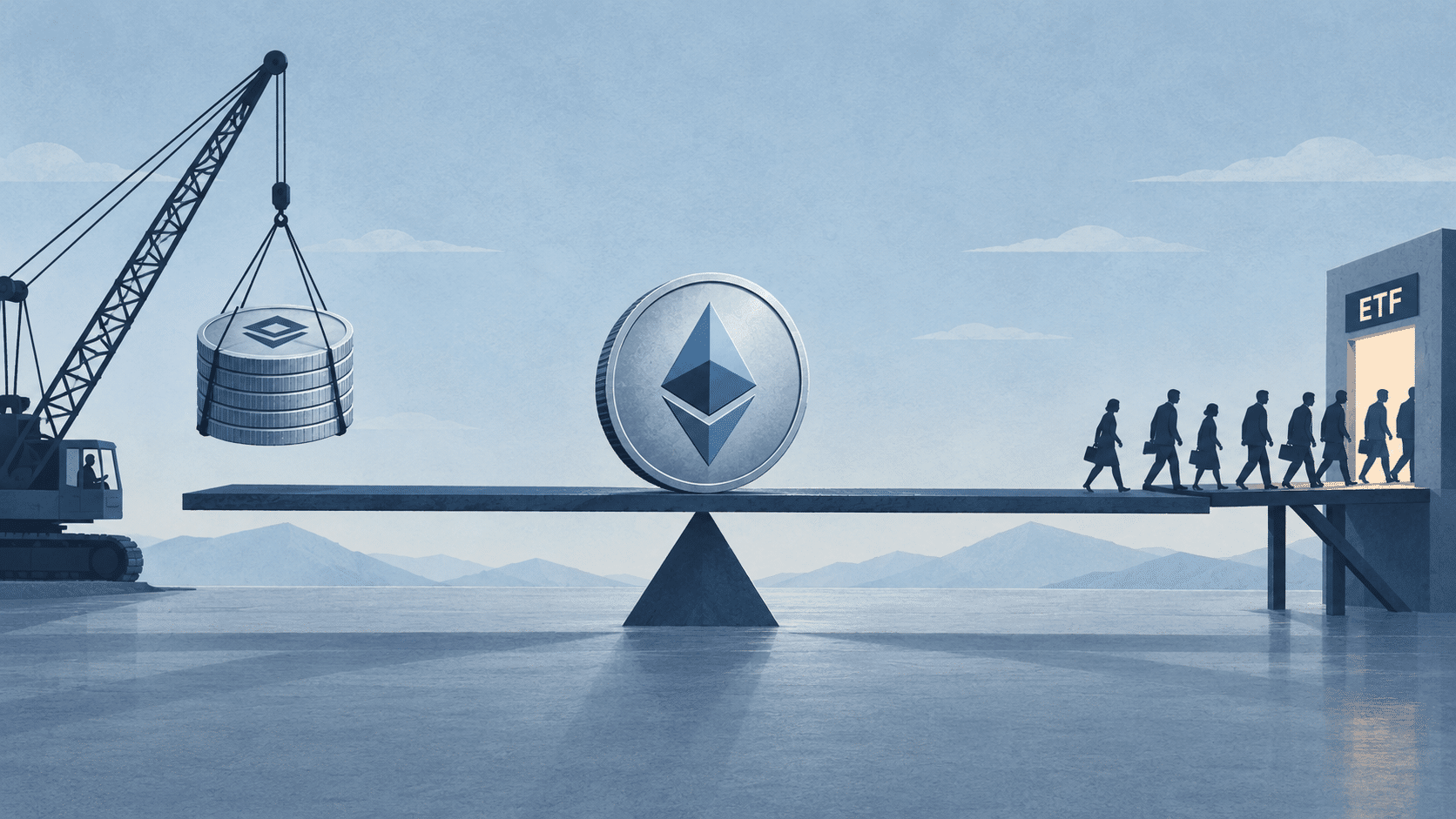
Ether ETFs Are Having Their Worst Month of 2026. Who Buys Once Bitmine Stops?
Ether’s (ETH) demand this year has largely come from two places: spot exchange-traded funds (ETFs) and Bitmine Immersion Technolog...
Electrum Fixes Bitcoin Wallet Flaw That Could Turn A Fee Bump Into Theft
Electrum disclosed a wallet flaw on October 24 that could turn a Bitcoin fee adjustment into an unintended payment. Its advisory e...
Bitcoin’s Fed Week Starts With A Fresh Rise In US Inflation Expectations
TL;DR: US household inflation expectations rose in October while consumer sentiment barely changed. The readings add context ahead...
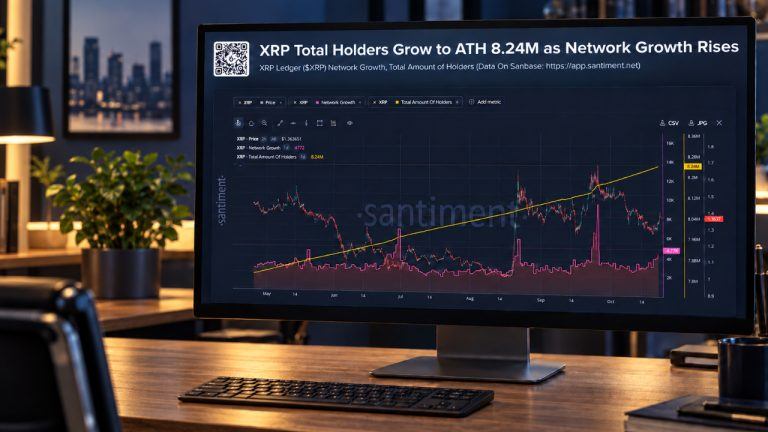
XRP Wallets Hit Record 8.24 Million as Network Growth Accelerates
XRP Ledger’s wallet count has reached 8.24 million, extending its climb through months of price volatility. Santiment paired the m...