Bankless Co-Founder Reveals New Crypto Portfolio After Ethereum Sale
Bankless co-founder David Hoffman has disclosed how he redeployed capital after selling ETH, revealing a new portfolio tilted toward VVV, NEAR, ZEC, HYPE and LIT. The move marks a notable shift for one of Ethereum’s most...
Archive context
Older archive item. Useful for background and entity history, but not a fresh market-moving signal.

Bankless co-founder David Hoffman has disclosed how he redeployed capital after selling ETH, revealing a new portfolio tilted toward VVV, NEAR, ZEC, HYPE and LIT. The move marks a notable shift for one of Ethereum’s most recognizable public advocates and has triggered debate over whether Hoffman is rotating into a new long-term thesis or chasing a different segment of the market.
In a post on X, Hoffman said he “immediately took ~50% of the capital to VVV, NEAR, ZEC, HYPE” after selling ETH. The other half, he said, was held back for dollar-cost averaging into an asset that had not already moved sharply higher.
“I left the rest as capital to DCA into something not already up multiples,” Hoffman wrote, adding that NEAR was an exception because it was “~1.40 at the time.” He then said he had completed that second leg of the rotation: “I’ve finished buying LIT with that remaining 50%.”
Why Hoffman Chose LIT As Next Major Crypto BetThe disclosure quickly shifted into a broader discussion about Hoffman’s investment thesis around LIT and Lighter, particularly after Multicoin Capital’s Kyle Samani asked why a user would choose Lighter over Robinhood. Hoffman framed the answer around product specialization, market structure and auditability rather than simply token speculation.
“The easy answer is that Robinhood is an everything platform, and Lighter is highly optimized for perps specifically,” Hoffman wrote. “Lighter has more assets, including more pre-IPO markets. Lighter doesn’t require KYC sign up, and Robinhood Perps are for only a closed group of users in the EU.”
He acknowledged one important constraint: “By contrast, Lighter is VPN blocked in the US.” But Hoffman argued that the deeper distinction is transparency. He pointed to zkLighter, Lighter’s zero-knowledge system, which he said allows end users to verify the exchange’s rule enforcement without permission.
“zkLighter is fully auditable by end users, so anyone can permissionlessly verify the exchange is following its own rules,” he wrote. “Order matching, funding, risk checks, liquidations etc are defined in zk circuits, so Ethereum verifies that they followed Lighter’s rules before accepting state updates. Bullish crypto ethos!”
For Hoffman, the auditability claim is not merely technical branding. He argued that it goes directly to trader and market-maker trust, because participants can verify that “there is no privileged party trading against users,” invoking the FTX and Alameda collapse as the relevant failure mode.
Hoffman also emphasized latency and execution cost. He claimed Lighter has “the best latency of any perp exchange” and “the best fee structure,” while pointing to third-party comparisons against Hyperliquid. On Robinhood, however, he was more cautious, saying he could not judge Robinhood perps directly because he cannot access them and would not be able to audit them in the same way.
“Maybe Robinhood, when it eventually rolls out perps, also has a 0-fee structure too,” he wrote. “But that means a tie between RH and Lighter, not a RH win.”
The debate also exposed pushback from parts of the Ethereum community. One user accused Hoffman of going “from eth maxi to the other extreme,” while another suggested he had become more of a short-term trader. Hoffman rejected both characterizations.
“The technology under all of these assets is pretty interesting too,” he replied to one critic. To another who joked about him having an investment thesis and sticking to it, Hoffman responded: “My last investment thesis I had for eight years. God forbid I get a new one!”
Asked directly about LIT versus HYPE, Hoffman said he views the position as both “beta and alpha” to HYPE. His reasoning centered on relative buybacks, product quality and regulatory positioning, citing “LIT buybacks” as moving at “2x the relative speed of HYPE Buybacks,” alongside what he described as a technically superior product, better fees, stronger latency and US domicile.
At press time LIT traded at $1.50.
Why this matters
Ethereum is showing up inside the Regulation theme, so this story is worth tracking for follow-through rather than treating it as a one-off headline.
Original source
Read on NewsBTCRelated market context

Hyperliquid surpasses $1B revenue, $1B used for HYPE buybacks
Hyperliquid's strategic buybacks enhance HYPE's market value, reflecting strong financial health and boosting investor confidence...

AI Could Weaken Ethereum Security as Cryptographic Risks Grow, Vitalik Buterin Warns
Buterin urged developers to prepare for potential AI vulnerabilities in both conventional and quantum-resistant cryptography, whil...
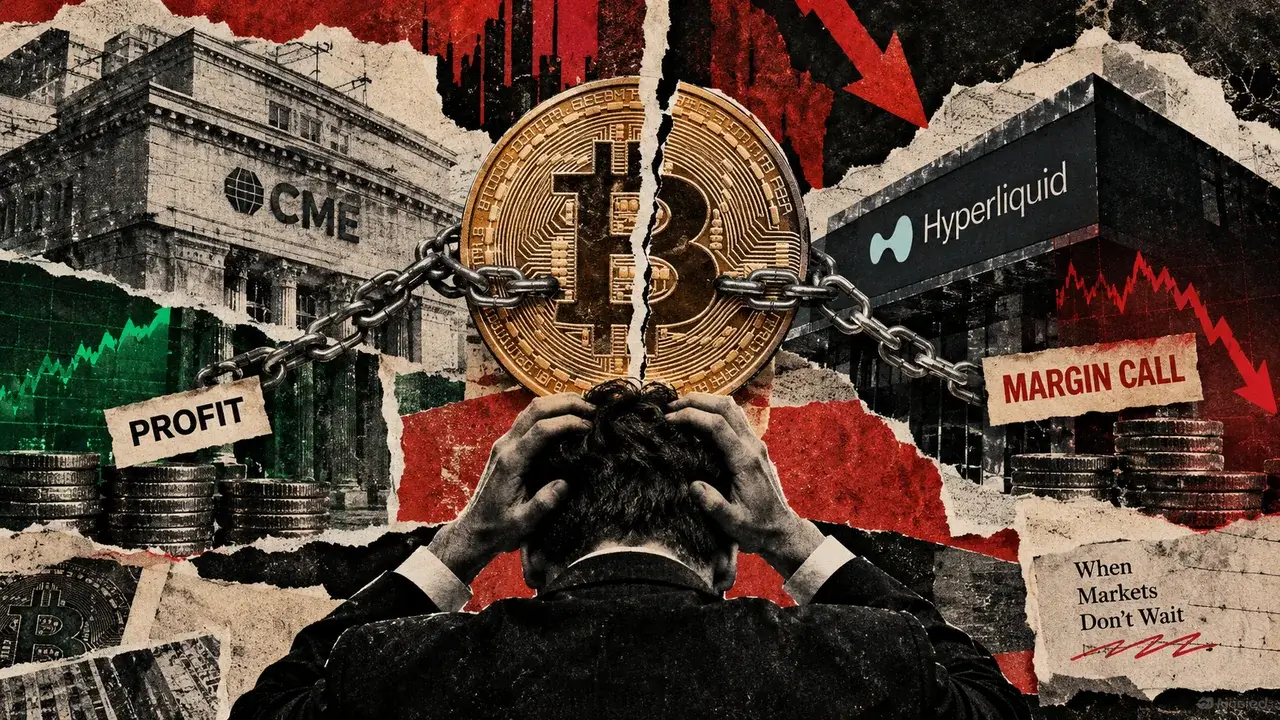
Bitcoin hedge funds face a liquidation trap when their collateral is split across markets
Here's a hypothetical situation: a hedge fund is making money, but one of its exchanges is about to liquidate its position anyway....

Citrini Research Says Tokenized Assets and AI Agents Make Crypto a Fundamentals Trade
Citrini Research published a report on Thursday arguing that AI agents and tokenized assets have opened a new paradigm of “fundame...

Ethereum Price Prediction: Is Tom Lee’s $25K ETH Target Too Ambitious?
Tom Lee’s $10,000 Ethereum price prediction implies a 1000% move from ETH’s current price at around $2,500. BitMine’s accumulation...
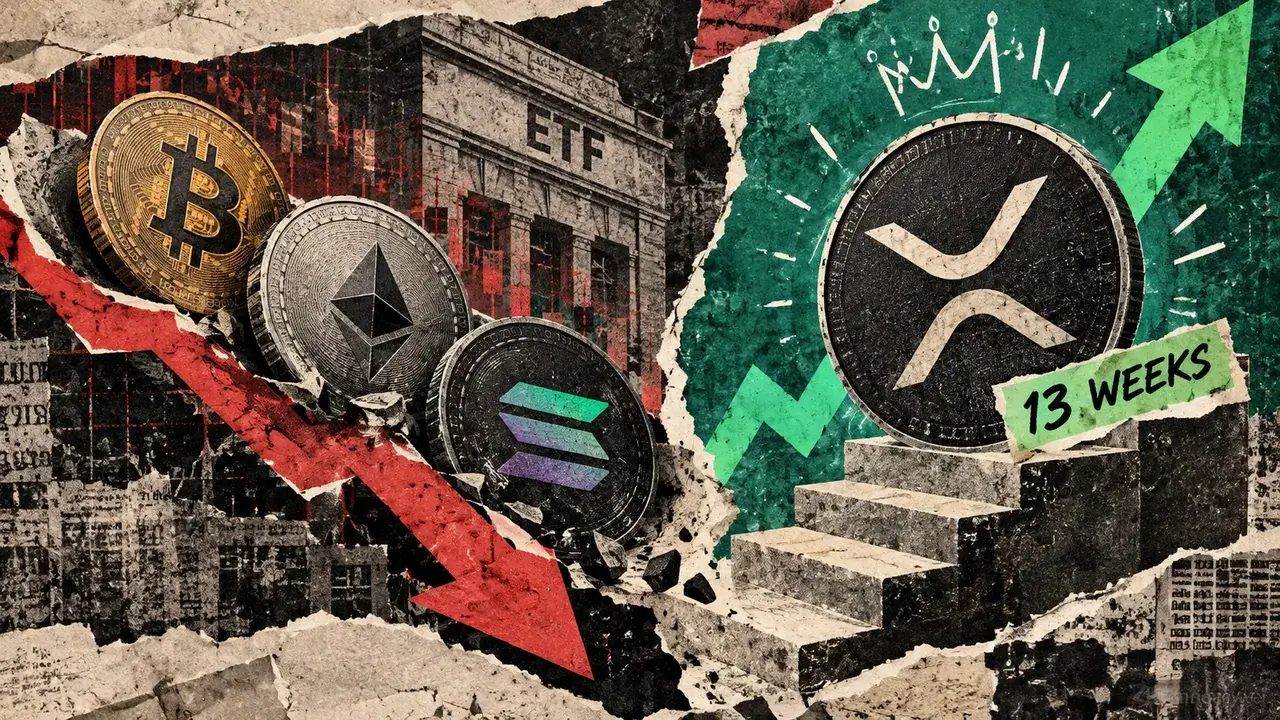
XRP ETFs extend a 13-week inflow streak as Bitcoin, Ethereum and Solana funds shed $1.25 billion
US-listed XRP ETFs extended their inflow streak to 13 weeks as Bitcoin, Ethereum and Solana funds suffered nearly $1.25 billion in...