Bitcoiner PlanB slams ETH: ‘Centralized & premined’ shitcoin
Pseudonymous Bitcoin stock-to-flow (S2F) model creator PlanB attacked Ethereum and mocked the project’s co-founder, Vitalik Buterin.PlanB mockingly reposted a June 2022 X post by Buterin in which the Ethereum co-founder...
Archive context
Older archive item. Useful for background and entity history, but not a fresh market-moving signal.

Pseudonymous Bitcoin stock-to-flow (S2F) model creator PlanB attacked Ethereum and mocked the project’s co-founder, Vitalik Buterin.
PlanB mockingly reposted a June 2022 X post by Buterin in which the Ethereum co-founder said S2F “is really not looking good now.” PlanB responded with a new posting stating, “Ethereum is really not looking good now.”
Source: PlanBIn his response to Buterin’s criticism from years ago, PlanB claimed Ethereum and the network’s coin, Ether (ETH), are centralized and premined, pointing to its shift to proof-of-stake (PoS) and changes in its issuance rate. He said that those features “are harmful and deserve all the mockery they get,” echoing Buterin’s old comment about S2F.
Related: Bitcoin analyst PlanB transfers Bitcoin to ETFs to avoid 'hassle with keys'
PlanB’s criticism of EthereumIn a separate X post, PlanB explained that an Ethereum full node requires nine terabytes of disk space, meaning he “can not run it” on his hardware. The kind of node in question is probably an Ethereum archival node, which, according to Etherscan data, requires over 21.8 terabytes (TB) with the Geth client.
An Ethereum full node running the Geth client that prunes older states with the default settings requires 1.28 TB, according to Etherscan data. The Bitcoin (BTC) and Ethereum communities have long debated what constitutes a full node.
This type of pruned node cannot access the full historical data or generate Merkle proofs for old blocks, which limits its research and bug-finding applications. Still, such nodes can engage in full trustless block and transaction validation.
Bitcoin’s full nodes require under 700 gigabytes (0.7 terabytes), according to Statista data, and also require much less computing power. This means that users can run Bitcoin full nodes much more easily, leading to a higher node count and higher network decentralization.
Not everyone views the criticism as founded. Jeremiah O’Connor, chief technology officer and co-founder at crypto cybersecurity firm Trugard, told Cointelegraph:
“PlanB’s take is classic Bitcoin maxi energy — loud, confident and missing half the picture.“O’Connor explained that Ethereum and Bitcoin serve two different purposes. He said that “Ethereum nodes are bigger and more complex” since Ether “isn’t just digital gold — it’s a full-on global computer.”
“Of course it’s heavier.“He conceded that users relying on centralized data providers like Infura is a problem. Still, he claimed that every ecosystem engages in centralization tradeoffs and that Ethereum developers are working to address the issue, and “it’s evolving fast.”
“Calling ETH a “shitcoin” because it’s not Bitcoin is like calling smartphones a scam because they aren’t landlines,“ he said.
He added that the two are different tools with differing purposes. He views Bitcoin as a “rock-solid value storage” and Ethereum as “where the builders are,” and said that “both matter” and “complement each other.”
Related: Can the Ethereum blockchain roll back transactions? Understanding the limits and risks
Buterin as a “single point of failure”PlanB also questioned Buterin’s influence on Ethereum’s development, calling him a “single point of failure.” However, Ethereum Foundation co-executive director Tomasz Stańczak recently announced that Buterin is stepping back from day-to-day operations to focus on research.
PlanB also raised an issue with Ethereum rolling back transactions following the 2016 DAO hack:
“The fact that this is even possible should worry you.“Bybit CEO Ben Zhou suggested an Ethereum rollback following the exchange’s $1.4 billion hack. Still, many in the community argued that a rollback happening now, with Ethereum being a more mature network, would be next to impossible.
Bitcoin itself had a comparable incident in its early history as well. On Aug. 15, 2010, an exploit resulted in a transaction that minted 184 BTC on the network in block 74638.
Satoshi Nakamoto (still involved in development at the time) and other core developers released an update that rolled back the network to block 74637 and patched the vulnerability. In other words, Bitcoin saw its own blockchain rollback in its early days.
Other points raised by PlanB include Ethereum switching to PoS, which he claims has consequences for the price. He suggested that changes to issuance and governance undermine Ethereum’s value proposition compared to Bitcoin’s fixed and predictable supply.
Magazine: Crypto ‘more taboo than OnlyFans,’ says Violetta Zironi, who sold song for 1 BTC
Why this matters
This ethereum story adds another data point to the current market tape and is useful when read alongside nearby source coverage.
Original source
Read on CointelegraphRelated market context

Cloudflare Exec Says Ethereum’s Original Sharding Plan Could Work for Stablecoin Payments
Will Papper, Cloudflare‘s director of product for agent payments, said a blockchain split into parallel shard chains, the design E...

Solana flips Ethereum in fees, while ETH holds the burn lead
Solana generated more user fees than Ethereum in data provider DefiLlama's Sept. 22 dashboard snapshot, while Ethereum burned more...

Bitcoin Recoils Below $86,000: Is Bitcoin Price Prediction Still Shooting For $90,000?
Bitcoin Price Prediction: Bitcoin (BTC) trades at $85,954, down a modest 0.3% on the day, holding the upper band of a rebound that...
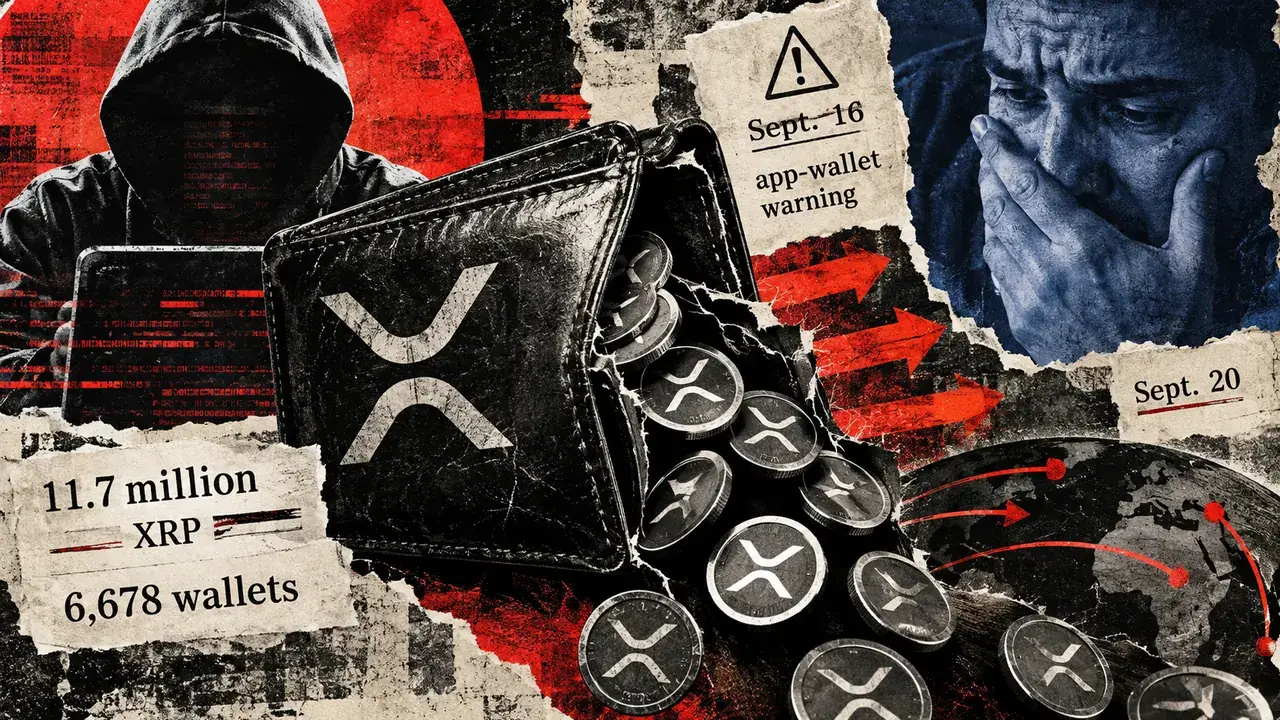
Nearly $20 million in XRP drained from 6,678 wallets across six attack waves
Nearly $20 million of XRP was drained from thousands of hardware wallets in six waves spanning nearly a week. Blockchain analysis...

Coin Metrics revises 19 months of ETF wallet data but by how much?
Coin Metrics corrected more than 19 months of Bitcoin ETF-related on-chain data, leaving users of its identified-wallet series to...

Crypto hacking group ShinyHunters says it stole data of 5,000 FBI agents
Crypto hacking collective ShinyHunters claims to have stolen the personal details of 5,000 FBI agents after gaining access to its...