Bitwise Ethereum ETF on NYSE with Staking Model – Door to Institutional Crypto Yield
Key Takeaways: A proposal by NYSE for the Bitwise Ethereum ETF could lead to it being the first U.S. ETF to offer staking rewards. This would make Ethereum staking more accessible as ETF investors can earn staking yields...
Archive context
Older archive item. Useful for background and entity history, but not a fresh market-moving signal.
Key Takeaways:
- A proposal by NYSE for the Bitwise Ethereum ETF could lead to it being the first U.S. ETF to offer staking rewards.
- This would make Ethereum staking more accessible as ETF investors can earn staking yields without holding ETH directly.
- The deal is still subject to regulatory approval, with the SEC, for their part, having acted against crypto firms providing staking services in the past.
- Such actions might lead to greater institutional adoption of Ethereum and staking-based financial products.
New York Stock Exchange (NYSE) has filed with SEC to allow staking on the Bitwise Ethereum ETF. If approved, the ETF would stake the Ethereum it owns, collecting passive rewards that would then be paid out to investors.
This has caused some concerns for Ethereum investors since Ethereum transitioned to a Proof-of-Stake (PoS) mechanism that requires participants to stake ETH to validate transactions and secure the network in exchange for rewards. Today, staking is primarily limited to retail investors or institutions through services like Lido or Coinbase. However, if the ETF includes staking, traditional investors might get to enjoy staking yields without having to physically hold ETH or manage private keys.
This proposal is a potential landmark development for crypto ETFs, as it would be the first ETF in the U.S. to offer staking rewards, merging traditional finance with crypto-native yield mechanisms.
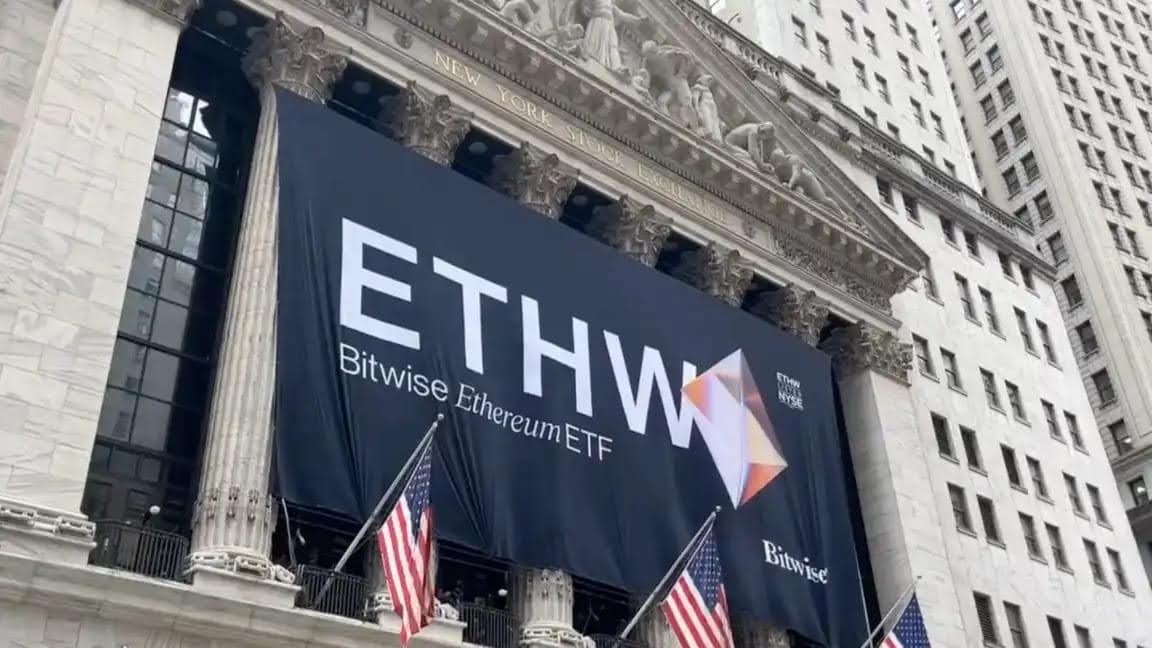
Bitwise displays a banner on the NYSE facade to promote its spot Ethereum ETF.
What ETF Investors Can Gain from StakingThese key advantages would come into play with staking Ethereum within an ETF:
Passive Yield for InvestorsEther staking is currently offering 3-5% annual yields. Furthermore, should the Bitwise Ethereum ETF be permitted to stake, these rewards may be passed along to shareholders, further boosting returns beyond typical price appreciation.
Easiest Access for Conventional InvestorStaking is complicated for many investors, as it often requires technical know-how, custody solutions, and on-chain actions. We believe that a staking-enabled ETF would remove these barriers and offer a unique opportunity to participate in staking rewards in a regulated and easily traded manner.
Facilitating Institutional AdoptionThe regulatory uncertainty and operational risks associated with staking have caused institutional investors to be reluctant to participate. If this ETF does get approval, it would serve as the first concrete way for institutions to gain real exposure to staking through a regulated vehicle, which in doing so, is likely to lead to increased liquidity for Ethereum.
Enhancing Security of Ethereum’s NetworkStaked ETH will help secure the network and reduce centralization.
How Does This Impact Regulatory Oversight and the Lawsuit by SEC?While it may provide long-term benefits, the proposal has some serious regulatory challenges to overcome. The U.S. Securities and Exchange Commission (SEC) has already rolled up some staking services in this way, arguing that some of them function as unregistered securities offering.
The Possible Effect on Ethereum and the MarketCrypto firms will pay close attention to the SEC’s decision, which could establish a precedent for other staking-enabled ETFs in the future.
If granted, Ethereum could benefit from increased institutional investment, as traditional investors get exposure to staking yields without direct crypto exposure.
If denied, it could renew fears about regulatory murkiness in the U.S. impeding institutional uptake of staking-based financial products.
Outside of Ethereum, the decision could set a precedent for future staking-compatible ETFs for other Proof-of-Stake cryptocurrencies such as Solana (SOL) or Cardano (ADA).
What’s Next?The SEC’s review process can take months. If passed, this would transform the Ethereum ETF landscape and integrate staking into regulated crypto investment strategies.
More News: NYSE Arca Eyes Dogecoin ETF Listing: A Sign of Mainstream Acceptance or a Risky Gamble?
The post Bitwise Ethereum ETF on NYSE with Staking Model – Door to Institutional Crypto Yield appeared first on CryptoNinjas.
Why this matters
This ethereum story adds another data point to the current market tape and is useful when read alongside nearby source coverage.
Original source
Read on CryptoNinjasRelated market context

RealFi Claims 12% Stablecoin Yield as Ethereum Mainnet Launch Nears
RealFi says staked USDr yields over 12% from real-world assets. After a Cardano mainnet launch with 3,000+ testnet wallets, Ethere...

Ethereum Price Prediction: ETH Outpaces the Market as Crypto Rebounds
Ethereum is outperforming the crypto market, rising by almost 3% over the past 24 hours to just a notch under $2,500 as digital as...

Grayscale Opens 3 Crypto Funds on Republic With $2,500 Minimum for Eligible Investors
Key Takeaways: Grayscale has introduced three crypto-investment products to Republic. A minimum investment of $2,500 is required f...

MSCI To Move Forward With Proposal That Could Exclude Strategy From Index
Bitcoin Magazine MSCI To Move Forward With Proposal That Could Exclude Strategy From Index Morgan Stanley Capital International is...

Stacks reports around 735 BTC bonded in Bitcoin Staking during Q3 2026
The successful Bitcoin Staking initiative by Stacks could enhance liquidity and yield opportunities in decentralized finance, attr...

XRP spot volume surpasses Bitcoin and Ethereum on South Korea’s Upbit
XRP's dominance on Upbit highlights the potential impact of local regulatory shifts on global crypto liquidity and market dynamics...