Buying ‘Ethereum Beta’ Altcoins Is A Recipe For Disaster, Researcher Finds
In a research report released on July 18, 2024, Thor Hartvigsen, a crypto researcher, strongly cautioned against the investment strategy of purchasing high-beta altcoins within the Ethereum ecosystem as a leveraged tacti...
Archive context
Older archive item. Useful for background and entity history, but not a fresh market-moving signal.

In a research report released on July 18, 2024, Thor Hartvigsen, a crypto researcher, strongly cautioned against the investment strategy of purchasing high-beta altcoins within the Ethereum ecosystem as a leveraged tactic, particularly with the forthcoming launch of the spot Ethereum ETFs in the United States.
Hartvigsen’s analysis titled “ETH Beta – a Recipe for Disaster?” provides an analysis of whether buying ETH-correlated altcoins, commonly referred to as ‘ETH betas,’ constitutes a good investment strategy. These assets, including tokens like OP, ARB, MANTA, MNT, METIS, GNO, CANTO, IMX, STRK (all L2’s), MKR, AAVE, SNX, FXS, LDO, PENDLE, ENS, LINK (all DeFi) PEPE, DOGE (all memes), SOL, AVAX, BNB and TON (alternative L1’s) are traditionally viewed as offering leveraged exposure to movements in Ethereum’s price, assuming a higher volatility relative to Ethereum itself.
The report dissects several critical areas: price performance comparison between these altcoins and Ethereum, their correlation and beta coefficients relative to Ethereum, and their risk-adjusted returns measured by the Sharpe ratio. The researcher highlights the inherent risks and inefficiencies in banking on these altcoins for enhanced Ethereum exposure.
Why Buying ‘Ethereum Beta’ Altcoins Is Generally A Bad IdeaDiscussing price performance, Hartvigsen points out, “The TOTAL3 (altcoin market cap) against the ETH market cap is at around 1.48. Since 2020, this chart has only been this low on a few rare occasions, signaling the outperformance of ETH against most alts.” This historical context sets a grim precedent for those hoping for altcoin outperformance concurrent with Ethereum’s growth. The researcher elaborates that despite periodic recoveries at these levels, the overarching trend has been one of decline—a troubling signal for altcoin investors.
“Notably, not a single L2 token has outperformed ETH YTD, with the best performing token, GNO, up 34%, whereas ETH has seen a 44% gain. Worst performers include MANTA, STRK, and CANTO, all down more than 60% this year,” Hartvigsen stated. With regard to the top alternative L1’s, AVAX is the only one down on the year vs ETH. “Of the 8 DeFi tokens in this basket, 3 have outperformed ETH, namely PENDLE (+254%), ENS (+163%) and MKR (+78%). The remaining 5 are all down on the year with FXS as the worst performer down 73%,” the researcher added.
Meanwhile, memecoins have been the best bet this year so far. “This can also be seen in the performance of the largest Ethereum-native memecoins. PEPE is the largest gainer of the sample, up +708% while SHIB is up 74% and DOGE 31%,” according to Hartvigsen.
The correlation section of the report digs deeper into the relationship these altcoins have with Ethereum. “The sample of altcoins has not been chosen at random but consists of tokens usually assumed to be correlated with the performance of ETH,” Hartvigsen explains.
He further notes that “Correlation between ETH and ETH is obviously perfect and therefore is 100%. The alts most correlated with ETH are GNO, SNX, METIS, AAVE, and ARB.” However, despite some tokens showing a decent correlation with Ethereum, the researcher cautions that these do not necessarily guarantee similar performance outcomes, especially in this crypto cycle.
In terms of beta, which measures the volatility of an asset compared to the market, the findings are telling. “From this analysis, it’s clear that only a few alts have a high beta coefficient in relation to ETH, namely PEPE, METIS, ENS, and PENDLE,” Hartvigsen states. This suggests that while certain altcoins exhibit higher volatility and thus potential for greater returns relative to Ethereum, they also carry a proportionately higher risk.
The calculation of the Sharpe ratio, which provides a measure of risk-adjusted return, brings another dimension to the analysis. Hartvigsen remarks, “The Sharpe ratio calculations underscore the volatility-adjusted returns of these altcoins, which have varied significantly. This is critical as investors often overlook the increased risk these ‘ETH beta’ assets carry.”
Wrapping up his findings, Hartvigsen offers a clear verdict: “Buying these altcoins as a way to get leveraged exposure to Ethereum is, in my opinion, a foolish game as you’re taking on a lot of additional risk you might not be aware of. If you’re looking for leveraged ETH exposure, simply putting on a 2x ETH long on e.g., Aave is more sensible.” He emphasizes that such a strategy ensures a 100% correlation and a beta value of 2, without the unnecessary complications.
At press time, ETH traded at $3,439.
Why this matters
This ethereum story adds another data point to the current market tape and is useful when read alongside nearby source coverage.
Original source
Read on NewsBTCRelated market context
Ethereum Draft Proposes Compliance Controls for Confidential RWA Tokens
Developer Aryeh Greenberg has proposed an Ethereum token interface that would add compliance checks and issuer enforcement powers...

Ethereum (ETH) Price Prediction: Bulls and Bears Face Off as $3,000 Rally Meets Liquidation Risk
Ethereum price is entering a volatile phase after its latest recovery, with buyers trying to defend the recent breakout while sell...

Hyperliquid (HYPE) Price Prediction: Can Whale Buying and Binance Listing Drive HYPE to $210?
The technical setup for Hyperliquid price currently places $110, $130, $160, and $180 among the key levels to watch, while some tr...

Ethereum Price Prediction: BlackRock Says AI Stablecoin Payments Could Drive ETH Demand
Ethereum trades at $2,695, down 2.6% over the past 24 hours, with the latest price prediction still shaped by its 10.3% seven-day...

Cosmos Hub Restarts and Moves $2.1 Million in Stolen Tokens Out of an Attacker’s Wallet
The Cosmos Hub resumed producing blocks Wednesday morning after its validators halted the network for nearly 25 hours. In the firs...
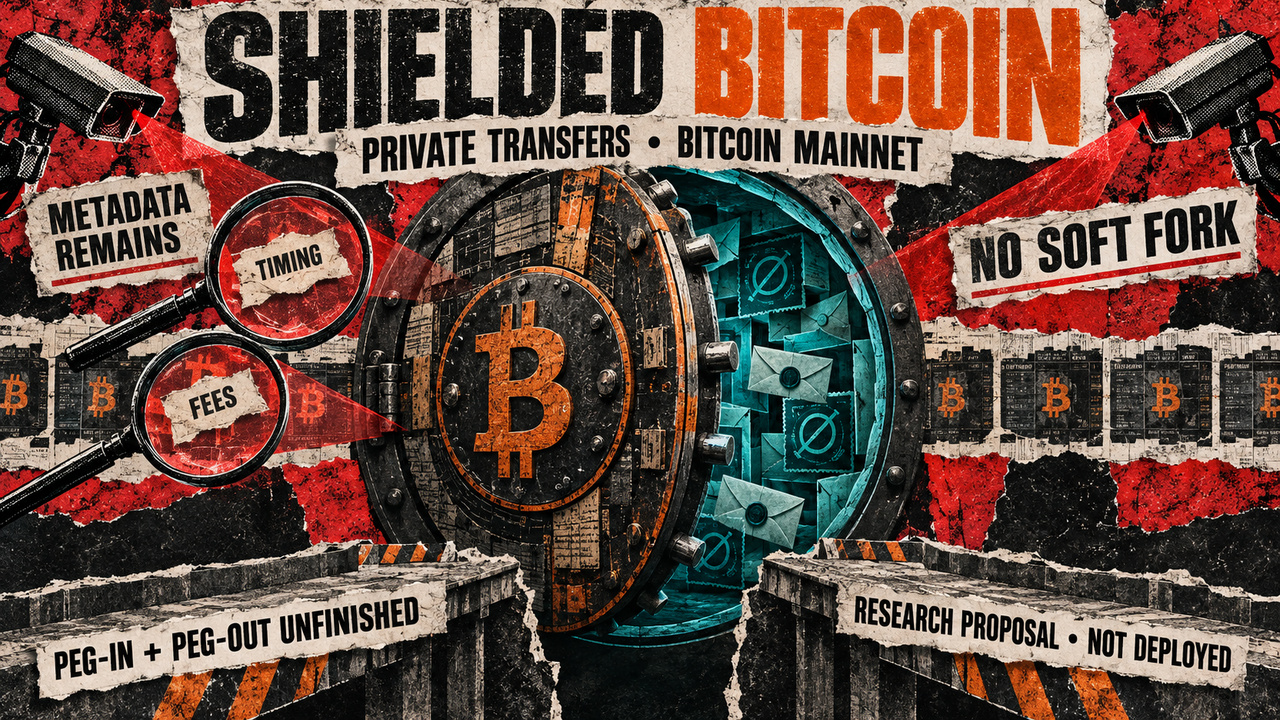
Bitcoin researchers target privacy coins with Zcash-style shielded transfers
Bitcoin researchers have proposed a system for private transfers directly on the network without requiring a soft fork or changes...