Ethereum Co-Founder Warns Closed Systems Breed ‘Abuse and Monopolies,’ Calls for Open-Source in Key Sectors
Ethereum co-founder Vitalik Buterin has issued a comprehensive warning about the dangers of closed technological systems, arguing that proprietary infrastructure across health, digital identity, and civic technology crea...
Archive context
Older archive item. Useful for background and entity history, but not a fresh market-moving signal.
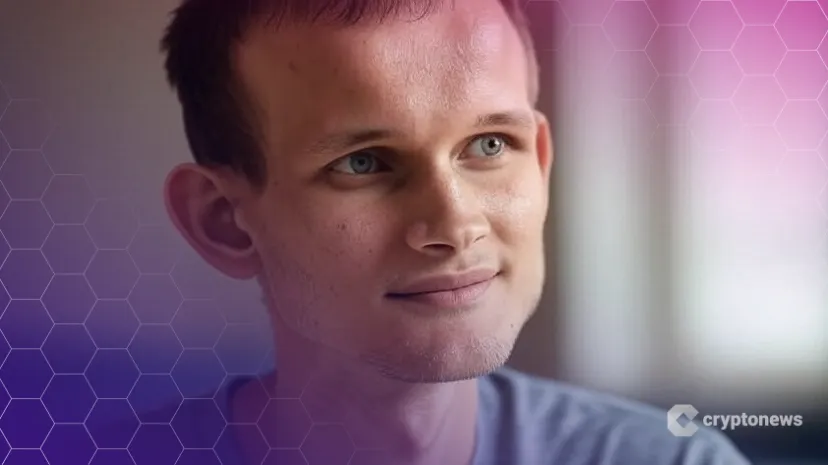
Ethereum co-founder Vitalik Buterin has issued a comprehensive warning about the dangers of closed technological systems, arguing that proprietary infrastructure across health, digital identity, and civic technology creates conditions for “abuse and monopolies” while concentrating power among a few players.
In a September 24 blog post, Buterin outlined his vision for “full-stack openness and verifiability” spanning software, hardware, and biological systems.
He argued that civilizations that produce open technology rather than merely consume it will dominate the 21st century.
The importance of full-stack openness and verifiability
(including applications, operating systems, hardware, and bio)https://t.co/FRb3V4TK6U
The warning comes as Buterin advocates for stronger “copyleft” licensing, which requires developers who build on open-source code to share their improvements.
Previously supporting permissive licenses, he now believes the crypto industry has become “more competitive and mercenary,” making voluntary code sharing unreliable.
His call extends beyond software to hardware verification, biological monitoring systems, and civic infrastructure.
Buterin envisions a world where personal devices offer smartphone functionality with crypto wallet security while remaining as inspectable as mechanical watches.
The Ethereum Foundation has backed this philosophy with a recent $500,000 donation to support Tornado Cash developer Roman Storm’s legal defense, while the Solana Policy Institute also contributed an additional $500,000.
Both organizations argue that prosecuting privacy tool developers sets dangerous precedents for criminalizing open-source development.
Digital Infrastructure Threatens Individual SovereigntyButerin identified health technology as a critical battleground where proprietary systems could entrench global inequalities.
According to the blog post, the COVID vaccine distribution exposed these risks when production was concentrated in a few countries, resulting in massive disparities between wealthy and developing nations.
Source: VitalikClosed-source vaccine manufacturing processes prevented equal access initiatives from scaling effectively.
Meanwhile, pharmaceutical companies’ opaque safety communications have contributed to widespread mistrust, which has extended into a rejection of established science.
Personal health tracking faces similar concerns as devices collect vastly more data than identification systems like Worldcoin.
When this infrastructure remains proprietary, large corporations gain exclusive access to build applications, while others face API limitations and the potential for service termination.
Security vulnerabilities compound these problems. Compromised health data enables blackmail over medical conditions, optimized insurance pricing extraction, and location tracking for physical threats.
Brain-computer interfaces raise the stakes further, with successful attacks potentially allowing hostile actors to read or manipulate thoughts.
Buterin’s proposed solution involves open-source biological monitoring equipment that communities can verify independently.
Source: VitalikThis includes personal medical devices, air quality sensors, and universal airborne disease detection systems that provide transparency about data collection and processing.
The approach extends to public surveillance systems where open-source, verifiable cameras and sensors could function like “digital guard dogs” rather than creating comprehensive surveillance networks.
Legal frameworks would guarantee the public’s right to inspect monitoring equipment randomly.
Centralized Control Undermines Democratic InnovationTaking it a step further, Buterin believes that Civic technology faces similar centralization pressures that threaten democratic participation and local innovation.
Electronic voting systems have drawn criticism from security researchers for using proprietary “black box software” that prevents public verification of vote-counting processes.
Real-world failures validate these concerns. Massachusetts courts invalidated large volumes of breathalyzer evidence after discovering state crime labs withheld information about widespread calibration problems.
The ruling emphasized that due process requires not only fairness but also a common understanding of fairness.
Buterin argued that technological efficiency gains will render purely analog systems increasingly irrelevant as people bypass slower alternatives.
This creates pressure to develop secure, verifiable digital solutions rather than avoiding technology entirely.
Open-source civic systems would enable local experimentation with governance innovations, such as quadratic voting, citizens’ assemblies, and sortition-based decision-making.
Proprietary systems force communities to either convince companies to implement preferred features or rebuild from scratch.
Physical security presents additional challenges as drone warfare makes high-tech countermeasures necessary for national defense.
Proprietary security equipment creates opaque, centralized data collection, while open alternatives could limit information gathering to specific threats while deleting irrelevant data.
Buterin’s comprehensive vision includes secure personal devices, encrypted messaging with formal verification, blockchain-based finance with social recovery, and open-source satellite internet infrastructure.
He acknowledged that designing for verifiability imposes costs through reduced optimization opportunities and challenging business models, but argued these trade-offs remain manageable for high-security applications.
The post Ethereum Co-Founder Warns Closed Systems Breed ‘Abuse and Monopolies,’ Calls for Open-Source in Key Sectors appeared first on Cryptonews.
Why this matters
This ethereum story adds another data point to the current market tape and is useful when read alongside nearby source coverage.
Original source
Read on CryptonewsRelated market context

Vitalik Buterin Backs Trueo's Ethereum Move As TRUE Jumps 900%
Vitalik Buterin endorsed a prediction market by name on Monday, welcoming Trueo's plan to move its primary deployment from Base to...

Onchain prediction market Trueo migrates to Ethereum; Vitalik Buterin welcomes ‘ethical’ market contender
Vitalik Buterin touted Trueo as a strong prediction market contender that is decentralized, ethical, and 'not corposlop.'

ShredPay Joins Jack Henry Network To Bring Stablecoin Infrastructure To Banks
TL;DR ShredPay has joined the Jack Henry Fintech Integration Network. The integration can connect ShredPay’s stablecoin and digita...

BlackRock research paper examines AI’s impact on digital assets
AI's integration into digital assets could redefine financial systems, boosting stablecoins and transforming Bitcoin mining into A...

Cipher Mining Expands AI Data Center Push With ERCOT Capacity And Long-Term Lease
TL;DR Cipher Mining disclosed conditional ERCOT interconnection capacity for up to 300 MW. The company also reported a 15-year hyp...

No Bitcoin Payments in Russia — But the Digital Ruble Is Open for Business
Bitcoin Magazine No Bitcoin Payments in Russia — But the Digital Ruble Is Open for Business While bitcoin is banned for making pay...