Ethereum community members propose new fee structure for the app layer
Two Ethereum community members, Kevin Owocki and Devansh Mehta, proposed a dynamic fee structure for the Ethereum application layer to strike a balance between revenue generation for app builders and fairness in fee extr...
Archive context
Older archive item. Useful for background and entity history, but not a fresh market-moving signal.
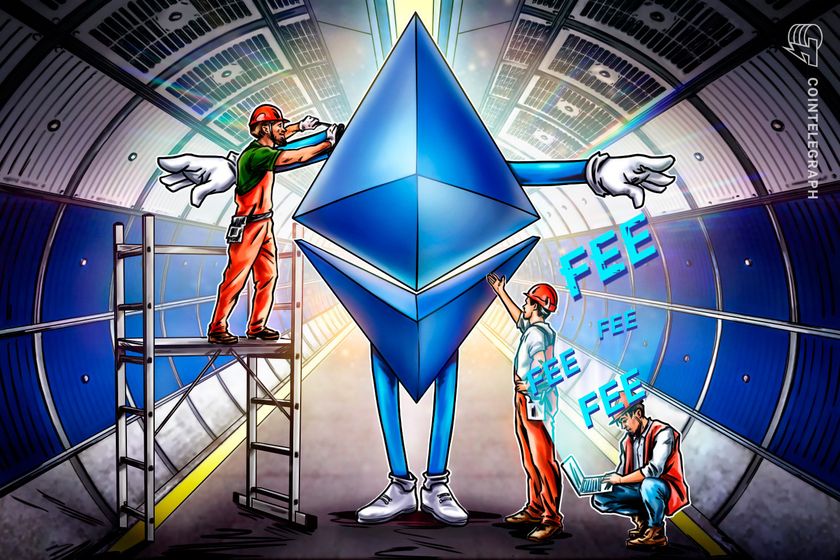
Two Ethereum community members, Kevin Owocki and Devansh Mehta, proposed a dynamic fee structure for the Ethereum application layer to strike a balance between revenue generation for app builders and fairness in fee extraction.
The April 27 proposal outlined a simple equation that uses a square root function that proportionally lowers the percentage of fees as the funding capital allocated to a particular project grows. Owocki and Mehta explained:
"For smaller funding amounts, the fee follows a square root function (sqrt(1000 x N)), providing proportionally higher returns to make building mechanisms for smaller pools worthwhile. For example, if the funding pool is $170,000, then the root of 1000 x 170,000 equals $13,038.4 or 7% is taken as overhead."The authors of the proposal added that fees would be capped at 1% once a particular application's funding pool crossed the $10 million level, ensuring that small app builders can develop decentralized applications without excess fees while also encouraging project and funding growth by capping fees as developers scale their applications.
A visualization of the proposed fee structure tapering off at higher project funding levels. Source: Ethereum ResearchOwocki and Mehta's proposal to balance revenue generation and profitability among Ethereum's app builders reflects the growing calls to reform fee structures and value accrual mechanisms to maintain Ethereum's economic viability against competing networks.
Related: Ethereum's L2 approach equals many high-throughput chains — Avail exec
Ethereum's competitors ramp up heat as Ethereum faces revenue crunchIn 2024, the Solana ecosystem onboarded more developers than the Ethereum network, attracting 7,625 new developers compared with Ethereum’s 6,456.
Despite the surge in software developers building on the Solana network in 2024, Ethereum remains the dominant ecosystem for attracting developer talent, although the 2024 data shows that position is no longer uncontested.
The Solana network is now the number two choice for decentralized application developers and is catching up to Ethereum. Source: Electric CapitalAccording to onchain analytics firm Santiment, Ethereum fees dropped to five-year lows in April 2025 due to low activity on the Ethereum base layer resulting from reduced demand for smart contract operations like decentralized finance.
This reduced demand is leading to many institutions scaling back their Ether (ETH) holdings or selling off portions of their investment as investor sentiment toward the first-ever smart-contract platform continues to erode without any clear catalysts for a reversal.
Magazine: Ethereum is destroying the competition in the $16.1T TradFi tokenization race
Why this matters
This ethereum story adds another data point to the current market tape and is useful when read alongside nearby source coverage.
Original source
Read on CointelegraphRelated market context

Solana flips Ethereum in fees, while ETH holds the burn lead
Solana generated more user fees than Ethereum in data provider DefiLlama's Sept. 22 dashboard snapshot, while Ethereum burned more...

ETH USD Loses Ground as Ethereum Price Analysis Remains Targeting $3,000 This Week
Ethereum Price Prediction, September 23: Ethereum (ETH) trades at $2,735, down a marginal 0.61% over the past 24 hours, a pause, n...

Ethereum ETFs Pull In $270M As BlackRock Leads September 21 Rebound
TL;DR US spot Ethereum ETFs recorded $270.0 million of net inflows for the September 21 session. BlackRock’s ETHA led the day with...
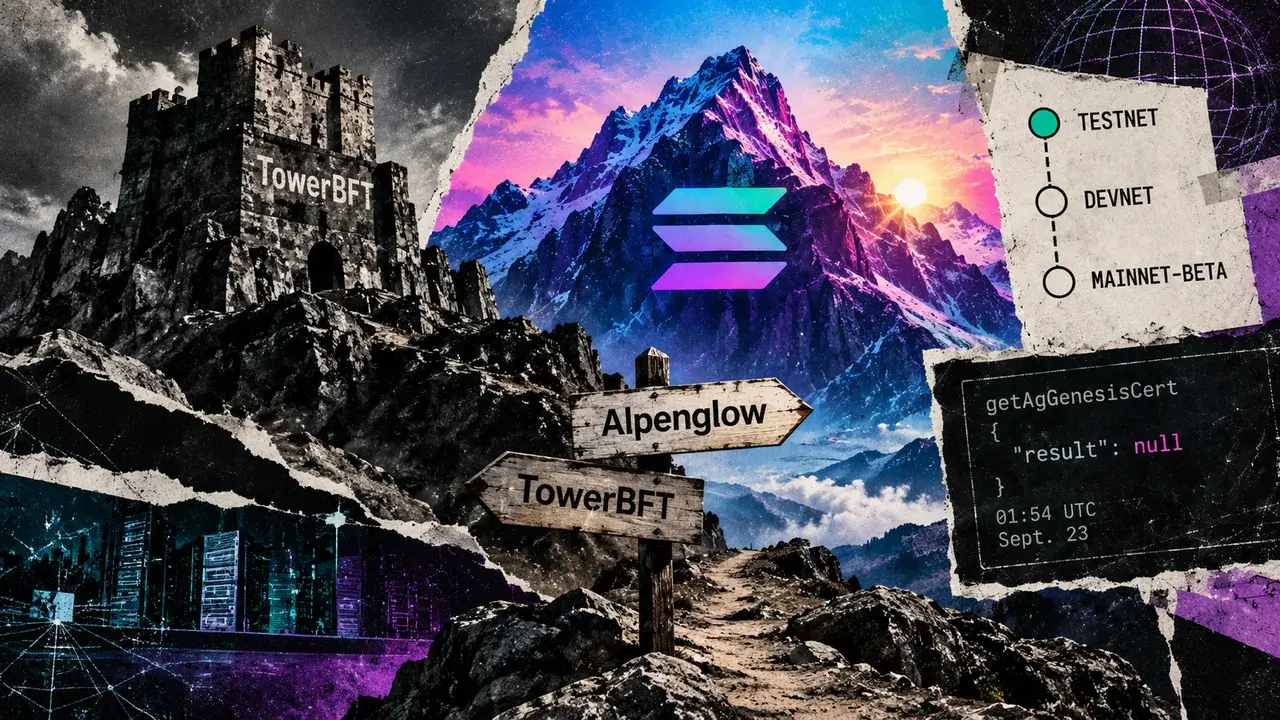
Solana moves Alpenglow into testnet as SOL nears January highs
Solana has begun rolling out Alpenglow on testnet, moving its planned blockchain consensus overhaul into a public testing environm...

Anchorage Digital Taps LayerZero To Take USAT Stablecoin Cross-Chain
TL;DR Anchorage Digital has selected LayerZero as its interoperability partner for regulated stablecoins issued through its platfo...

Vitalik Buterin Backs Trueo's Ethereum Move As TRUE Jumps 900%
Vitalik Buterin endorsed a prediction market by name on Monday, welcoming Trueo's plan to move its primary deployment from Base to...