Ethereum Could Benefit From Stealth Addresses Implementation, Says Vitalik Buterin
Ethereum co-founder Vitalik Buterin published a research post that suggests using stealth addresses to enhance privacy-preserving transfers. Buterin detailed that stealth addresses can be implemented fairly quickly today...
Archive context
Older archive item. Useful for background and entity history, but not a fresh market-moving signal.

Ethereum co-founder Vitalik Buterin published a research post that suggests using stealth addresses to enhance privacy-preserving transfers. Buterin detailed that stealth addresses can be implemented fairly quickly today on Ethereum and would significantly boost user privacy on the blockchain network.
Buterin Suggests Stealth Addresses as a Solution to the Privacy Challenges in Ethereum EcosystemThree days ago, the co-founder of Ethereum, Vitalik Buterin, published a blog post that gives a comprehensive overview of stealth addresses and the benefits of using them. Stealth addresses are a feature that is supported by other blockchain networks, like Monero (XMR), to increase privacy and anonymity when conducting transactions. The network creates one-time addresses that are not connected to the user’s public address. In the blog post, Buterin insists that “one of the largest remaining challenges in the Ethereum ecosystem is privacy.”
Buterin describes a number of different ways to generate cryptographically opaque public addresses with a key-blinding mechanism, elliptic curve cryptography, and quantum-resistant security. He also addresses “social recovery and multi-L2 wallets” and “separating spending and viewing keys.” Buterin notes that there are some concerns that could affect longer-term usability, like the difficulty of social recovery. “In the longer term, these problems can be solved, but the stealth address ecosystem of the long term is looking like one that would really heavily depend on zero-knowledge proofs,” Buterin said.
While Monero uses stealth addresses, the technology is also featured in cryptocurrency networks like Zcash, Dash, Verge, Navcoin, and PIVX. It’s worth noting that some of the aforementioned cryptocurrencies have different implementations of stealth addresses. Concluding his research post, Buterin details that stealth addresses could be easily implemented into the Ethereum network, and wallets would need to adjust to the changes. Overall, supporting stealth addresses would require significant changes to the underlying architecture of Ethereum-based wallets and their current settings.
For example, current wallets use a different address format. The lite client would need to generate new, one-time addresses for each transaction, and wallets would need to be able to properly encrypt and decrypt the transaction data. “Basic stealth addresses can be implemented fairly quickly today and could be a significant boost to practical user privacy on Ethereum,” Buterin concludes. “They do require some work on the wallet side to support them. That said, it is my view that wallets should start moving toward a more natively multi-address model (e.g., creating a new address for each application you interact with could be one option) for other privacy-related reasons as well.”
What are your thoughts on implementing stealth addresses in the Ethereum network? Do you believe it would significantly boost user privacy on the blockchain network or do you have any concerns about longer-term usability? Share your thoughts in the comments below.
Why this matters
This ethereum story adds another data point to the current market tape and is useful when read alongside nearby source coverage.
Original source
Read on Bitcoin NewsRelated market context

Arca’s Jeff Dorman Calls Vitalik Buterin’s ETH Store-of-Value Pitch ‘Really Misguided’
Jeff Dorman said on Unchained that Ethereum co-founder Vitalik Buterin‘s case for ETH as a store of value is “really misguided.” D...
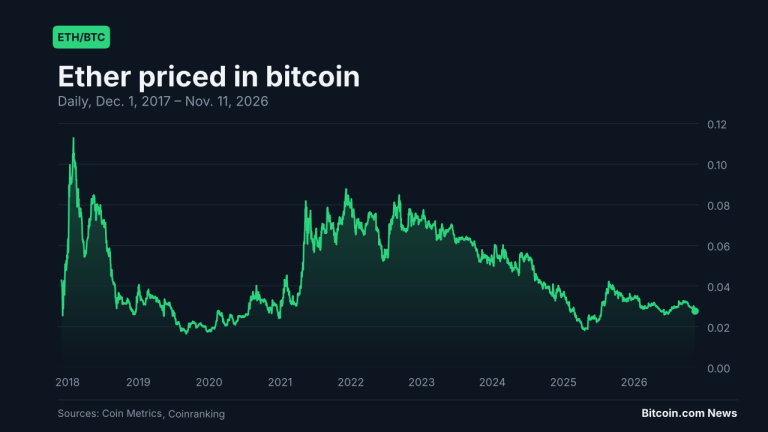
How Buterin Complicates Ethereum’s Wall Street Pitch by Aiming at Bitcoin
Vitalik Buterin’s latest pivot in how Ethereum should be valued might make traditional Wall Street investors dizzy. The narrative...

What Is Canton Network? The Privacy Blockchain Built for Wall Street
Canton Network is a privacy-enabled blockchain built for banks and tokenized assets. Here's how it works and what Canton Coin (CC)...

From $6 to $6.9 million: Two dormant Bitcoin addresses wake up to move 100 BTC after more than 16 years
Two Bitcoin whale addresses moved 100 BTC worth $6.89 million after more than 16 years of dormancy on Friday.
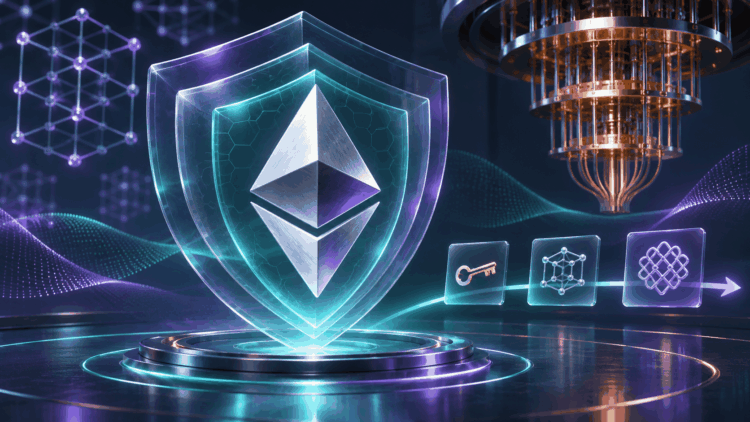
Ethlabs Calls for Ethereum Quantum Protection in 2027 as Upgrade Priorities Shift
TL;DR: Ethlabs proposes quantum readiness in 2027 and plans to withdraw its quick-slots work from Hegotá. Developers still need to...

Ethereum faces temporary issues due to cloud provider malfunction
Cloud dependency highlights Ethereum's vulnerability, urging diversification to ensure network resilience and uninterrupted user a...