Ethereum Developers Commence Finalizing Shanghai Upgrade ‘Shadow Fork’ for Testing and Bug Identification
Ethereum developers have begun finalizing the Shanghai upgrade “shadow fork,” according to software engineer Marius van der Wijden. The “shadow fork” will serve as a testing environment for the Shanghai upgrade, allowing...
Archive context
Older archive item. Useful for background and entity history, but not a fresh market-moving signal.

Ethereum developers have begun finalizing the Shanghai upgrade “shadow fork,” according to software engineer Marius van der Wijden. The “shadow fork” will serve as a testing environment for the Shanghai upgrade, allowing developers to identify bugs and any potential issues.
Ethereum’s Shanghai Upgrade ‘Shadow Fork’ Launches
As the cryptocurrency community awaits the upcoming Shanghai hard fork, core Ethereum developers have launched a testing environment called a “shadow fork” in order to test the upgrade. This follows the developers’ announcement of the launch of a new testnet for the Shanghai upgrade on Jan. 11, 2023. The fork, which will focus on allowing staked withdrawals, is anticipated to occur in March 2023.
According to Marius van der Wijden, an Ethereum Foundation software developer, there were a few issues with the “shadow fork” that began at approximately 6 a.m. Eastern Time on Monday morning. “It started out with a few issues because the config wasn’t correctly applied on Geth (we disallow overriding the mainnet config),” van der Wijden wrote on Twitter. The developer added:
For now, the chain is finalizing correctly, let’s see if Potuz and I can break it.
The cryptocurrency community has been concerned about the Beacon chain withdrawals, as there are 16,167,527 ETH stored within the validator contract that is currently locked. Only a hard fork can unlock the staked funds and the Shanghai upgrade is meant to pave the way toward that goal. Statistics from Beaconscan.com show that there are 504,765 validators, as the validator count crossed the 500,000 zone this year.
It has been approximately 130 days since The Merge, when Ethereum transitioned from a proof-of-work (PoW) blockchain to a proof-of-stake (PoS) network. The Shanghai upgrade will be the next major hard fork following The Merge. In addition to allowing Beacon chain withdrawals, developers are exploring ways to lower gas costs for the withdrawals as well. The public testnet for the Shanghai upgrade is set to launch in the near future, giving the general public an opportunity to test the new software’s features.
What are your thoughts on the Ethereum developers’ use of a “shadow fork” for testing and bug identification prior to the Shanghai upgrade’s mainnet release? How do you think the upgrade will impact the Ethereum community and the locked-staked funds? Let us know your thoughts in the comments section below.
Why this matters
This ethereum story adds another data point to the current market tape and is useful when read alongside nearby source coverage.
Original source
Read on Bitcoin NewsRelated market context

Former Ethereum Core Dev Greg Markou Defends Developers Over Stalled Gas Repricing
Greg Markou, a former Ethereum core developer, defended the engineers who build Ethereum’s protocol as Glamsterdam, its next upgra...

Ethlabs Calls for Ethereum Quantum Protection in 2027 as Upgrade Priorities Shift
TL;DR: Ethlabs proposes quantum readiness in 2027 and plans to withdraw its quick-slots work from Hegotá. Developers still need to...

Ethereum Dancing on Two Fronts as Quantum Upgrade Advances and Treasury Leverage Bites
Ethereum developers want to upgrade the network to be quantum-ready by 2027, potentially accelerating one of its biggest security...

Ethereum and Layer 1s Explained
Ethereum 101 explains how Ethereum made blockchains programmable. It covers smart contracts, accounts and the EVM, ETH and gas fee...
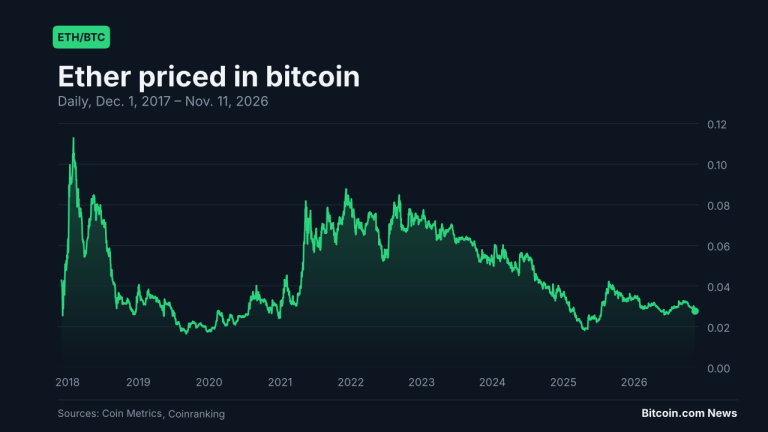
How Buterin Complicates Ethereum’s Wall Street Pitch by Aiming at Bitcoin
Vitalik Buterin’s latest pivot in how Ethereum should be valued might make traditional Wall Street investors dizzy. The narrative...

Ethereum faces temporary issues due to cloud provider malfunction
Cloud dependency highlights Ethereum's vulnerability, urging diversification to ensure network resilience and uninterrupted user a...