Ethereum futures premium hits 1+ year low — Is it time to buy the ETH bottom?
Ether (ETH) price fell 9.3% between March 26 and March 28, testing the $1,860 level for the first time in two weeks. This correction led to over $114 million in liquidations of leveraged ETH futures and caused the premiu...
Archive context
Older archive item. Useful for background and entity history, but not a fresh market-moving signal.

Ether (ETH) price fell 9.3% between March 26 and March 28, testing the $1,860 level for the first time in two weeks. This correction led to over $114 million in liquidations of leveraged ETH futures and caused the premium relative to the regular spot market to drop to its lowest level in over a year.
Some traders have said that the rock-bottom ETH futures premium is a bottom signal, but let’s dig deeper into the data to see if this perspective makes any sense.
ETH 1-month futures premium relative to spot markets. Source: Laevitas.ch
Ether’s monthly futures typically trade above the regular spot price as sellers demand compensation for the longer settlement period. A 5% to 10% annualized premium usually indicates neutral markets, reflecting the cost of opportunity and the exchanges’ risk. However, ETH futures dropped below this threshold on March 8, following a 24% price correction in the prior two weeks.
The current 2% ETH futures annualized premium suggests a lack of demand for leveraged longs (buys), but this measure is highly influenced by recent price movements. For example, on Oct. 10, 2024, the ETH futures premium dropped to 2.6% after a 14% price correction in two weeks, but the indicator rose to 7% as ETH regained most of its losses. Essentially, the futures premium rarely signals changes in the spot price trend.
ETH whales are afraid Ether price will fall furtherTo determine if whales have lost interest in Ether, it is crucial to observe how the market is pricing put (sell) options compared to call (buy) options. When traders anticipate a downtrend, the 25% delta skew metric rises above 6%, indicating a higher demand for hedging strategies. In contrast, periods of bullishness usually push the skew below -6%.
Ether 1-month options 25% delta skew (put-call). Source: Laevitas.ch
Currently, at 7%, the ETH options’ 25% delta skew suggests a lack of conviction among professional traders, raising the likelihood of further bearish momentum.
From a derivatives market perspective, there is little indication that the recent ETH price correction has bottomed out. Essentially, investors are not confident that the $1,800 support will hold.
Some analysts argue that the sharp decline in Ethereum network activity is the primary reason for the reduced appeal of ETH, while others suggest that the shift toward layer-2 scalability has significantly diminished the potential of base chain fees. Given the need to compensate network validators, the lack of capital inflow requires more ETH issuance, which negatively affects net returns from native staking.
The Ethereum network faces steep competitionAttempting to pinpoint the reasons behind sellers' motivations is futile, especially when considering Ethereum’s competition, which has expanded from blockchains like BNB Chain and Solana to networks tailored for specific challenges. Examples include Hyperliquid, focused on synthetic assets and perpetual trading, and Berachain, which is apparently better suited for staked assets in cross-liquidity pools.
Related: Timeline: Jelly token goes sour after $6M exploit on Hyperliquid
The success of certain decentralized applications (DApps) could serve as the final blow to Ether. For example, Ethena, the synthetic dollar protocol on Ethereum, is transitioning to its own layer-1 blockchain. The project, currently holding $5.3 billion in total value locked (TVL), raised $100 million in December 2024 to support this shift.
However, it may be premature to claim that ETH price will continue to fall, as a major protocol update is only weeks away. Investors should carefully track the practical benefits of Ethereum’s Pectra upgrade, particularly in terms of base layer fees and overall usability for the average user. Until then, the chances of ETH outperforming the broader altcoin market remain slim.
This article is for general information purposes and is not intended to be and should not be taken as legal or investment advice. The views, thoughts, and opinions expressed here are the author’s alone and do not necessarily reflect or represent the views and opinions of Cointelegraph.
Why this matters
This ethereum story adds another data point to the current market tape and is useful when read alongside nearby source coverage.
Original source
Read on CointelegraphRelated market context

Altcoin demand meets $18B threat as flows move into RWA perps as just 19% of traders keep alts
In the markets Talos tracked, daily volume in RWA perpetual futures tied to equities, commodities and indices rose from less than...

Ethereum ETFs Pull In $270M As BlackRock Leads September 21 Rebound
TL;DR US spot Ethereum ETFs recorded $270.0 million of net inflows for the September 21 session. BlackRock’s ETHA led the day with...

Cloudflare Exec Says Ethereum’s Original Sharding Plan Could Work for Stablecoin Payments
Will Papper, Cloudflare‘s director of product for agent payments, said a blockchain split into parallel shard chains, the design E...

ETH USD Loses Ground as Ethereum Price Analysis Remains Targeting $3,000 This Week
Ethereum Price Prediction, September 23: Ethereum (ETH) trades at $2,735, down a marginal 0.61% over the past 24 hours, a pause, n...
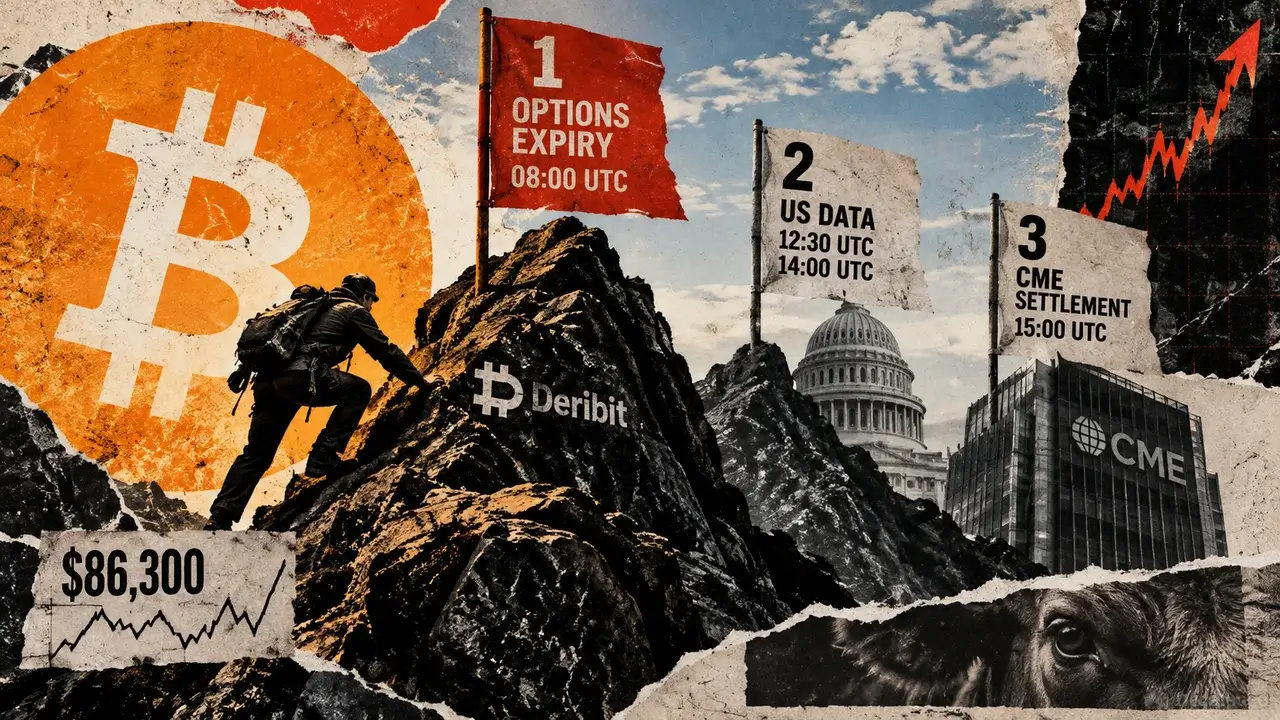
Bitcoin faces $16 billion options expiry Friday, then two more tests hit the rally
Bitcoin options carrying roughly $16 billion in notional value expire on Deribit at 08:00 UTC on Friday, Sept. 25. Calls account f...

BlackRock ETF clients purchase $51M in Ethereum
Institutional adoption of Ethereum ETFs highlights a shift towards regulated crypto investments, potentially reshaping traditional...