Ethereum Gas At 1 Gwei Gives Mainnet Users A Rare Cheap Window
Ethereum mainnet is rarely described as cheap, but 1 gwei gas changes the tone. For users who have spent years avoiding mainnet transactions because of cost, this kind of fee environment creates a very different experien...
Archive context
Older archive item. Useful for background and entity history, but not a fresh market-moving signal.

Ethereum mainnet is rarely described as cheap, but 1 gwei gas changes the tone. For users who have spent years avoiding mainnet transactions because of cost, this kind of fee environment creates a very different experience.
The useful way to read this is not as a guaranteed price signal, but as a fresh piece of information in a market that is trying to sort real developments from noise. The trade-off is that low fees also reduce the amount of ETH burned through the fee mechanism. For investors who care about Ethereum’s monetary narrative, that matters. Cheap usage is positive for adoption, but it can soften the burn story if network demand remains low.
For more details, visit the official Etherscan platform.
TL;DR- Ethereum gas fees have fallen toward 1 gwei.
- Lower fees make mainnet DeFi and wallet activity more accessible.
- The downside is that reduced base fees also mean less ETH is burned through transaction activity.
Lower gas fees are good for users. Swaps, transfers, NFT interactions, and DeFi management become easier to justify when the cost of pressing a button is no longer painful. That can bring some activity back to mainnet, especially for smaller wallets.
The trade-off is that low fees also reduce the amount of ETH burned through the fee mechanism. For investors who care about Ethereum’s monetary narrative, that matters. Cheap usage is positive for adoption, but it can soften the burn story if network demand remains low.
The Market ReadUse Etherscan as the data anchor and explain the burn trade-off clearly.
That is the balance readers need to keep in mind. Crypto markets are quick to turn every update into a single-direction trade, but most durable stories are more layered than that. They matter because they change positioning, incentives, infrastructure, or regulation over time.
What Comes Into Focus NowFrom here, the important thing is follow-through. If the source data, company update, filing, or on-chain record continues to move in the same direction, this can become part of a larger trend. If it stalls, it is still useful as a snapshot of where attention is sitting today.
For traders and readers, the cleaner takeaway is to separate the confirmed development from the speculation around it. The confirmed part is what deserves coverage. The speculation is what needs caution.
For Ethereum readers specifically, the story is useful because it gives a clearer frame for the next few sessions. It tells them what to watch, which part of the market is reacting, and where the first obvious risk sits. That is more valuable than simply saying a token, company, or regulator has made a move. The useful work is in connecting the update to liquidity, positioning, adoption, enforcement, or user behaviour without pretending that any single headline controls the whole market.
The practical question now is whether this remains an isolated update or becomes part of a chain of follow-through. A second filing, another wallet move, fresh dashboard data, a new governance vote, or a stronger market reaction can all turn a clean single-day story into a broader narrative. Without that follow-through, it still matters, but more as a marker of where attention was concentrated on July 8 than as a complete trend on its own.
That distinction is especially important in a market where headlines can travel faster than context. A source-backed update gives readers something firmer to work with, but it does not remove liquidity risk, execution risk, or the chance that traders fade the initial reaction once the first wave of attention passes.
In that sense, the headline is only the starting point. The better read is to watch how builders, exchanges, funds, wallets, regulators, or large holders respond after the first announcement has moved through the feed.
This report is based on information from etherscan.io.
This article was written by the News Desk and edited by Samuel Rae.
Why this matters
Ethereum is showing up inside the Regulation theme, so this story is worth tracking for follow-through rather than treating it as a one-off headline.
Original source
Read on NewsBTCRelated market context

Injective proposes fixed gas fees to make DeFi trading costs predictable
Injective's fixed gas fees could enhance DeFi trading efficiency, offering cost predictability and potentially attracting more hig...

Bitcoin defies $800 million crypto wipeout as South Korea’s AI stock market crashes
Bitcoin rebounded above $83,000 on Tuesday despite a sharp Asian stock selloff, as cryptocurrency liquidations exceeded $800 milli...
Ethereum Name Service plans major .eth overhaul with one irreversible catch for domain holders
Ethereum Name Service has proposed activating ENSv2 without requiring existing .eth domain holders to migrate to the new system. T...
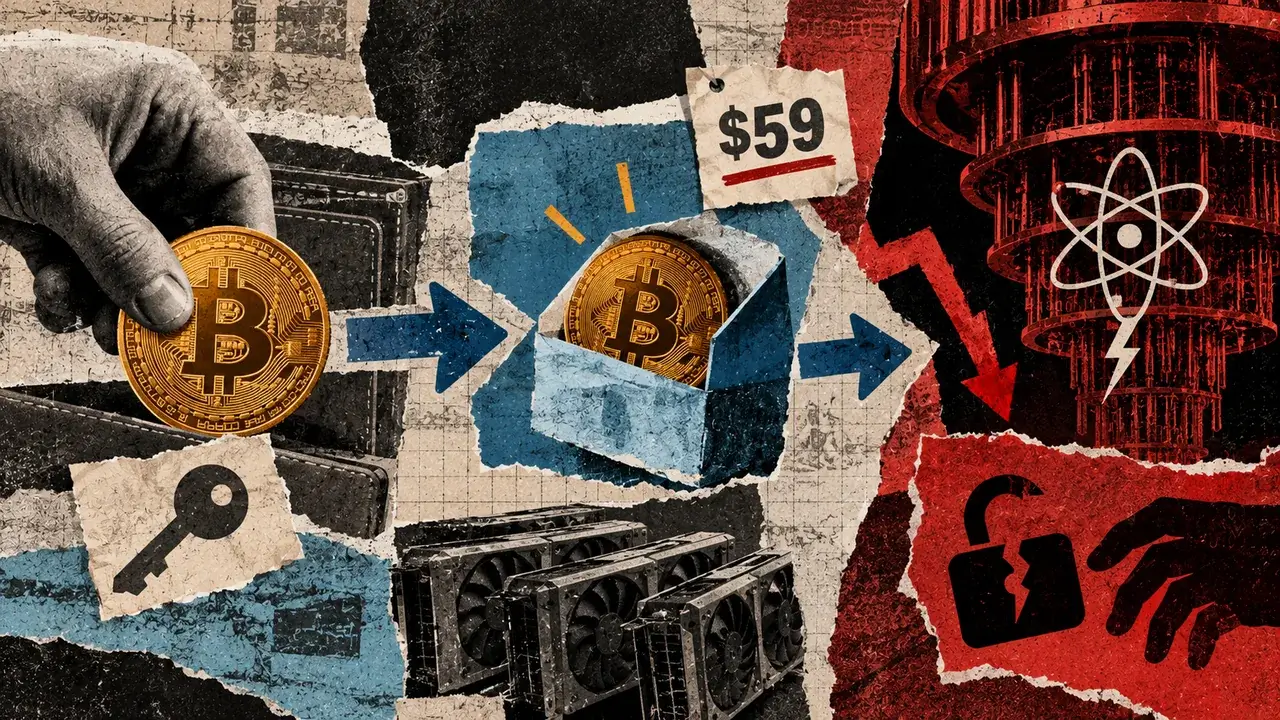
Bitcoin’s quantum-safe protection gets 82% cheaper as researchers race to secure 6 million exposed BTC
Researchers have cut the estimated computing cost of a specialized quantum-safe Bitcoin transaction by 82% to $59. Data from the Q...

NEAR Intents’ General Manager Says Part of the $3.8 Million Exploit Came Back in Monero
The attacker who drained about $3.8 million from NEAR Intents returned only part of it in Bitcoin, the protocol’s general manager...
Researchers Build First Working Post-Quantum Defense for Bitcoin’s Lightning Network
Bitcoin Magazine Researchers Build First Working Post-Quantum Defense for Bitcoin’s Lightning Network Whether or not quantum compu...