Ethereum Is ‘The Biggest Macro Trade Over The Next 10–15 Years,’ Says Tom Lee
Tom Lee, co-founder and head of research at Fundstrat Global Advisors and chairman of Bitmine, used his appearance on Natalie Brunell’s Coin Stories to press a sweeping thesis for Ethereum: institutional tokenization is...
Archive context
Older archive item. Useful for background and entity history, but not a fresh market-moving signal.

Tom Lee, co-founder and head of research at Fundstrat Global Advisors and chairman of Bitmine, used his appearance on Natalie Brunell’s Coin Stories to press a sweeping thesis for Ethereum: institutional tokenization is arriving at scale, stablecoins have become crypto’s first mass-market product, and the dominant smart-contract network is positioned to intermediate both.
“Ethereum is arguably the biggest macro trade over the next 10-15 years as Wall Street runs onto the blockchain and as AI drives adoption of token economics – the largest layer 1 is ethereum,” he commented via X, framing Ethereum’s moment as analogous to Bitcoin’s institutional validation.
Why Ethereum Might Be The Biggest Macro TradeLee argued there is no contradiction between his longstanding Bitcoin optimism and his conviction on Ethereum. Bitcoin, in his telling, remains the monetary primitive and store of value. Ethereum, by contrast, is the execution layer for tokenized finance. “I don’t see this as a conflict,” he said when asked why he champions both assets. Drawing an analogy to equities, he added that investors can sensibly own scarce, category-defining names in parallel: “You know you should own both.”
The crux of Lee’s Ethereum case is the convergence of Wall Street’s tokenization push with real-world adoption of stablecoins. He described stablecoins as crypto’s first ubiquitous application and the accelerant for institutional on-chain activity. “That is the ChatGPT moment for crypto,” he said. “The first killer app for crypto has emerged… which is stablecoins, and now Wall Street is running to tokenize and maybe even financialize their entire system on the blockchain. But that means they require smart contracts.”
In Lee’s assessment, “the biggest and most secure blockchain with no downtime is Ethereum. And it’s legally compliant.” He further contended that “the majority of stablecoins and real-world assets that have been tokenized are taking place on Ethereum,” positioning the network as the default venue for capital-markets infrastructure to migrate on-chain.
Brunell pressed on perceived weaknesses introduced since Ethereum’s transition to proof-of-stake, including increased complexity, centralization vectors, bridge and Layer-2 attack surfaces. Lee acknowledged those critiques but weighed them against what he views as the incumbent system’s brittleness.
“These risks that you describe seem like smaller risks compared to the fragility of the existing financial system,” he said, pointing to legacy “trust vectors” and fraud rates in traditional rails. In other words, even with Ethereum’s trade-offs, the relative security-and-efficiency frontier still tilts in its favor for modern financial plumbing.
Lee linked his timeline to the institutional learning curve. When he first wrote about Bitcoin in 2017, he said, the investment community was just beginning to recognize a credible digital-gold thesis. “I think Ethereum is having its 2017 moment now because now is the time that Wall Street will take tokenization seriously and it’s taking place on Ethereum,” he said. That adoption vector—tokenized dollars and securities settling under programmable contracts—underpins his claim that Ethereum is the preeminent macro trade ahead.
Asked to choose a single asset for the next decade, Lee resisted the premise but ultimately answered in line with his current mandate. “If I had to choose… because I’m chairman of Bitmine, which is an Ethereum treasury, then I of course would choose Ethereum,” he said.
He closed by reiterating that generational shifts in technology and attitudes will keep compounding crypto’s addressable market, with both Bitcoin and Ethereum benefiting. But on the specific question of where institutional financial infrastructure is most likely to land, his stance was unambiguous: “Wall Street will take tokenization seriously and it’s taking place on Ethereum.”
At press time, ETH traded at $3,625.
Why this matters
This ethereum story adds another data point to the current market tape and is useful when read alongside nearby source coverage.
Original source
Read on NewsBTCRelated market context

CFTC chair warns of mass tokenization shift in financial markets over next decade
The anticipated mass tokenization could revolutionize financial systems, prompting regulatory adaptations and influencing crypto m...

CFTC Weighs Enforcement Probe Into Kalshi’s Ether Perps Over Repeating $5,500 Trades
The Commodity Futures Trading Commission is examining trading in Kalshi’s ether perpetual futures market, where one repeating orde...

ETH USD Loses Ground as Ethereum Price Analysis Remains Targeting $3,000 This Week
Ethereum Price Prediction, September 23: Ethereum (ETH) trades at $2,735, down a marginal 0.61% over the past 24 hours, a pause, n...
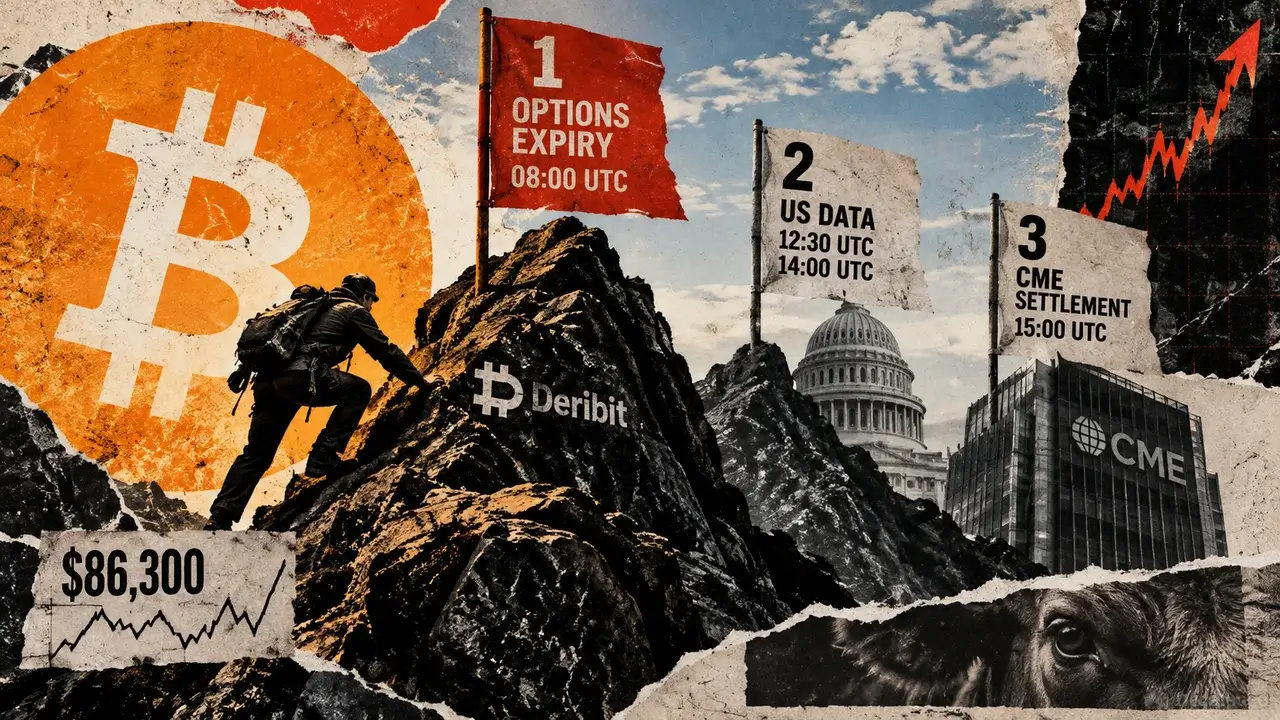
Bitcoin faces $16 billion options expiry Friday, then two more tests hit the rally
Bitcoin options carrying roughly $16 billion in notional value expire on Deribit at 08:00 UTC on Friday, Sept. 25. Calls account f...

Bitcoin ETFs just absorbed 11,500 BTC in their biggest buying day in nearly two years
US spot Bitcoin exchange-traded funds (ETFs) pulled in nearly $1 billion as BTC broke above $86,000, marking their strongest inflo...

Ethereum ETFs Pull In $270M As BlackRock Leads September 21 Rebound
TL;DR US spot Ethereum ETFs recorded $270.0 million of net inflows for the September 21 session. BlackRock’s ETHA led the day with...