Ethereum scaling solution XDC Network presents XDPOS2.0, an enhanced consensus for scalability and forensics.
Scalability problems have plagued Ethereum, the second-largest blockchain network in the world, for some time now. The proof-of-work model’s inability to scale demonstrates that blockchains implementing this consensus pr...
Archive context
Older archive item. Useful for background and entity history, but not a fresh market-moving signal.

Scalability problems have plagued Ethereum, the second-largest blockchain network in the world, for some time now. The proof-of-work model’s inability to scale demonstrates that blockchains implementing this consensus process are limited to transaction throughput rates of a single digit.
It is evident to any developer who has attempted to create a widely utilized decentralized application that Ethereum isn’t nearly ready in its current form. The user experience is awful because transactions take a long time to clear, and every basic function must be paid for. Everything comes down to a generic “scalability” issue, and cost and poor throughput have been significant roadblocks to any severe adoption.
Ethereum has primarily decided on a course of action. Although Ethereum 2.0 is one of the most ambitious projects in the blockchain industry, it will be a significant step forward for decentralization if it succeeds as planned.
The Ethereum blockchain’s and other top blockchain platforms’ scalability issues have an inventive answer in the form of the XDC Network. The 108 Masternodes that make up the XinFin Delegated Proof of Stake (XDPoS) consensus architecture that powers the XDC Network enable cheap transaction fees and 2-second transaction confirmation speeds. Innovative methods, such as double validation, staking via smart contracts, and simple randomization procedures, ensure security, stability, and a trustless ledger.
The XDC Network supports all EVM-compatible smart contracts, protocols, and atomic cross-chain token transfers. Sharding, EVM parallelization, private-chain creation, and hardware integration are a few examples of new scaling strategies that will be continuously investigated and included in the Masternode architecture of the XDC Network. For both small and large organizations, it will be the perfect scalable smart-contract public blockchain for decentralized apps, token issuances, and token integrations. Currently, multiple projects are already built on XDC Network, and it can be found among the utilities of XDC on XinFin’s official website.
With its practical and secure consensus protocol, XDC Network addresses the traditional blockchains’ primary bottlenecks. Hence, XDC Network is a trustworthy Ethereum-compatible and Ethereum-competitive blockchain platform that offers a foundation layer for business blockchain applications and a strong ground for blockchain innovation at all levels.
A novel consensus engine developed exclusively for XDC, XDPoS 2.0, has been released in testnet. With a full year of beta testing necessary before the new protocol is scheduled to be implemented in the first quarter of 2023, XDPoS 2.0 is viewed as a significant milestone and by far the most complex upgrade since the XDC Network’s inception.
This upgrade, which is entirely backward-compatible in terms of APIs and is based on the most cutting-edge BFT consensus mechanism, will give the XDC Network military-grade security and performance while using minimal resources. Additionally, it will clear the way for the XDC Network’s future development. Multiple tools such as Origin – Token creation Platform, Remix, Explorer, Tools & documentations are available to help the newbies planning to build on XDC Network. Already, the developmental conversations are active on Xdc.dev, a community for blockchain developers. It acts as one of the resource centers for blockchain engineers, including a knowledge base, tools, and support.
Why this matters
This ethereum story adds another data point to the current market tape and is useful when read alongside nearby source coverage.
Original source
Read on NewsBTCRelated market context

Ethereum Dancing on Two Fronts as Quantum Upgrade Advances and Treasury Leverage Bites
Ethereum developers want to upgrade the network to be quantum-ready by 2027, potentially accelerating one of its biggest security...

ChatGPT Wallet vs. Google Gemini: Who Will Lead AI Shopping and Personal Finance?
ChatGPT Wallet enables AI agents to complete online purchases with user approval, while Google Gemini uses financial transaction d...
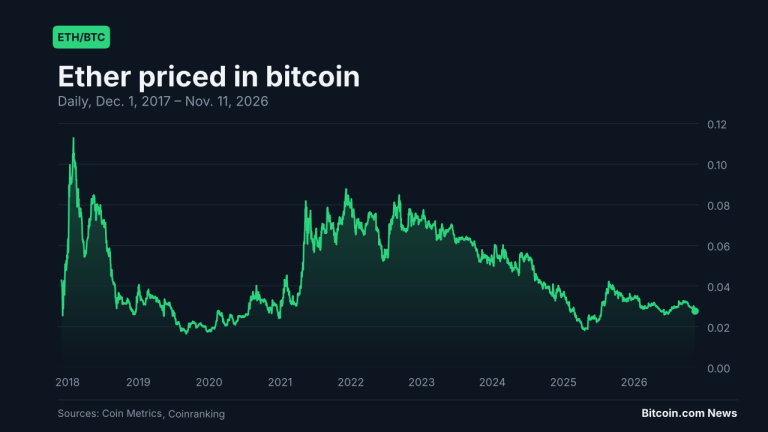
How Buterin Complicates Ethereum’s Wall Street Pitch by Aiming at Bitcoin
Vitalik Buterin’s latest pivot in how Ethereum should be valued might make traditional Wall Street investors dizzy. The narrative...

Ethereum and Layer 1s Explained
Ethereum 101 explains how Ethereum made blockchains programmable. It covers smart contracts, accounts and the EVM, ETH and gas fee...
Ethereum Gas Fees: From Wallet Estimate to Final Cost
Gas measures computational work. A real Ethereum transaction shows why a spending ceiling can exceed the fee finally charged.... R...

Why Tokenized Gold’s Explosive Growth Isn’t the Full Story: Xash CEO
Tokenized gold’s booming market cap and trading volumes haven’t translated into decentralized finance adoption. According to Xash...