Ethereum’s 2030 Shift: Vitalik Maps a Cryptographic World Computer Beyond Blockchain
Key Takeaways: According to Vitalik Buterin, Ethereum is going further than simply being a blockchain to “cryptographic world computer.” Post-Hegotá upgrades could combine Lean consensus, zero-knowledge proofs, FOCIL, pr...
Watchlist
Published in the last two hours. The story has cross-source confirmation.

Key Takeaways:
- According to Vitalik Buterin, Ethereum is going further than simply being a blockchain to “cryptographic world computer.”
- Post-Hegotá upgrades could combine Lean consensus, zero-knowledge proofs, FOCIL, proof aggregation and stronger privacy.
- Ethereum’s long haul plan includes making verification more lightweight and spreading out the processing of transactions and blocks among additional participants.
User Score
8.7
Follow us on Google NewsEthereum is transitioning from what could be called a classic blockchain and Vitalik Buterin has explained a significant backplane redesign for the network.
The cryptographic world computer:https://t.co/ueayODeUPo
My attempt to express in somewhat concise terms the true meaning of basically everything planned to happen to Ethereum starting from the fork after Hegota. It’s really not just a blockchain anymore. It’s a hybrid…
— vitalik.eth (@VitalikButerin) September 27, 2026
The Ethereum co-founder stated in the September 27 post that its functionality will be a hybrid combination of blockchain consensus, new cryptographic methods, and offchain distributed infrastructure.
Ethereum Shifts Away From Full Re-ExecutionA major change is that of how the operations of Ethereum are verified. Traditional blockchains suffer from that nodes have to download that data and also run those transactions themself. However, Buterin believes that in time, data sampling and verifying cryptographic proofs will increasingly take the place of that process on Ethereum.
PeerDAS has already done something similar with Ethereum, letting nodes sample data chunks they don’t need to download.
Future versions might significantly leverage SNARKs and STARK-based systems to enable users to validate the correctness of computation without running all operations again.
This transition may also ease hardware requirements and provide robust verification assurances, which simplifies verification by users.
Read More: Ethereum Faces Brutal Oil Correlation as Tom Lee Sees Massive 2026 ETH Rebound
Mempools Could Process Proofs Before Blocks Are BuiltAdditionally, Buterin noted that EIP-8288 is a proposed draft that aggregates signatures and cryptographic proofs within Ethereum’s mempool.
Nodes can also bundle all of the large proofs or signatures into one recursive STARK, which is then submitted to block builders.
It’s especially relevant once Ethereum moves to quantum-resistant signatures, which would need much more data and resources than the existing ones.
The mempool finally became a piece of the cryptographic majority rule machinery of Ethereum.
Hegotá Could Close Ethereum’s Conventional Upgrade EraEthereum’s final “normal” fork in what could be a series of deeper protocol upgrades, is Hegotá, which is expected to take place in 2027, according to Buterin. Subsequent improvements could focus on recursive STARKs, automated formal verification, optimisation of consensus and quantum-defence.
The implementation is already planned for Hegóta as FOCIL (EIP-7805). It enables a committee of validators to enforce transactions to be placed in a block, thus limiting the ability of a single block builder to exclude transactions.
Mechanism is part of larger Buterin’s goal of multi-party block building and enhanced censorship resistance.
Read More: Vitalik Says AI Can Secure Crypto, Keeps 90% of His Wealth in Crypto Despite AI Hacks
Privacy and Parallel Computation Move to the CoreEthereum’s future development also emphasizes private mempools, zero knowledge account policies and parallel computation. Buterin believes that applications will begin to organize tasks, allowing computation to be completed or consolidated prior to the final block.
This could help to make Ethereum more efficient, while at the same time managing the state is more difficult. One of the biggest engineering challenges in the transition will be coordinating simultaneous access to massive amounts of blockchain state.
The ultimate goal is an Ethereum based on a bigger framework of cryptographic proofs, privacy and decentralized computation using blockchain consensus as one of several layers.
The post Ethereum’s 2030 Shift: Vitalik Maps a Cryptographic World Computer Beyond Blockchain appeared first on CryptoNinjas.
Why this matters
Ethereum is a tracked market entity in the DigitalMoneyBox archive, making this useful context for readers monitoring repeated mentions and follow-up coverage.
Original source
Read on CryptoNinjasSame story, other sources
Cross-source coverage
2 sources

Vitalik Buterin maps Ethereum’s shift beyond a blockchain in sweeping 2030 vision
Buterin wants Ethereum to do far more work without forcing every computer on the network to rep...
Related market context
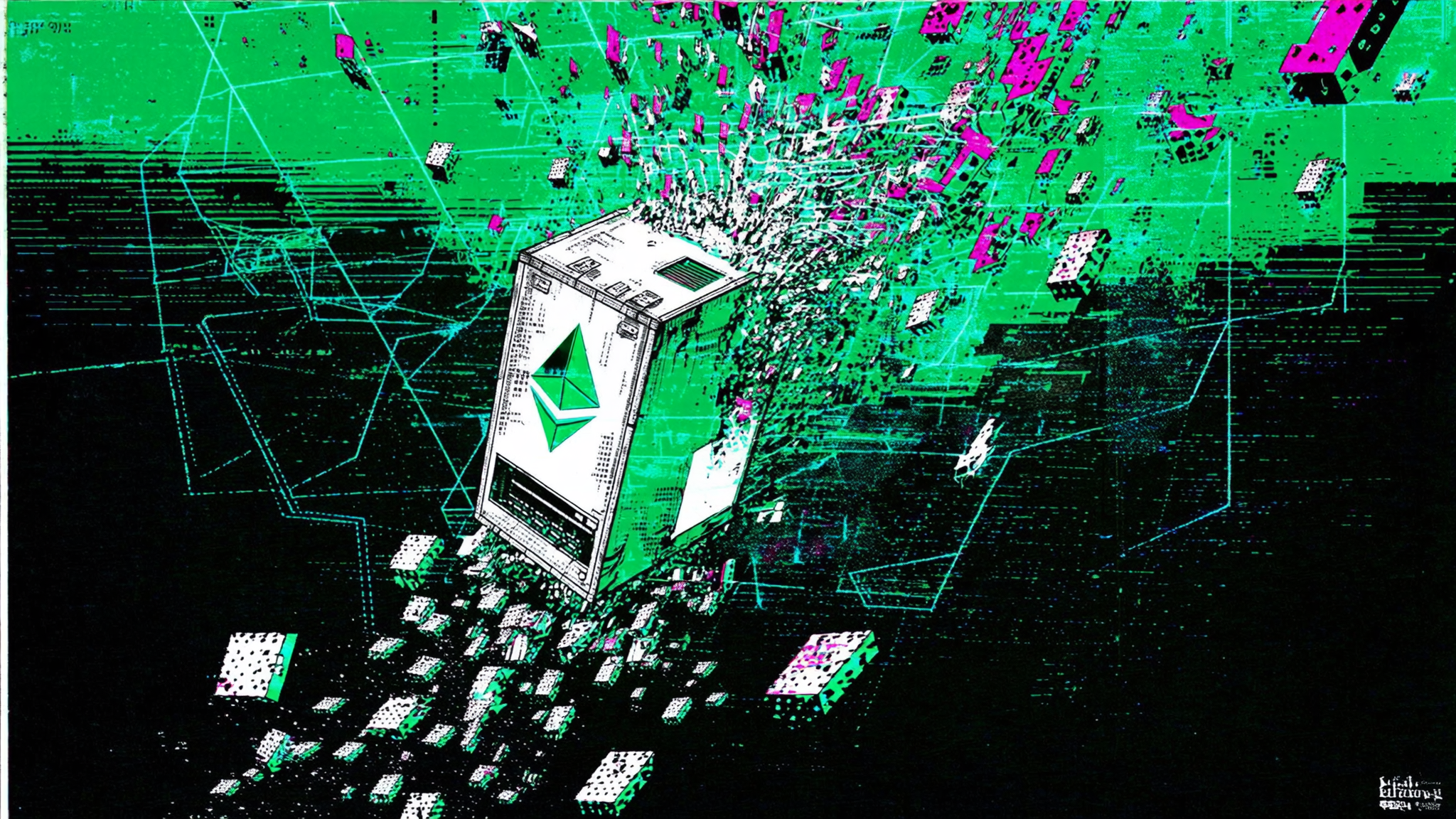
Buterin Maps Ethereum's Post-Hegota 'Cryptographic World Computer'
Ethereum’s upgrades after Hegota should make cryptographic proof-checking and distributed offchain work central to the network, re...

Ethereum evolves into a cryptographic world computer, says Buterin
Ethereum's evolution into a cryptographic world computer could redefine decentralized computing, enhancing privacy, scalability, a...

‘It’s really not just a blockchain anymore’: Vitalik Buterin maps Ethereum’s path to 2030
Ethereum co-founder Vitalik Buterin said Ethereum is "really not just a blockchain anymore" and laid out how its design will chang...

Vitalik Buterin outlines Ethereum’s ambitious roadmap to 2030
Ethereum's ambitious roadmap could redefine its scalability and security, potentially boosting long-term market confidence and val...
Buterin Says Ethereum’s Last ‘Normal’ Fork Is Planned for 2027
Ethereum co-founder Vitalik Buterin says the network is heading toward a future where calling it a blockchain barely describes the...

THORChain under fire over Bitget, ETH evolves beyond blockchain: Hodler’s Digest
THORChain refuses to blacklist addresses linked to the Bitget hack. Vitalik Buterin says Ethereum is evolving from being a mere bl...