Expert Warns Ethereum Faces A ‘Slow And Painful Death’: Here’s Why
Joe Consorti, an analyst at The Bitcoin Layer and advisor to self-custody app Theya, released an incisive critique on the future of Ethereum in comparison to Bitcoin, shedding light on why he believes Ethereum is facing...
Archive context
Older archive item. Useful for background and entity history, but not a fresh market-moving signal.

Joe Consorti, an analyst at The Bitcoin Layer and advisor to self-custody app Theya, released an incisive critique on the future of Ethereum in comparison to Bitcoin, shedding light on why he believes Ethereum is facing a “slow and painful death.” Published on X, his analysis titled “The Slow & Painful Death of Ethereum” compares the two leading cryptocurrencies, emphasizing significant underperformance and declining market interest in Ethereum.
Why Ethereum Is ‘Dying’Consorti begins his analysis by highlighting the stark contrast in performance metrics between Ethereum and Bitcoin over the past year. Ethereum, according to Consorti, has suffered a 10.6% drop in value since January, whereas Bitcoin has recorded a substantial 42% increase. This divergence is underscored by the ETH/BTC ratio which has recently broken below the 0.05 level, a critical threshold for the two assets historically. This ratio, Consorti argues, is more than just a number; it represents the shifting balance of power in the crypto market.
“The more important gauge of the staying power of Ethereum, and all of “crypto” by extension, is ETH/BTC. By removing dollars from the denominator, we can clearly see that from a market dominance perspective, all of “crypto” is on life support. ETH/BTC has cratered through the key 0.05 level, an arbitrary threshold but crucial to the trading behavior of the two assets over the years,” Consorti writes.
Talking about the reasons, Consorti points to the differing narratives that have driven investor interest in both cryptocurrencies. Ethereum’s narrative has largely been built around its technological advancements and potential applications, from smart contracts to decentralized finance. However, Consorti suggests that this narrative is no longer resonating with investors as it once did, leading to diminished hype.
On the other hand, Bitcoin continues to attract investors with its clear value proposition of being a decentralized, finite digital asset, which Consorti refers to as “absolute scarcity.” The analyst points to the performance of the US spot Exchange Traded Funds (ETFs). He notes that US-based Ethereum ETFs have experienced consistent net outflows, totaling over $110 million during an 8-day streak, indicating waning investor confidence. In stark contrast, Bitcoin ETFs have not only launched successfully but have continued to attract significant capital, accumulating approximately $750 million in net inflows.
Another pivotal aspect of Consorti’s argument centers around the monetary policies of Ethereum and Bitcoin. Ethereum’s shift to a Proof of Stake (PoS) consensus mechanism in 2022 initially led to a deflationary supply mechanism. However, this was short-lived, as highlighted by a subsequent upgrade that increased Ethereum’s supply by 200,000 ETH over five months. “The ‘ultrasound money’ narrative has also died on the vine,” Consorti adds.
He criticizes the frequent changes of monetary policies, contrasting it with Bitcoin’s fixed supply of 21 million coins, which he argues offers investors a reliable hedge against inflation and monetary debasement. This makes BTC appealing to everyone. “Bitcoin’s fixed monetary policy and absolutely scarce supply schedule are a breath of fresh air for investors who are keen on hedging themselves from unfettered monetary debasement. While ETH ETFs are off to an abysmal start, Bitcoin ETFs have managed to grab the number 3 and 9 spot in YTD net inflows amongst all US-based ETF products,” Consorti notes.
The broader financialization of Bitcoin is also a key theme in Consorti’s analysis. He discusses recent developments such as Nasdaq’s filing to allow Bitcoin options trading, which reflects Bitcoin’s growing integration into mainstream financial markets. This, Consorti implies, not only enhances Bitcoin’s legitimacy but also its attractiveness as an investment vehicle relative to Ethereum, which has seen its ecosystem deteriorate in parallel with the price decline of its native token.
At press time, ETH traded at $2,522.
Why this matters
This ethereum story adds another data point to the current market tape and is useful when read alongside nearby source coverage.
Original source
Read on NewsBTCRelated market context

Ethereum Price Prediction: BlackRock Says AI Stablecoin Payments Could Drive ETH Demand
Ethereum trades at $2,695, down 2.6% over the past 24 hours, with the latest price prediction still shaped by its 10.3% seven-day...

ARK Launches Tokenized Venture Fund on Ethereum With $500 Minimum
Cathie Wood’s ARK Invest has launched tokenized shares of its ARK Venture Fund (ARKVX) on Ethereum through Securitize, with a $500...
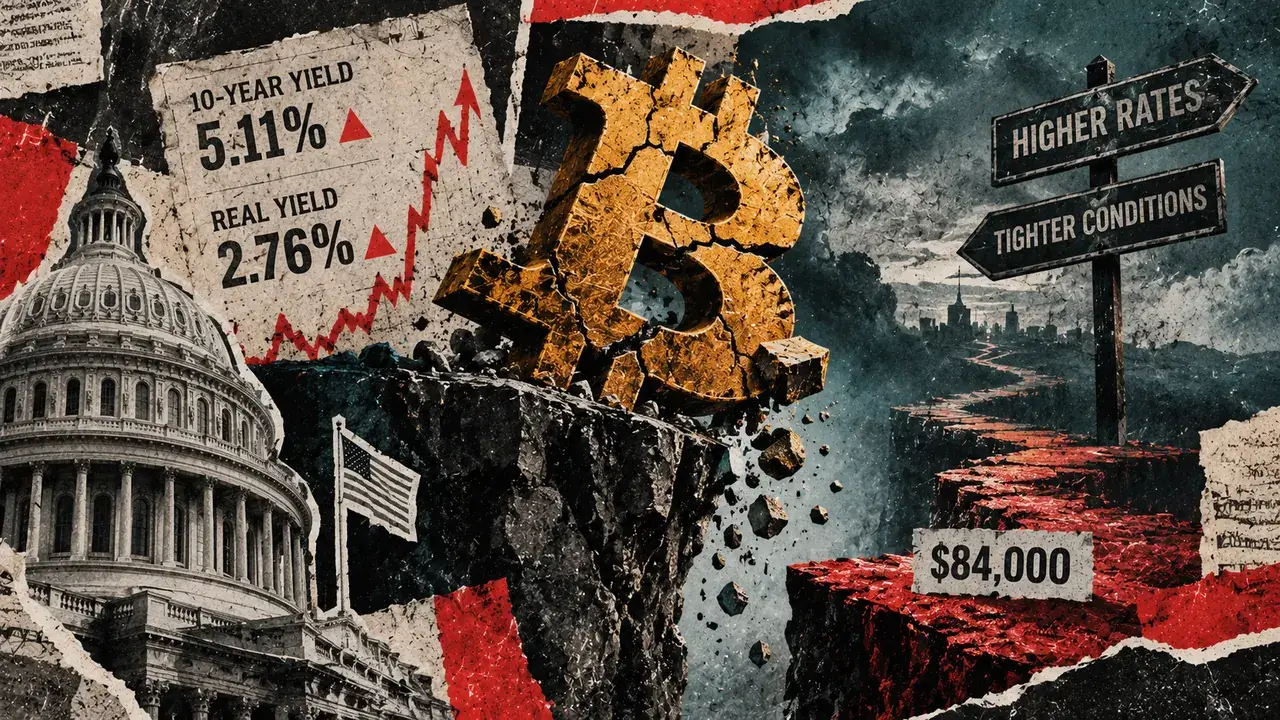
Why surging US real yields are quietly forcing Bitcoin under $84,000
Bitcoin registered an intraday low at $83,500 on Sept. 23, the same day the US 10-year Treasury yield closed at 5.11%, up 15 basis...

BlackRock ETF clients purchase $51M in Ethereum
Institutional adoption of Ethereum ETFs highlights a shift towards regulated crypto investments, potentially reshaping traditional...

Cloudflare Exec Says Ethereum’s Original Sharding Plan Could Work for Stablecoin Payments
Will Papper, Cloudflare‘s director of product for agent payments, said a blockchain split into parallel shard chains, the design E...

Ethereum Draft Proposes Compliance Controls for Confidential RWA Tokens
Developer Aryeh Greenberg has proposed an Ethereum token interface that would add compliance checks and issuer enforcement powers...