Goldman Sachs Analysis: Ethereum’s Path to Scalability
Source: Adobe Ethereum (ETH)‘s upcoming Dencun upgrade, expected in the first quarter of 2024, will play a crucial role in the blockchain’s journey towards scalability as a settlement layer. In a recent note, Goldman Sac...
Archive context
Older archive item. Useful for background and entity history, but not a fresh market-moving signal.

Ethereum (ETH)‘s upcoming Dencun upgrade, expected in the first quarter of 2024, will play a crucial role in the blockchain’s journey towards scalability as a settlement layer.
In a recent note, Goldman Sachs highlighted the primary impact of the Dencun upgrade, which is increasing data availability for layer-2 rollups through proto-danksharding.
The bank claimed that this enhancement will result in reduced transaction costs for rollups, ultimately benefiting end users.
“Dencun’s primary impact will be to increase its data availability for layer-2 rollups via proto-danksharding, resulting in a reduction of rollup transaction costs which will be passed on to end users.”
In the context of blockchain technology, a layer 1 network serves as the foundation or underlying infrastructure.
Layer 2 refers to off-chain systems or separate blockchains built on top of layer 1s.
Rollups, which are part of layer 2, process transactions on a faster blockchain and then transfer the data back to the parent blockchain at a fraction of the cost.
The proto-danksharding feature of the Dencun upgrade will not only improve data availability for layer-2 rollups but also lay the groundwork for future scalability upgrades, including danksharding.
Danksharding is a methodology that aims to enhance Ethereum’s scalability by dividing the network into shards, expanding data storage capacity rather than solely increasing transaction throughput.
Dencun to Improve Ethereum’s ScalabilityAccording to the Goldman Sachs report, Dencun will enhance Ethereum’s scalability through the implementation of rollups.
Additionally, it will optimize gas fees, improve network security, and introduce several housekeeping updates aimed at overall network improvement.
Meanwhile, Ethereum co-founder Vitalik Buterin has recently admitted that centralization of nodes is one of the network’s biggest challenges, given the fact that the majority of the 5,901 active Ethereum full nodes are run on centralized platforms such as Amazon Web Services (AWS).
The Ethereum mastermind said that he hopes in the future fully verified Ethereum nodes can “literally” run on a phone.
He claimed that solving the issue with centralization of full nodes is a “big piece of the puzzle” to making Ethereum more decentralized.
As reported, in an effort to maintain the decentralized nature of the ETH network, several prominent liquid staking providers have implemented or are in the process of implementing a self-limit rule.
The rule ensures that these providers will not own more than 22% of the Ethereum staking market, which could help address concerns over the growing centralization of Ethereum staking.
Rocket Pool, StakeWise, Stader Labs, Diva Staking, and Puffer Finance are some of the staking platforms that have already committed to the self-limit, Ethereum core developer Superphiz said in a recent tweet.
The post Goldman Sachs Analysis: Ethereum’s Path to Scalability appeared first on Cryptonews.
Why this matters
This ethereum story adds another data point to the current market tape and is useful when read alongside nearby source coverage.
Original source
Read on CryptonewsRelated market context

Circle Agent Marketplace Brings USDC Payments and Live Data Tools to Arc Blockchain
Key Takeaways: Circle Agent Marketplace now makes services available for AI agents on Arc. Agents have access to live web search,...

Elon Musk Grok AI Predicts a Bold Move for Ethereum in 2026
When prompted, the Elon Musk-backed Grok AI predicts a bold move for Ethereum (ETH) over the remainder of 2026. It claims that if...

Best Crypto Staking Platforms for 2026: 7 Options Compared
Staking is the closest thing crypto has to earning interest: you lock up a proof-of-stake asset to help secure its network, and in...
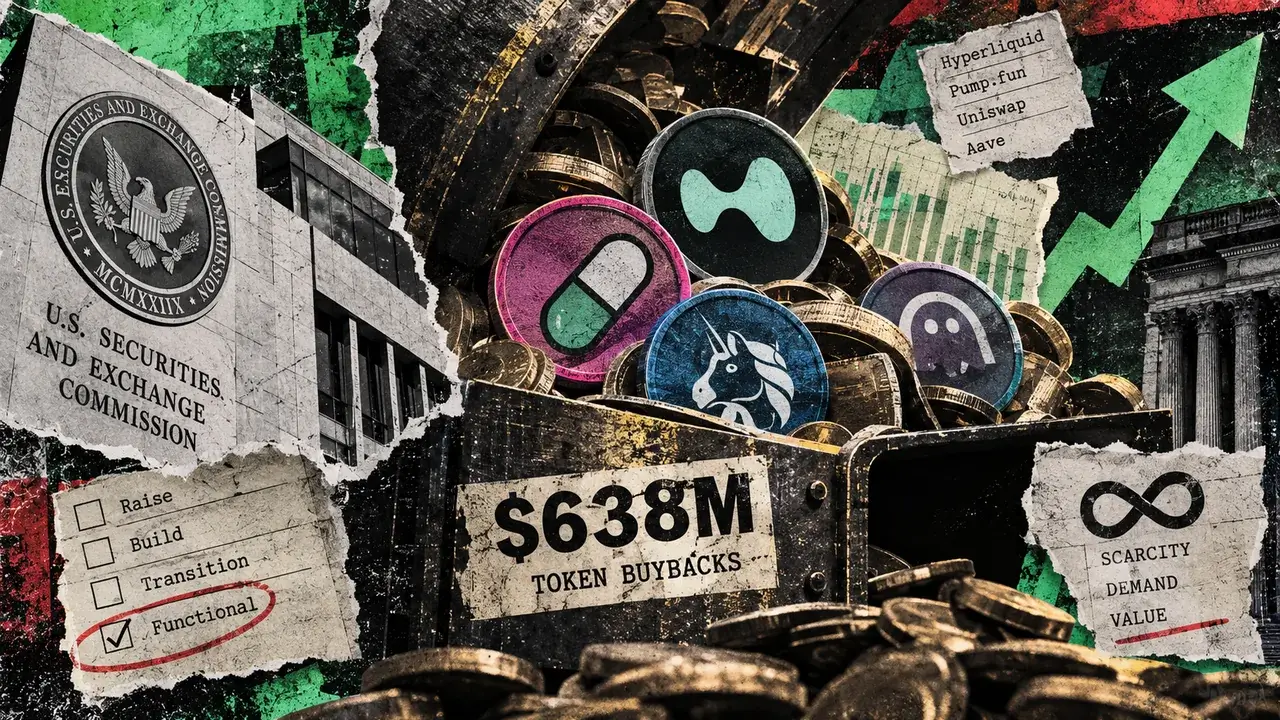
SEC clears regulatory hurdle as crypto token buybacks hit record $638 million
Crypto projects spent about $638 million with token buybacks through late August 2026, according to Allium Labs data. That is alre...

SEC Clarifies When Crypto Buybacks And Network Upgrades Can Raise Securities Questions
TL;DR SEC staff has published new FAQs explaining how federal securities laws may apply to crypto-asset buybacks, network upgrades...
The Clearing House Picks Quant For US Tokenized Deposit Network
The Clearing House has selected Quant to provide the interoperability and transaction-management layer for its On-Chain Money Init...