Rollkit Developers Leverage Bitcoin for Sovereign Rollups, Sparking Criticism from Ethereum Proponents
The Rollkit development team has announced that Bitcoin has been integrated as a means for sovereign rollups to store and retrieve data. The developers have stated that it is now possible to run the Ethereum Virtual Mach...
Archive context
Older archive item. Useful for background and entity history, but not a fresh market-moving signal.
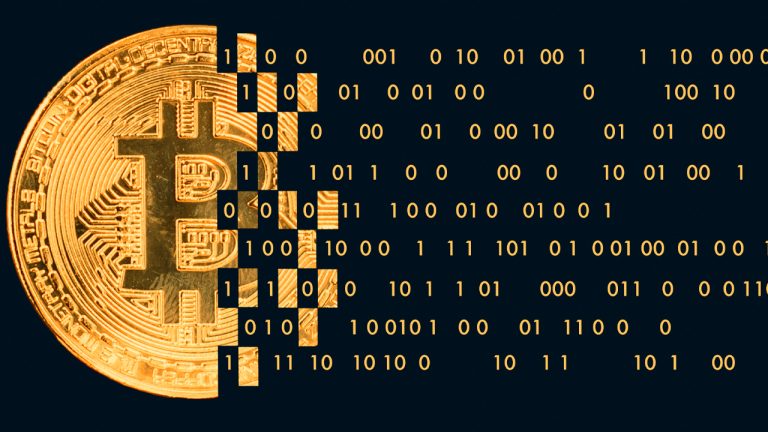
The Rollkit development team has announced that Bitcoin has been integrated as a means for sovereign rollups to store and retrieve data. The developers have stated that it is now possible to run the Ethereum Virtual Machine (EVM) on Bitcoin as a sovereign rollup. However, some Ethereum proponents have expressed dissatisfaction with the technology being referred to as a rollup, and have suggested that the team should avoid using the term.
Rollkit’s Modular Framework for Rollups and Its Potential Impact on the Blockchain Industry
On March 5, 2023, developers announced a new development that claims it is now possible to produce sovereign rollups to store and retrieve data using the Bitcoin blockchain. The team behind the project is Rollkit developers, who detailed that the technology allows for more possibilities for rollups and could help create a better block space fee market on Bitcoin. To make this possible, the Rollkit team used Taproot transactions to read and write data on Bitcoin and created the “bitcoin-da” package to provide the necessary interface. They also implemented the “SubmitBlock” and “RetrieveBlocks” functions for Rollkit to interact with Bitcoin.
“Rollkit is a modular framework for rollups that provides interfaces for plugging in different components, like data availability layers,” explained the Rollkit development team. “The newest addition is an early research implementation of a module that allows a Rollkit rollup to use Bitcoin for data availability.” The software programmers also noted that the Ordinal inscription trend on Bitcoin showed the team the possibilities, and they followed a similar design process. “At its core, all that was needed was two functions: one to submit rollup blocks and another to retrieve them,” the Rollkit developers said.
Following the announcement from Rollkit developers, a number of Ethereum proponents criticized the team for describing the process as a rollup. ETH supporter Ryan Berckmans said: “A ‘sovereign rollup on Bitcoin’ is actually an alt L1 that stores its block data on Bitcoin. It’s not a real rollup or a real L2. [In my opinion], the best way for us to fight back against these lies is to build an Ethereum zk L2 that puts its data on Bitcoin.”
Another person insisted, “Just because you have data availability doesn’t make it a rollup.” The founder of Interlay, Alexei Zamyatin, also criticized Rollkit’s announcement. “Pls ser, read this paper,” Zamyatin wrote. “You inherit *nothing* of Bitcoin’s security. Data availability – OK, but honestly, that’s been used since 2012. The entire post describes ‘I write some data to Bitcoin’ with fancy buzzwords,” Zamyatin added.
The Rollkit developers have released a demo video on Youtube of the technology in action. The team has also written a comprehensive blog post detailing how it works. “As we move towards a future where sovereign communities will form around different applications, asking them to incur the high cost and overhead of deploying a layer 1 blockchain to be sovereign is not sustainable,” the Rollkit blog post concludes. “Sovereign rollups fix this by making it possible to deploy a sovereign chain that inherits the data availability and consensus of another layer 1 chain such as Bitcoin.”
What do you think about the use of Bitcoin as a means for sovereign rollups? Do you believe it has the potential to create a better block space fee market on Bitcoin or do you agree with critics that it’s not a real rollup? Share your thoughts in the comments section below.
Why this matters
This ethereum story adds another data point to the current market tape and is useful when read alongside nearby source coverage.
Original source
Read on Bitcoin NewsRelated market context

Ethereum is not instant, but collateral could make it feel that way
When a payment app tells you a transfer is complete, you start making decisions. You hand over whatever you've sold, spend the mon...

Circle Agent Marketplace Brings USDC Payments and Live Data Tools to Arc Blockchain
Key Takeaways: Circle Agent Marketplace now makes services available for AI agents on Arc. Agents have access to live web search,...

Coinbase CEO Brian Armstrong wants internal teams to compete like startups, with AI agents as the referees
Coinbase's AI-driven internal competition model could accelerate innovation but risks embedding biases and creating uncharted orga...

Buterin Says Ethereum’s Last ‘Normal’ Fork Is Planned for 2027
Ethereum co-founder Vitalik Buterin says the network is heading toward a future where calling it a blockchain barely describes the...
Buterin Maps Ethereum's Post-Hegota 'Cryptographic World Computer'
Ethereum’s upgrades after Hegota should make cryptographic proof-checking and distributed offchain work central to the network, re...

Vitalik Buterin outlines Ethereum’s ambitious roadmap to 2030
Ethereum's ambitious roadmap could redefine its scalability and security, potentially boosting long-term market confidence and val...