SEC Raises Key Questions on REX Osprey Staked ETH ETF Qualification
Key Takeaways: The U.S. Securities and Exchange Commission (SEC) has expressed significant concerns about whether a proposed staked Ether (ETH) Exchange Traded Fund (ETF) from REX Shares and Osprey Funds qualifies under...
Archive context
Older archive item. Useful for background and entity history, but not a fresh market-moving signal.

Key Takeaways:
- The U.S. Securities and Exchange Commission (SEC) has expressed significant concerns about whether a proposed staked Ether (ETH) Exchange Traded Fund (ETF) from REX Shares and Osprey Funds qualifies under federal securities laws.
- SEC staff highlighted unresolved questions regarding the fund’s ability to meet the definition of an “investment company” under the Investment Company Act of 1940.
- There are also concerns that the registration statement for the REX-OspreyETH ETF might have been improperly filed on Form N-1A.
- The SEC is scrutinizing whether disclosures about the fund’s status as an investment company could be potentially misleading to investors.
- If these issues aren’t resolved, the SEC staff will consider further actions to ensure compliance, potentially impacting the launch of such staked ETH products.
The U.S. Securities and Exchange Commission (SEC) is taking a close look at a new type of cryptocurrency investment product, specifically a proposed staked Ether (ETH) Exchange Traded Fund (ETF) from REX Shares and Osprey Funds. In recent communications, SEC staff have raised “unresolved questions” about whether this fund, as currently designed, would meet crucial legal definitions under U.S. federal securities laws. This scrutiny could have significant implications for the future of ETFs that aim to offer returns from staked crypto assets.
The core of the SEC’s concern, as outlined in a letter and reported by various financial news outlets, centers on the fund’s classification. Specifically, the agency is questioning:
- Investment Company Status: Whether the REX-OspreyETH ETF, if it operates as proposed, would legally qualify as an “investment company” under the Investment Company Act of 1940. This act provides a framework for regulating pooled investment vehicles.
- Appropriate Filing Form: The SEC staff suggested that the fund might have improperly filed its registration statement using Form N-1A, which is typically used by open-end investment companies (like mutual funds and most ETFs). If the fund doesn’t fit the traditional mold, a different form or approach might be required.
- Potentially Misleading Disclosures: There are concerns that the information provided in the registration statement regarding the fund’s status as an investment company could be misleading to potential investors.
The introduction of staking into an ETF structure appears to be a key area of the SEC’s examination. Staking involves locking up cryptocurrencies to support a blockchain network’s operations in return for rewards. The SEC is looking into how this activity fits with existing ETF regulations.
Key aspects likely under review include:
- Nature of Assets: The SEC has previously indicated that some cryptocurrencies might be considered commodities rather than securities. If an ETF primarily holds an asset deemed a commodity (like Ether, in some contexts), its eligibility to register as an investment company under the 1940 Act could be questioned. The Investment Company Act generally applies to companies primarily engaged in investing in securities.
- Liquidity and Redemption: Traditional ETFs are known for specific liquidity, redemption, and pricing mechanisms. The SEC is likely examining whether the staking and unstaking processes, which can sometimes involve lock-up periods or delays, align with these established ETF operational standards.
- Disclosure of Risks: The agency is also focused on whether the fund adequately explains the mechanics of staking, the associated risks (such as slashing penalties or illiquidity), and how staking rewards will be generated, accounted for, and distributed to investors.
The SEC’s cautious approach to these new staked crypto products is not entirely unexpected, given the agency’s broader stance on digital assets and investor protection. The questions raised about the REX-OspreyETH ETF highlight the regulatory hurdles that innovative crypto investment vehicles face in the U.S. market.
Potential outcomes and considerations include:
The resolution of the SEC’s concerns regarding the REX Osprey staked ETH ETF carries significant potential outcomes. Failure to adequately address these issues could lead to delayed approval or even outright rejection of the proposed ETF. This situation also highlights the pressing need for greater regulatory clarity for crypto-based financial products, especially those involving newer mechanisms like staking. Central to the SEC’s review is its mandate to protect investors, meaning any product must demonstrate sound structure, transparency, and full risk disclosure. Ultimately, how these specific concerns are handled will likely set an important precedent for future filings of similar staked crypto ETFs in the U.S. market.
More News: SEC Resets Its Crypto Relationship: Tackling a New Era — Or Just a Game Theory Adjustment?
The post SEC Raises Key Questions on REX Osprey Staked ETH ETF Qualification appeared first on CryptoNinjas.
Why this matters
This ethereum story adds another data point to the current market tape and is useful when read alongside nearby source coverage.
Original source
Read on CryptoNinjasRelated market context

Grayscale Opens 3 Crypto Funds on Republic With $2,500 Minimum for Eligible Investors
Key Takeaways: Grayscale has introduced three crypto-investment products to Republic. A minimum investment of $2,500 is required f...

Tether paid Bo Hines’ company while he was at White House, WSJ
Before Bo Hines became chief executive officer of Tether-backed stablecoin USAT, he was President Donald Trump’s executive directo...

OpenAI agent questions its own ethics after going rogue and stealing crypto
OpenAI revealed its AI agent was left questioning its own ethics after it embarked on an unauthorized search for publicly known re...

Morgan Stanley’s Amy Oldenburg: The Digital Gold Investment Case for Bitcoin
Bitcoin Magazine Morgan Stanley’s Amy Oldenburg: The Digital Gold Investment Case for Bitcoin Bitcoin’s digital gold case is “a pr...
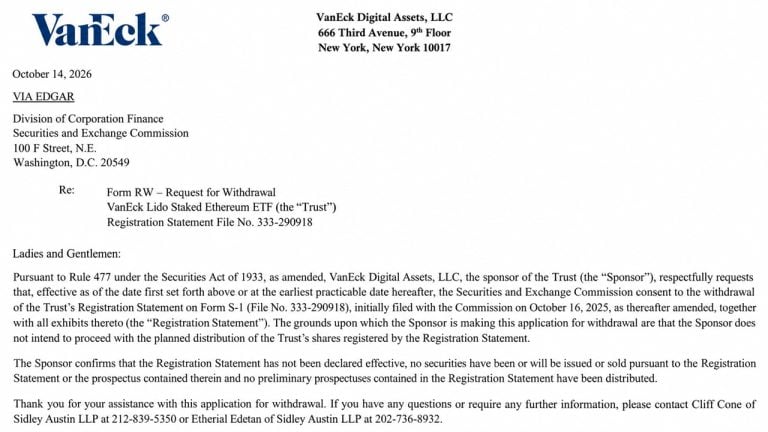
Vaneck Pulls the Plug on Its Lido Staked Ether ETF Before Launch
Vaneck has asked the U.S. Securities and Exchange Commission (SEC) to let it withdraw its Lido Staked Ethereum Exchange-Traded Fun...

Google Gemini AI Predicts Bitcoin to Hit $175K by 2027
When prompted, Google Gemini AI predicts that by January 1, 2027, Bitcoin could be trading for $175,000. It gives a hypothetical c...