Six Ethereum Researchers Propose Burning Validator Rewards to Zero Issuance at a 50% Staking Ratio
Six Ethereum researchers and developers published a draft improvement proposal on Tuesday that would burn a rising share of validator rewards, removing the protocol’s issuance incentive to stake more than half of all ETH...
Archive context
Older archive item. Useful for background and entity history, but not a fresh market-moving signal.

Six Ethereum researchers and developers published a draft improvement proposal on Tuesday that would burn a rising share of validator rewards, removing the protocol’s issuance incentive to stake more than half of all ETH. The authors are lead writer pintail, Ethereum France President Jérôme de Tychey, Ethereum core developer dapplion, pa7x1, researchers Ladislaus von Daniels and Justin Drake.
At each epoch boundary, every validator is charged a fraction of the idealized reward for each duty it was assigned, whether attestation, block proposal, or sync committee work, and that ETH is destroyed. The fraction scales with total stake and reaches 100% at a fixed 60,250,000 ETH, roughly half the current supply, at which point a performing validator’s consensus issuance nets to zero. Execution-layer income is untouched, so fees and MEV keep flowing.
For holders, the proposal is a trade between dilution and yield. Issuance would peak near a 19.8% staking ratio and fall after it rather than climbing without limit, capping the dilution paid by unstaked ETH. Stakers absorb the cost: applied in full at today’s ratio, the burn would cut net consensus yield from about 2.6% to 1.2%, which is why the authors phase it in by temporarily doubling the base reward factor to 128 and decaying it back to today’s 64 over roughly 18 months. The curve’s shape applies from the first epoch after activation, so growth beyond 50% stops being rewarded immediately.
DeFi’s response has been hostile. Aave founder Stani Kulechov wrote that the proposal “doesn’t achieve the outcome it tries to achieve and is actually hurtful for Ethereum.” ether.fi CEO Silagadze said the change would push out solo stakers who are not subsidized and leave staking to large centralized operators with no cost of capital.
Timing is the other objection. The draft landed two days before the August 6 deadline for submitting EIPs to the Hegota upgrade.
Related Listen: Zcash, Ethereum, Aztec, Canton and More: Which Chain Will Win the Privacy Race?
{"@context":"http:\/\/schema.org\/","@id":"https:\/\/unchainedcrypto.com\/six-ethereum-researchers-propose-burning-validator-rewards-to-zero-issuance-at-a-50-staking-ratio\/#arve-youtube-ksqt1phwqii","@type":"VideoObject","embedURL":"https:\/\/www.youtube-nocookie.com\/embed\/KSQt1PHwqiI?feature=oembed&iv_load_policy=3&modestbranding=1&rel=0&autohide=1&playsinline=1&autoplay=0"}
The post Six Ethereum Researchers Propose Burning Validator Rewards to Zero Issuance at a 50% Staking Ratio appeared first on Unchained.
Why this matters
Ethereum is showing up inside the DeFi theme, so this story is worth tracking for follow-through rather than treating it as a one-off headline.
Original source
Read on UnchainedRelated market context
Interactive Brokers expands crypto services with Ethereum staking via Zerohash
Interactive Brokers now lets eligible clients stake ETH through its Client Portal, with zerohash providing the service.
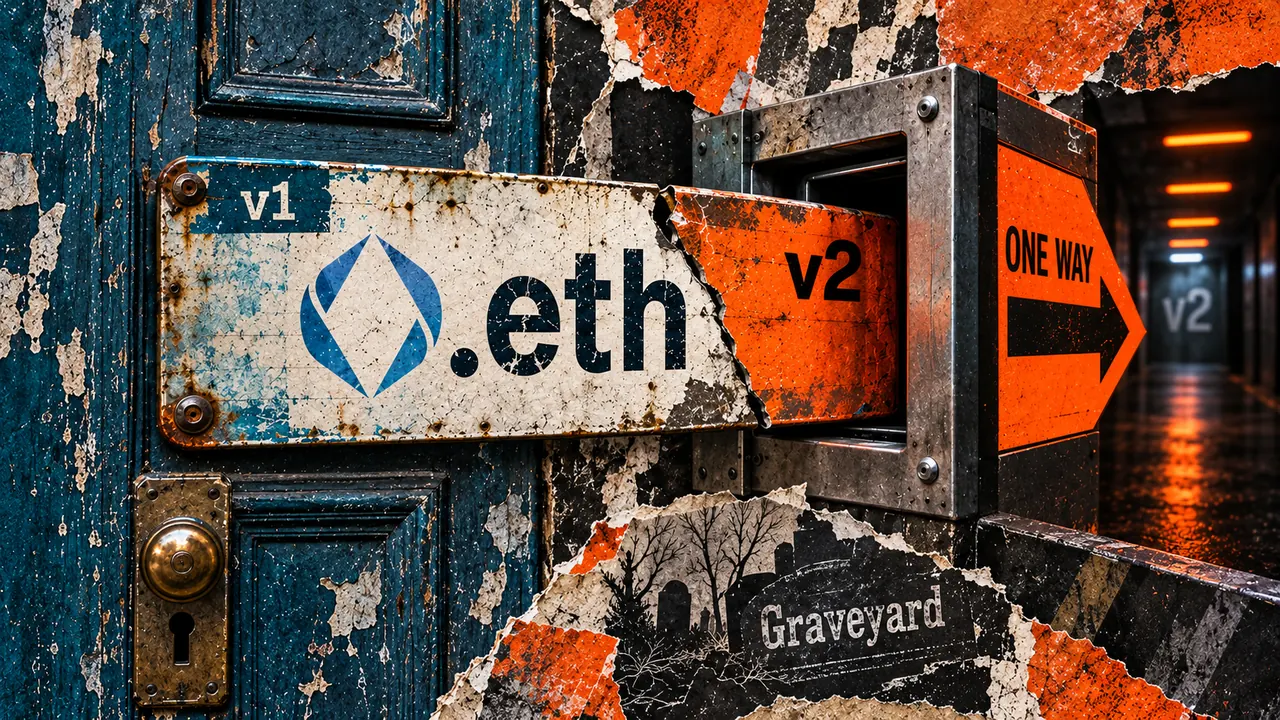
Ethereum Name Service plans major .eth overhaul with one irreversible catch for domain holders
Ethereum Name Service has proposed activating ENSv2 without requiring existing .eth domain holders to migrate to the new system. T...

Interactive Brokers launches Ethereum staking as crypto push expands
Interactive Brokers' Ethereum staking launch signifies a growing integration of crypto services into traditional investment platfo...

Injective proposes fixed gas fees to make DeFi trading costs predictable
Injective's fixed gas fees could enhance DeFi trading efficiency, offering cost predictability and potentially attracting more hig...
Interactive Brokers Rolls out Ether Staking With Zerohash
On Tuesday, Interactive Brokers (IBKR), the brokerage giant overseeing $964.7 billion in total client equity, announced the introd...

Bitcoin defies $800 million crypto wipeout as South Korea’s AI stock market crashes
Bitcoin rebounded above $83,000 on Tuesday despite a sharp Asian stock selloff, as cryptocurrency liquidations exceeded $800 milli...