US Treasury’s OFAC Adds 3 ETH Addresses Linked to North Korean Cybercrime Group to SDN List
The Office of Foreign Asset Control (OFAC) has added three ethereum addresses to its Specially Designated Nationals And Blocked Persons List (SDN). OFAC alleges the ether addresses are controlled by the Lazarus Group, a...
Archive context
Older archive item. Useful for background and entity history, but not a fresh market-moving signal.

The Office of Foreign Asset Control (OFAC) has added three ethereum addresses to its Specially Designated Nationals And Blocked Persons List (SDN). OFAC alleges the ether addresses are controlled by the Lazarus Group, a cybercrime group that is associated with North Korea.
Lazarus Group Behind Axie Infinity HeistThe U.S. Treasury Department’s OFAC has added three ethereum addresses that are allegedly associated linked with the Lazarus Group cybercrime syndicate to its SDN list. The addition of the addresses comes a few weeks after U.S. authorities accused the Lazarus Group and North Korean hackers of being behind the $620 million Axie Infinity heist.
As previously reported by Bitcoin.com News, after reports of the hacking emerged, the U.S. government claimed the cybercrime group was part of a group of hackers that spearheaded the Ronin bridge attack that resulted in the siphoning of over 173,000 ethereum tokens. Also, prior to the department’s latest update, the ethereum mixing project Tornado Cash revealed it was blocking OFAC sanctioned addresses from using the mixer.
North Korea Sanctions EvasionIn a statement released via Twitter on April 22, the U.S. Treasury Department suggested the blocking of access to funds at the designated addresses would deprive the sanctions-evading North Korea of a vital source of revenue. The statement explained:
OFAC added 3 virtual currency wallet addresses to the SDN Listing for Lazarus Group. The DPRK [North Korea] has relied on illicit activities like cybercrime to generate revenue while trying to evade U.S. & UN sanctions.
While authorities in the U.S. insist the blockade will stop North Korea from using the stolen crypto, an earlier report by Bitcoin.com News suggested the cybercriminals would still be able to move the funds by simply transferring the funds to an unsanctioned ether address.
Meanwhile, in addition to directly blocking the three ethereum addresses, the U.S. Treasury Department statement warned against transacting with these addresses. The statement suggested that those doing so would become a target of U.S. sanctions.
What are your thoughts on this story? Tell us what you think in the comments section below.
Why this matters
This ethereum story adds another data point to the current market tape and is useful when read alongside nearby source coverage.
Original source
Read on Bitcoin NewsRelated market context

Court Order Lets DOJ Lock Up $1.2 Billion of North Korea’s Stolen Binance Crypto
The U.S. Department of Justice (DOJ) has court authorization to seize or restrain more than $1.2 billion of the crypto North Korea...
DOJ Wins Court Authority to Seize $1.2 Billion of North Korea’s Stolen Binance Crypto as Freezes Top $2.7 Billion
Bitcoin Magazine DOJ Wins Court Authority to Seize $1.2 Billion of North Korea’s Stolen Binance Crypto as Freezes Top $2.7 Billion...

US seizes $1.2 billion frozen after North Korean Binance hack
The US Department of Justice (DoJ) yesterday announced the seizure of $1.2 billion in cryptocurrency stolen from Binance last mont...

Ethereum Dancing on Two Fronts as Quantum Upgrade Advances and Treasury Leverage Bites
Ethereum developers want to upgrade the network to be quantum-ready by 2027, potentially accelerating one of its biggest security...
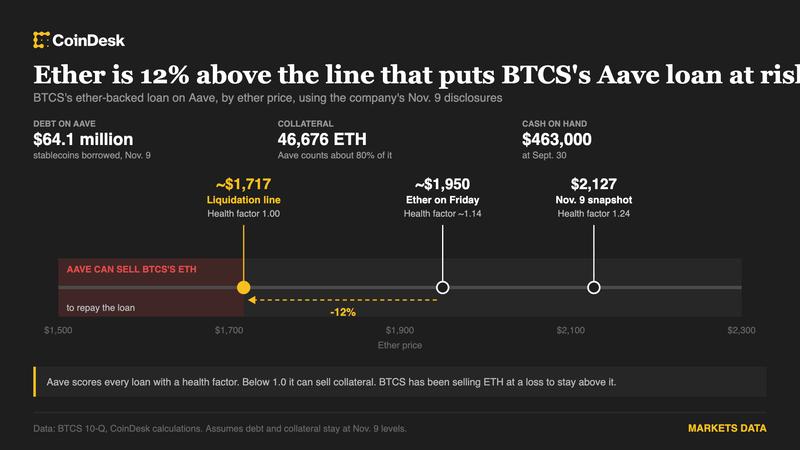
Ethereum treasury firm BTCS sold ether at a loss to keep $64 million Aave loan healthy
The Nasdaq-listed company has 46,676 ETH backing its borrowings, and the loan could become eligible for liquidation if ether slide...

MSCI Cuts Strategy From Global Indexes, Putting Bitcoin Treasury Model Under Pressure
Key Takeaways: Under new classification rules instituted by MSCI, Strategy will be phased out of the global equity index. The chan...