Vitalik Buterin Praises Polymarket Despite ‘War Betting’ Criticism
Earlier this week, Buterin addressed concerns about Polymarket offering bets on the escalating tensions in the region. The controversy began when a user on X (formerly Twitter) expressed discomfort, saying, “It feels wro...
Archive context
Older archive item. Useful for background and entity history, but not a fresh market-moving signal.

Earlier this week, Buterin addressed concerns about Polymarket offering bets on the escalating tensions in the region. The controversy began when a user on X (formerly Twitter) expressed discomfort, saying, “It feels wrong that Polymarket has an entire Hezbollah betting section that makes a war look like a football game to bet on.”
Polymarket’s war betting is causing controversy. Source: Polymarket
Buterin responded by emphasizing the platform’s potential to act as a reliable news source for those who might be misled by false information online. He stated: “There are all kinds of people (incl elites) on Twitter and the internet making harmful and inaccurate predictions about conflicts and being able to go and see if people with actual skin in the game think that something has a 2% chance or a 50% chance is a valuable feature that can help keep people sane.”
He further clarified that the aim isn’t to “profit from bad events” but to promote an environment where truthful information circulates freely, without interference from governments or corporate censorship. By allowing users to place bets on outcomes, the platform encourages honest predictions over sensationalized ones.
Polymarket’s Role in Preventing MisinformationDespite his support, Buterin drew ethical lines by opposing assassination predictions, acknowledging the potential for such markets to incentivize illegal actions. His stance highlights a nuanced perspective on the moral responsibilities of decentralized platforms in regulating content without external censorship.
Buterin’s endorsement comes amid Polymarket’s rising popularity, especially during the U.S. election season, where users place bets on various event outcomes. “It’s not about ‘make money from bad stuff happening’, it’s about creating an environment where speech has consequences,” he reiterated.
In May, Buterin participated in Polymarket’s $70 million funding round, which also attracted investments from billionaire Peter Thiel’s Founders Fund. His financial backing underscores a vested interest in the platform’s success and the broader implications for decentralized information exchange.
Polymarket, built on Ethereum’s Layer-2 chain Polygon, enables users to buy and sell outcome shares using cryptocurrencies. Shares are redeemable for $1 if the outcome is correct and become worthless if incorrect, creating a market-driven approach to predicting real-world events. The platform was reportedly preparing for fresh funding and speculations of a token launch, projected to play a vital role in its operations.
Ethical Concerns Over War BettingThe criticism against Polymarket arises from ethical concerns over profiting from tragic events like wars, with detractors arguing that it trivializes human suffering. Including sensitive topics such as armed conflicts raises questions about the moral boundaries of prediction markets.
However, proponents like Buterin argue that these markets offer valuable insights into public sentiment and expectations, potentially aiding in more informed decision-making. The platform aims to create a space where accurate information is incentivized over speculation and misinformation by allowing users to express their beliefs with crypto stakes.
Prediction markets like Polymarket have long been a topic of debate, balancing the ethical implications of betting on real-world events with the potential benefits of aggregated public opinion. Experts suggest that such markets can improve the accuracy of forecasts on various topics, from elections to geopolitical events, by harnessing the wisdom of the crowd.
Why this matters
This ethereum story adds another data point to the current market tape and is useful when read alongside nearby source coverage.
Original source
Read on Brave New CoinRelated market context

New York Sues Polymarket, Calling Prediction Market an Illegal Gambling Operation
Bitcoin Magazine New York Sues Polymarket, Calling Prediction Market an Illegal Gambling Operation New York Attorney General Letit...
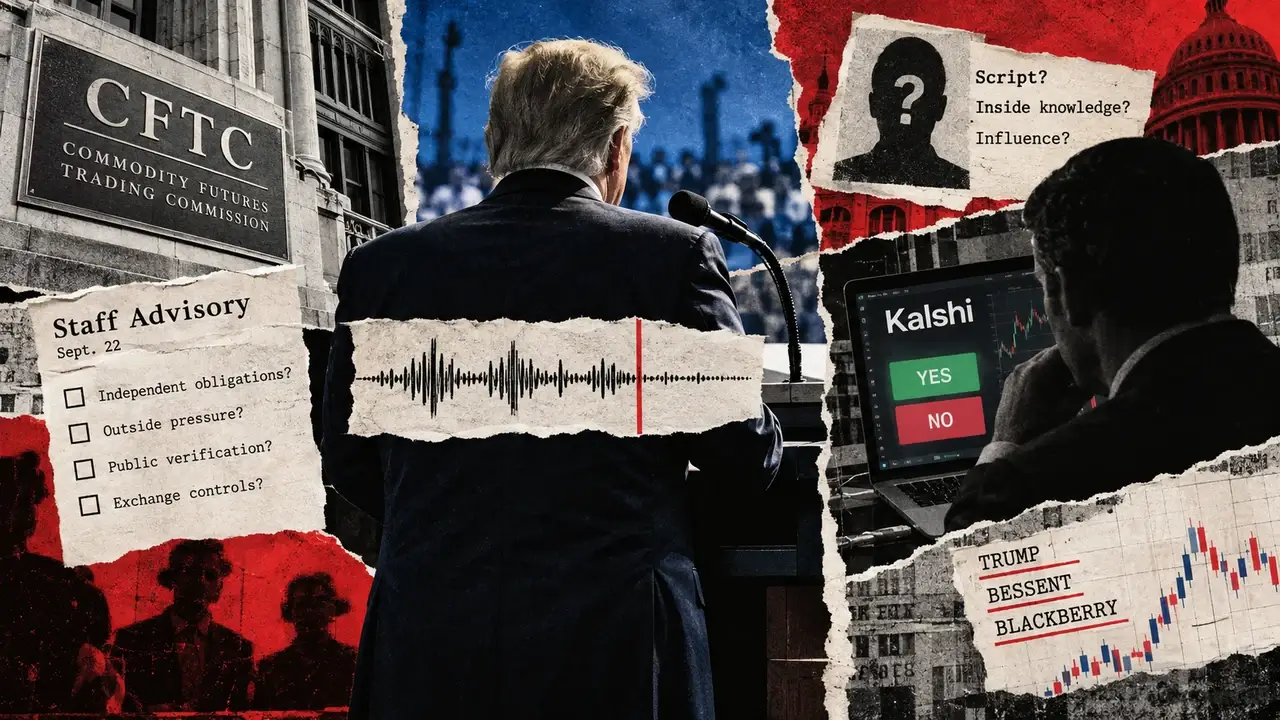
CFTC staff presses exchanges on political speech prediction market bets, asks how to prevent manipulation
A clear video can settle whether a public figure said a particular word. It cannot show who knew the script beforehand or whether...

Coinbase Impersonator Who Drained Nearly $16 Million From Users Heads to Prison
A Brooklyn judge on Wednesday sentenced a local man who posed as Coinbase staff and drained nearly $16 million from about 100 of t...

Who is Ronald Spektor? New York Coinbase Scam Mastermind That Stole $15.9M
Everyone is asking the same question today. ‘Who is Ronald Spektor?’ Spektor, 23, of Sheepshead Bay, Brooklyn, was sentenced on Se...

NYSE and Blockchain.com Working Together To List Tokenized Stocks
Bitcoin Magazine NYSE and Blockchain.com Working Together To List Tokenized Stocks The New York Stock Exchange and crypto exchang...

Bitget faces hack concerns after over $180 million in crypto moves: Onchain data
The incident underscores vulnerabilities in exchange security, potentially eroding trust and prompting stricter regulatory scrutin...