Vitalik Sides With Critics as Zcash Faces Deepening Rift Over Token-Voting Governance Push
Key Takeaways: A longtime Zcash contributor said token voting could undermine the project’s privacy foundation. Some community members argue that large holders might steer governance toward market-driven goals. The debat...
Archive context
Older archive item. Useful for background and entity history, but not a fresh market-moving signal.
Key Takeaways:
- A longtime Zcash contributor said token voting could undermine the project’s privacy foundation.
- Some community members argue that large holders might steer governance toward market-driven goals.
- The debate reflects tension across the crypto sector over how decentralized projects should be governed.
A familiar conversation resurfaced inside the Zcash community this week. The spark was a short message, but it touched a nerve: whether token holders should decide the project’s future.
A Growing Divide Over How Zcash Should Be RunThe message wasn’t long, and it wasn’t dressed up in technical language. It simply argued that token voting would be a step backward for Zcash. People who have followed the project for years immediately understood why the comment hit hard.
Zcash has always been a project with a very specific North Star. Privacy is not a feature to add or remove depending on market cycles – it’s the spine. Its construction, from zero-knowledge research to the way the network handles sensitive updates, depends on people who treat privacy with long-term seriousness.
That is exactly what worries those who oppose token-based governance. Token markets move fast. Holders come and go, and their motivations differ wildly. Some are traders, some are collectors, and some just keep assets on exchanges without much thought. The concern is simple: if these varied motivations become the basis for governance, decisions could drift away from what Zcash stands for.
Why the Comment Gained Unusual AttentionFor people who follow governance discussions across crypto, this critique is familiar. Token voting has produced messy outcomes in many DAOs. Voter turnout is often low; influence is concentrated; proposals pass because a handful of large wallets have already decided the outcome before voting starts.
Zcash supporters worry that importing this model would change the project in ways that are difficult to undo. Privacy upgrades require discipline, time, and deep technical focus – qualities not always reflected in token markets. If decisions begin leaning toward features that please fast-moving traders, the culture around Zcash could shift.
The controversy became even more popular when Ethereum co-founder Vitalik Buterin restated similar worries about token-voting models. Vitalik has cautioned on several occasions that “one-token-one-vote” systems will concentrate power in the hands of the rich and do not represent community values, particularly in projects that are mission-driven. His remarks, although not specifically about Zcash, are very close to the proponents of the idea that privacy-conscious ecosystems should have greater expertise and stakeholder involvement
Read More: What is KYC in crypto?
Token Voting and Its Long-Standing Friction PointsToken voting seems simple: one token equals one vote. But the simplicity hides a series of problems that the industry continues to struggle with. Large holders naturally dominate the process. Their priorities might be rational from an investment perspective, but that doesn’t make them aligned with a privacy-driven mission.
Even the idea of participation becomes complicated. In many governance systems, only a small minority takes part. People get busy or disengaged, or they feel that their vote won’t matter because whales will decide the outcome regardless. When you combine low participation with high concentration, token voting starts to resemble a weighted boardroom rather than a decentralized community.
Industry examples illustrate this. There are cases in DeFi where a single wallet swung an entire proposal. There are others where thousands of smaller holders barely registered because turnout was tiny. These patterns repeat so often that they have become a central point of criticism in governance research.
Broader Debates Shift Toward AlternativesDifferent ecosystems have tried to find ways around these issues. Some protocols use delegated voting layers, where community members pick representatives. Others rely on committees or contributor groups to evaluate technical proposals before the community signals approval. Ethereum itself continues to rely heavily on open discussion and social consensus outside of token mechanics.
The crypto space hasn’t agreed on a perfect system, but there is growing recognition that governance must reflect more than capital. Especially for projects tied to public goods or advanced research, relying on token weight alone introduces pressures that don’t match the work required.
Read More: What is DeFi? A Simple Guide to Decentralized Finance 2025
Why the Stakes Feel Higher for ZcashZcash sits in a category of its own. Its development path involves complex cryptographic research, regulatory sensitivity, and a mission that doesn’t bend easily to market whims. Decisions made without understanding this landscape could push the network toward simpler, more market-friendly directions – directions that critics believe would weaken the privacy guarantees Zcash was built to protect.
Community members who responded to the original warning echoed this fear. They described token voting as a mechanism that might look orderly at first but would gradually shift priorities toward whatever benefits the largest holders. Over time, that could create pressure to pursue features or governance structures that emphasize liquidity or visibility instead of building stronger privacy technology.
The renewed discussion reflects something larger than a governance argument. It reveals how the project sees itself, and how vulnerable that identity might be if decision-making power becomes tied to wallet size instead of values, knowledge, and long-term commitment.
The post Vitalik Sides With Critics as Zcash Faces Deepening Rift Over Token-Voting Governance Push appeared first on CryptoNinjas.
Why this matters
This ethereum story adds another data point to the current market tape and is useful when read alongside nearby source coverage.
Original source
Read on CryptoNinjasRelated market context

Citigroup projects tokenized assets could reach $5.5T by 2030
The shift to tokenized assets could redefine financial markets, enhancing liquidity and accessibility while reshaping investment s...

Helius CEO Mert Mumtaz joins NEAR Council to advance onchain privacy
Mumtaz's dual role could foster collaboration between NEAR and Solana, but may also raise concerns about impartial governance and...

XRP Price Prediction: XRP Duo Turn Bullish, $1,000 Dream Lives On
XRP is trading at $1.34, up more than 1% after a brutal Wednesday. Ripple CEO Brad Garlinghouse says XRP has legal clarity despite...
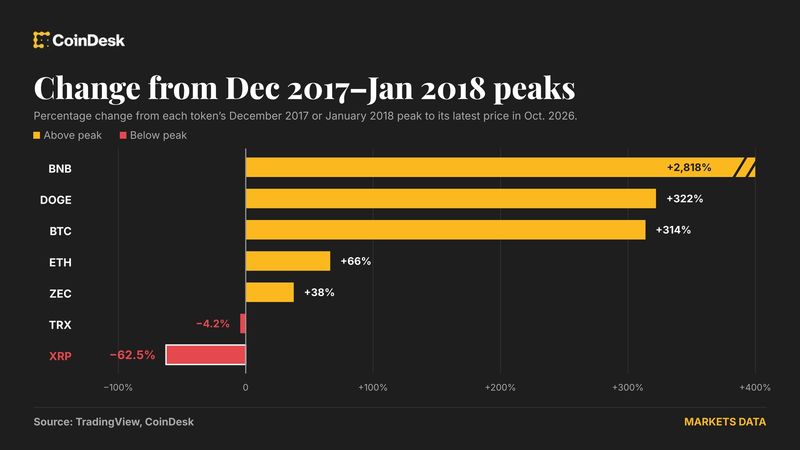
XRP has failed to make holders rich like bitcoin and ether. Here’s why
XRP remains below its 2017-cycle high while bitcoin, ether and other major tokens have surged, enriching their holders.

Claude AI Predicts that Chainlink (LINK) Could Hit Triple Digits in 2026
Claude AI predicts a wildly bullish price target for Chainlink (LINK), claiming it could reach $100 by January 1, 2027, if a near-...

Vitalik Buterin says Ethereum is outgrowing its founder
Ethereum's evolution towards decentralized leadership could enhance resilience and innovation, reducing reliance on any single ind...