Applied Direct Response — ERCOT Study Shows Bitcoin Mining Is Beneficial to the Texas Grid
On Nov. 29, 2022, The Electric Reliability Council of Texas (ERCOT) published a report on seasonal assessment and resource adequacy for the ERCOT region. ERCOT’s study indicates that bitcoin mining operations are flexibl...
Archive context
Older archive item. Useful for background and entity history, but not a fresh market-moving signal.
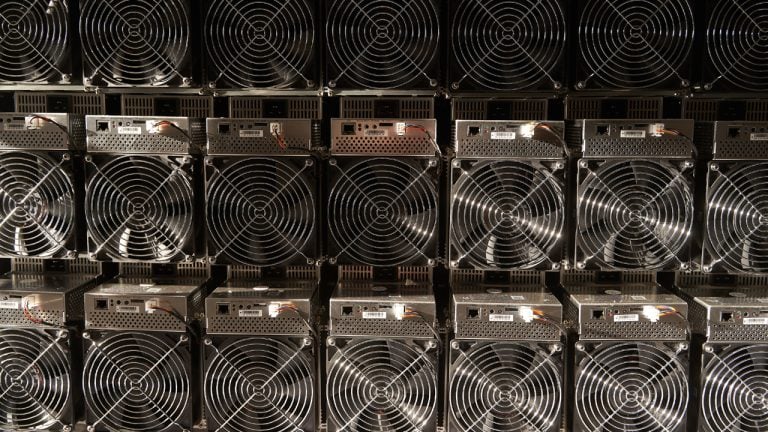
On Nov. 29, 2022, The Electric Reliability Council of Texas (ERCOT) published a report on seasonal assessment and resource adequacy for the ERCOT region. ERCOT’s study indicates that bitcoin mining operations are flexible operations that can be beneficial to the Texas grid during the upcoming winter and extreme peak load times.
ERCOT Report Says Texas Bitcoin Mining Facilities Can Curtail Operations and Relieve 1.7 GW of Energy This WinterThe American organization that operates Texas’s electrical grid, ERCOT, has published a study that shows bitcoin mining operations are instrumental in direct response systems. The report’s researchers studied the installed generation capacity based on historical data and extreme peak load scenarios. The report indicates that bitcoin mining operations are able to curtail their operations and relieve roughly 1.7 gigawatts (GW) of energy during the Texas winter.
Other systems that leverage large electrical loads are unable to adjust to direct response needs but bitcoin miners, on the other hand, are also known to shut down operations when they reach breakeven price levels between bitcoin’s spot price and cost of production. “This breakeven cost was estimated at $86/MWh and is based on the economics of an Antminer S19 bitcoin mining rig as of early November,” ERCOT’s study details.
ERCOT is not the only grid operator that has been studying direct response systems as the second-largest U.S. energy corporation, Duke Energy Corporation, was reportedly studying bitcoin mining in July. Duke’s lead analyst said that bitcoin mining operations partnered with Duke in order to provide data for a bitcoin demand response (DR) study. The same month, the bitcoin mining infrastructure provider Lancium revealed how its operations in Texas can curtail load in DR situations.
Lancium teamed up with the Texas battery-storage provider Broad Reach Power LLC, and when the grid is hit with extreme situations, batteries keep Lancium’s facility running without reducing its computational power. Besides heavy load times and extreme weather events, bitcoin miners provide a reliable stream of revenue to the grid’s operators because they are constantly running in search of bitcoins. ERCOT’s study shows that even with bitcoin miners leveraging electrical resources, the grid operators believe there will be a sufficient amount of energy this winter.
“Assuming that the ERCOT Region experiences typical winter grid conditions, ERCOT anticipates that there will be sufficient installed generating capacity available to serve the system-wide forecasted peak demand for the upcoming winter season, December 2022 ‒ February 2023,” the report notes.
The news follows U.S. legislators pressing ERCOT officials for information concerning bitcoin mining operations. The politicians think that bitcoin mining affects so-called climate change and they think bitcoin miners could possibly destabilize the Texas grid. ERCOT’s new CEO told the press that ERCOT wants “to be able to serve any business that wants to do business in Texas. And that includes crypto miners.”
The report from ERCOT shows that politicians are arguably wrong about their grid destabilization predictions, as bitcoin mining facilities may be the only type of operation that can act on DR situations in a matter of no time at all.
ERCOT’s 22-page study on seasonal assessment and resource adequacy for the ERCOT region can be read in its entirety here.
What do you think about the report published by ERCOT? What do you think about bitcoin mining operations applied to direct response systems? Let us know what you think about this subject in the comments section below.
Why this matters
This mining story adds another data point to the current market tape and is useful when read alongside nearby source coverage.
Original source
Read on Bitcoin NewsRelated market context
Tether Wins Mining Industry Support For Its Open Automation Toolkit
Tether is trying to make Bitcoin mining equipment easier to operate as one system. Its October 24 announcement brings 15 industry...

Bitdeer Reports 1,355 Bitcoin Mined In September While Building AI Capacity
TL;DR: Bitdeer says its September Bitcoin production reached 1,355 BTC, highlighting the miner’s expanding hash rate alongside sep...
Bitcoin ETF Flows Trail Price Moves, DWF Study Finds
Bitcoin ETF flows track recent price moves more closely than subsequent ones, according to DWF Labs research published October 22....
Bitcoin Hashrate Reclaims One Zettahash As Mining Competition Rebounds
TL;DR: BlocksBridge reported Bitcoin’s seven-day hashrate above one zettahash in the week to October 22. Mining competition has re...

South Korea’s Crypto Tax Faces Fourth Delay as 2029 Date Looms: Report
South Korea is preparing to push its cryptocurrency gains tax back for a fourth time, according to local reporting, potentially gi...

Bitcoin Wallet Fixes Critical Flaw That Redirected Funds to Attackers
A confirmed exploit let rogue servers replace Electrum’s pending transactions, tricking users into redirecting Bitcoin to attacker...