ASIC Sues BPS for Misleading Promotion of Qoin Tokens
The Australian Securities and Exchange Commission (ASIC) has sued BPS Financial, seeking civil penalties for allegedly making false representations involving Qoin, a crypto asset token, when marketing.The company is alle...
Archive context
Older archive item. Useful for background and entity history, but not a fresh market-moving signal.

The Australian Securities and Exchange Commission (ASIC) has sued BPS Financial, seeking civil penalties for allegedly making false representations involving Qoin, a crypto asset token, when marketing.
The company is alleged to have engaged in unlicensed conduct to a non-cash payment facility for the cryptocurrency.
BPS established the Qoin Facility in January 2020 as a non-cash payment facility. It included Qoin tokens, a Qoin wallet, and a blockchain-based distributed digital ledger. The tokens were promoted to retail consumers and business owners.
According to ASIC, the misrepresentations include the assurance of exchanging Qoin for other cryptocurrencies or fiat. Additionally, BPS claimed that Qoin tokens could be used for purchasing goods and services from registered merchants.
A sister entity of BPS enabled the exchange of Qoin tokens for the Australian dollar, but it has imposed increasingly restrictive limits over time.
Moreover, BPS claimed that both the token and the associated wallet are regulated in Australia, which ASIC highlighted to be false. In addition, the misrepresentations include claims of Qoin and BPS to be compliant with financial services laws.
Tough Regulatory Stance
“We allege that, despite what BPS represented in its marketing, Qoin merchant numbers have been declining and that there have been periods of time where it was not possible to exchange Qoin tokens through independent exchanges,” said the Deputy Chair of ASIC, Sarah Court.
“ASIC is particularly concerned about the alleged misrepresentation that the Qoin Facility is regulated in Australia, as we believe more than 79,000 individuals and entities who have been issued with the Qoin Facility may have believed that it was compliant with financial services laws, when ASIC considers it was not.”
ASIC has been very vigilant against misleading crypto projects lately. It temporarily halted Holon's three cryptocurrency funds for not being suitable for retail investors. The regulatory is also earning against potential scams.
“Where it falls within our remit, ASIC will take targeted action against unlicensed conduct and misleading promotion of crypto-asset financial products that could harm consumers – this is a key priority for ASIC. Crypto-assets are highly volatile, inherently risky, and complex,” Court added.
This article was written by Arnab Shome at www.financemagnates.com.Why this matters
This mining story adds another data point to the current market tape and is useful when read alongside nearby source coverage.
Original source
Read on Finance MagnatesRelated market context

Kraken Ends Trading In 13 Tokens As A Separate Withdrawal Deadline Begins
Kraken’s October delistings have moved into the withdrawal phase. Trading and deposits for 13 assets were scheduled to stop on Oct...
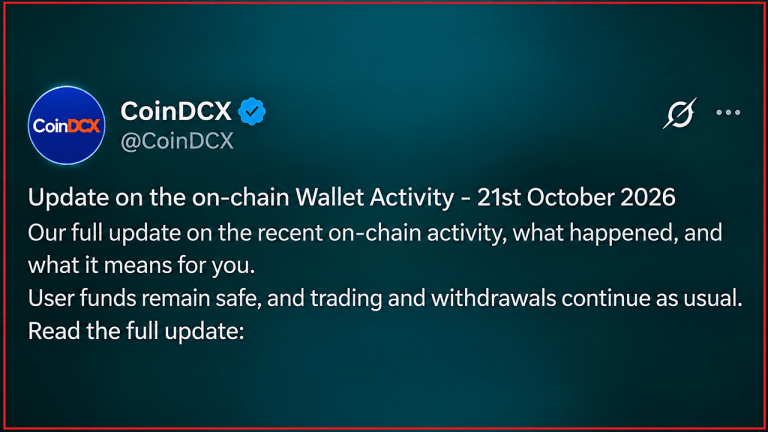
Indian Exchange CoinDCX Admits $16M Hit After CEO Dismissed Suspicious Transfers
CoinDCX has confirmed a $16 million cryptocurrency loss just three days after its CEO dismissed suspicious wallet activity as a “f...

South Korea Weighs Fourth Delay of Crypto Tax, With 2029 Start Tied to U.S. Data Sharing
Bitcoin Magazine South Korea Weighs Fourth Delay of Crypto Tax, With 2029 Start Tied to U.S. Data Sharing South Korea’s presidenti...

India's largest crypto exchange absorbs $16 million loss from internal process failure tied to retired wallet
The Mumbai-based exchange initially dismissed reports of suspicious outflows as a false alarm. It now says it lost $16 million and...

Pump Fun offers $2.5M prize as traders boycott its missing airdrop
Crypto traders are boycotting the memecoin platform Pump Fun this week over the firm’s lack of airdrop, numerous rug pulls, and it...

CFTC developing new rules for crypto exchanges to register with US regulators
Federal oversight of crypto exchanges could enhance market confidence and stability, potentially influencing Bitcoin's market dyna...