ASIC Takes Crypto Battle to High Court After Block Earner Defeat
The Australian Securities and Investments Commission (ASIC) seeks special leave from the High Court to appeal a recent ruling that severely impacted its enforcement of crypto regulation. The appeal targets a Full Federal...
Archive context
Older archive item. Useful for background and entity history, but not a fresh market-moving signal.

The Australian Securities and Investments Commission (ASIC) seeks special leave from the High Court to appeal a recent ruling that severely impacted its enforcement of crypto regulation.
The appeal targets a Full Federal Court decision that found Block Earner’s “Access” product, offering fixed-yield returns on crypto lending, was not a financial product.
ASIC’s move signals a broader attempt to clarify the legal definition of financial products as crypto adoption grows. The High Court has yet to set a date for the application hearing.
Block Earner Case Tests Boundaries of Financial Licensing LawsThe case centers on Block Earner, a Sydney-based fintech operating under Web3 Ventures Pty Ltd. Between March and November 2022, it offered two yield-generating products, “Earner” and “Access.”
ASIC originally filed suit in 2022, alleging the company provided unlicensed financial services by offering these products without the necessary Australian Financial Services Licence (AFSL).
On 9 February 2024, the Federal Court ruled that Block Earner’s “Earner” product constituted a financial product and had been offered without a license.
An Australian federal court has determined that fintech company Block Earner engaged in unlicensed financial services conduct by offering its crypto-backed Earner product.#CryptoNewshttps://t.co/VdMEg1aitv
— Cryptonews.com (@cryptonews) February 9, 2024However, it dismissed ASIC’s claims regarding the “Access” product, which offered variable yields via decentralized finance (DeFi) protocols.
Though the Court acknowledged regulatory breaches with Earner, it waived the $350,000 penalty in June 2024. ASIC appealed the decision to drop the fine, while Block Earner cross-appealed the finding that the Earner product required a license.
However, on 22 April 2025, the Full Federal Court allowed Block Earner’s cross-appeal and dismissed ASIC’s arguments, ruling that neither product breached licensing obligations. This decision prompted ASIC to seek High Court intervention.
The Australian court found that the discontinued ‘Earner’ product was a loan, not a managed investment scheme, dismissing ASIC's allegations.#Australia #CryptoLenderhttps://t.co/2V5wng6ajm
— Cryptonews.com (@cryptonews) April 23, 2025The agency said in its Wednesday statement, “the definition of financial product was drafted in a broad and technology-neutral way, and ASIC believes it is in the public interest to clarify this.”
It added that the issue has implications beyond crypto and is essential to all financial products and services due to the law’s broad, technology-neutral drafting.
“This clarification is important as it applies to all financial products and services whether they involve crypto-assets or not.”
Crypto Yield Products Face Global Scrutiny Amid Regulatory GapsThe Block Earner case is the latest in Australia’s legal challenges surrounding regulating crypto-related financial services. It shows ongoing regulatory uncertainty around whether yield-generating crypto products fall within the scope of existing financial laws.
This is not the first time ASIC has faced a crypto firm in court. In 2023, the regulator took action against Finder Wallet and BPS Financial over similar allegations related to interest-earning crypto products.
Australian Court Rules in Favor of Crypto Firm Finder’s Earn Product
An Australian Federal Court dismissed a case filed by ASIC against crypto firm Finder Wallet. #CryptoNews #newshttps://t.co/PFO6FhYKkd
Both cases questioned the “financial product” definition under the Corporations Act, particularly when applied to innovative offerings such as DeFi protocols, stablecoins, or tokenized yield accounts.
Internationally, regulators have also struggled to classify crypto products that resemble traditional financial instruments. The U.S. SEC, for example, has brought similar cases against crypto lenders like BlockFi and Celsius, which were fined or shut down for offering interest-bearing products without proper registration.
Therefore, ASIC’s High Court application could set a landmark precedent not only for Australia’s crypto sector but also for how regulators worldwide approach evolving financial technologies.
If successful, it may lead to stricter oversight of DeFi platforms and stablecoin-based services operating under the guise of non-financial products.
The post ASIC Takes Crypto Battle to High Court After Block Earner Defeat appeared first on Cryptonews.
Why this matters
This mining story adds another data point to the current market tape and is useful when read alongside nearby source coverage.
Original source
Read on CryptonewsRelated market context

Bybit Expands Beyond Crypto as CEO Outlines Next Phase of Financial Platform
Dubai, United Arab Emirates, October 13th, 2026, Chainwire Bybit Co-founder and CEO Ben Zhou has outlined the latest stage of the...

Binance News: Miners Must Move Before Pool Closes on November 10
In Binance news today, the exchange will shut down Binance Pool and related services at 07:00 UTC on November 10, 2026, ending its...

South Korea Blocks 27 Crypto Exchange Websites, Including KuCoin, BitMart
South Korea’s Financial Intelligence Unit has ordered access restrictions on 27 websites operated by unregistered overseas cryptoc...

Ethereum (ETH) Price Prediction: ETH Holds Near $2,500 as ETF Flows Turn Positive and Long Positions Reach Four-Year High
Ethereum is holding close to $2,500 after a volatile start to October, with the market now showing a mixture of improving institut...

A $5 billion Bitcoin fortune is at stake, but UK court says being defrauded isn’t enough to claim it
A London judge rejected Chinese fraud victims' bid to use English law to claim more than 61,000 seized Bitcoin. In an Oct. 12 ruli...
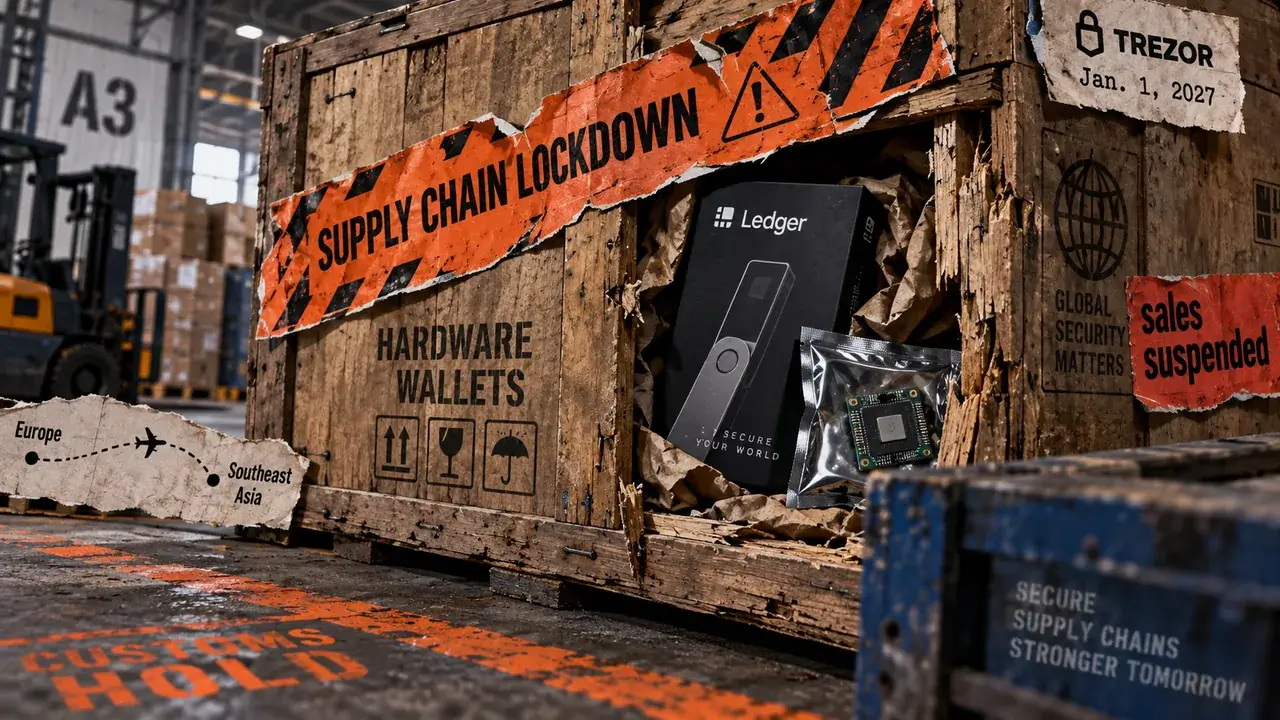
Ledger’s crypto wallet implant scare triggers Trezor reseller crackdown as security fears spread
Trezor is cutting authorized resellers after a hardware-implant attack against rival Ledger exposed vulnerabilities in cryptocurre...