Bitcoin Miners: Adaptation for Survival Amid Halving
Bitcoin’s (BTC) recent surge since the beginning of 2023 has reignited interest in the cryptocurrency realm. The launch of several spot BTC ETFs has propelled the top crypto to establish a new record high on March 14, br...
Archive context
Older archive item. Useful for background and entity history, but not a fresh market-moving signal.
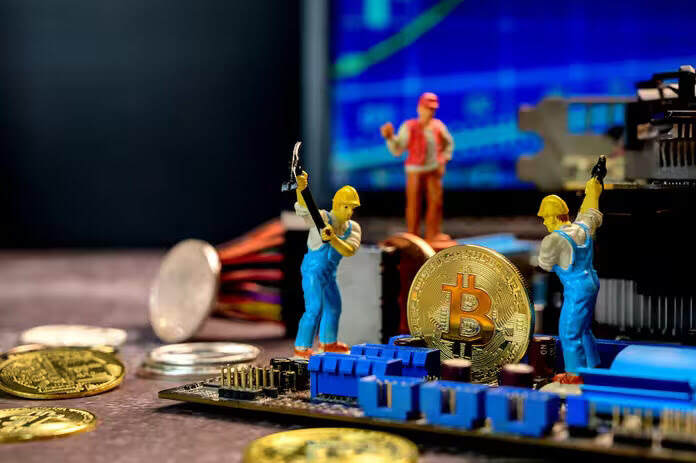
Bitcoin’s (BTC) recent surge since the beginning of 2023 has reignited interest in the cryptocurrency realm. The launch of several spot BTC ETFs has propelled the top crypto to establish a new record high on March 14, breaking a historical milestone by achieving this feat over 45 days ahead of its next halving event.
Amidst the current correction phase in the crypto market, traders are eagerly searching for the next catalyst to drive prices higher. Analysts widely point to the impending halving as the potential trigger for the next rally. However, halvings pose a significant challenge for Bitcoin miners, as the 50% reduction in new BTC emissions slashes their revenue in half, prompting many to deactivate inefficient equipment post-halving, leading to a decline in the Bitcoin hash rate.
To gain insights into how miners are preparing for the halving and their subsequent strategies, Kitco Crypto engaged in a discussion with Greg Beard, CEO of Stronghold Digital Mining. Stronghold made history as the first mining company to launch an IPO approved by the Securities and Exchange Commission (SEC). Beard, formerly Head of Energy at Apollo, emphasized the importance of viewing crypto mining as a form of “power arbitrage,” highlighting Stronghold’s ownership of power plants and data centers.
Beard emphasized the evolving landscape of the crypto-mining industry and the necessity for miners to assess energy demands on local power grids. Stronghold’s unique approach allows them to swiftly adapt to fluctuating energy prices by turning off data centers during periods of expensive power and selling excess energy to the grid. Beard highlighted the impact of renewable energy sources on energy price volatility and underscored Bitcoin mines’ role as grid-scale batteries, providing stability to power grids.
Regarding Stronghold’s revenue diversification efforts, Beard mentioned ventures into carbon sequestration, coal ash sales, and exploring alternative fuel sources. He contrasted Stronghold’s resilience with the challenges faced by miners lacking their infrastructure, emphasizing the importance of creating additional industrial applications beyond Bitcoin mining.
Criticism towards Bitcoin mining’s energy consumption has overshadowed its contribution to improving energy efficiency and environmental remediation efforts. Beard emphasized Stronghold’s commitment to cleaning up waste coal sites and converting them into power generation facilities. However, he lamented the lack of recognition from ESG investors, highlighting a disparity between investor perceptions and environmental impact.
Addressing concerns over Bitcoin mining centralization, Beard downplayed the risk of a concentrated mining power disrupting Bitcoin’s decentralized nature, citing potential consolidation among public miners. He projected significant consolidation post-halving, with outdated machines being phased out for more efficient models, ultimately driving the industry towards industrial-scale operations.
Beard also discussed potential challenges posed by government regulations, including President Biden’s proposed tax on Bitcoin miners’ power consumption. He cautioned against singling out Bitcoin miners for taxation, warning of unintended consequences on innovation and economic growth.
Looking ahead, Beard anticipated Bitcoin ETFs’ role in driving price volatility, particularly with their obligation to purchase underlying assets upon investor demand. He underscored Bitcoin’s defensive appeal for populations facing economic instability due to inflation and mounting global debt.
As governments grapple with soaring debt levels, Beard highlighted the inflationary implications of printing money to service debt, expressing concern for future economic stability. Despite uncertainties, Beard remained optimistic about Bitcoin’s potential as a hedge against economic turmoil, emphasizing its role in preserving wealth amidst fiscal uncertainties.
Featured Image: Freepik
Why this matters
This mining story adds another data point to the current market tape and is useful when read alongside nearby source coverage.
Original source
Read on CryptoCurrencyNewsRelated market context
Bitcoin Hashrate Reclaims One Zettahash As Mining Competition Rebounds
TL;DR: BlocksBridge reported Bitcoin’s seven-day hashrate above one zettahash in the week to October 22. Mining competition has re...
Tether Wins Mining Industry Support For Its Open Automation Toolkit
Tether is trying to make Bitcoin mining equipment easier to operate as one system. Its October 24 announcement brings 15 industry...

Tether’s mining development kit gets backing from 15 mining firms
Tether's MDK initiative could revolutionize Bitcoin mining by fostering interoperability and automation, potentially reshaping ind...

NIP Group Signs Bitcoin Miner Purchase To Add 4.47 Exahash Of Capacity
TL;DR: NIP Group has agreed to purchase already deployed Bitcoin mining machines with about 4.47 EH/s of hash rate, subject to clo...
SEC Examiners Set Sights on Tokenization at Clearing Agencies for Fiscal 2027
The SEC’s Division of Examinations has named tokenization among the “high-risk areas” its staff will focus on when examining clear...

Netanyahu Rebuked Over Plan to Use Crypto to Bypass Economic Sanctions
Netanyahu faces Bank of Israel rebuke after suggesting crypto could bypass sanctions, with 100+ economists warning of damage to Is...