Bitcoin Mining Pools in 2026: Hashrate Consolidation Is Creating a Two-Tier Market — and Smaller Miners Are Feeling It
The Bitcoin mining industry in 2026 looks very different from what it did just a few years ago. Post-halving pressure, rising network difficulty, and margin compression have reshaped the competitive landscape — and nowhe...
Archive context
Older archive item. Useful for background and entity history, but not a fresh market-moving signal.
The Bitcoin mining industry in 2026 looks very different from what it did just a few years ago. Post-halving pressure, rising network difficulty, and margin compression have reshaped the competitive landscape — and nowhere is that more visible than in the mining pool market.
According to data from miningpoolstats.stream (as of June 23, 2026), just four pools now account for over 70% of Bitcoin's total hashrate. That level of concentration raises legitimate questions about network decentralization — but it also has a more immediate, practical consequence: the big pools are increasingly optimizing for institutional clients, leaving independent and mid-size miners underserved.
The Top Players: Who Controls the HashrateHere's where things stand today:
Pool Network Share Hashrate (EH/s) Payout Model Target Audience Foundry Digital ~31% 2.62 FPPS Institutional / Corporate AntPool ~18% FPPS 4% / PPLNS 0% Bitmain equipment owners ViaBTC ~13% PPS+ 4% / PPLNS 2% International miners F2Pool ~10% FPPS 4% / PPLNS 2% Experienced global operators EMCD ~2.7% 30.35 FPPS from 1.5% Independent miners, all scales*as for 30.06.2026
Foundry Digital (~31% of network)Foundry USA has cemented itself as the dominant force in Bitcoin mining, controlling roughly a third of the network's total compute. Backed by Digital Currency Group and based in the United States, Foundry is built for one kind of customer: large-scale, institutional operators and publicly traded mining companies.
Strict KYC requirements and a heavy focus on regulatory compliance define the Foundry experience. Fee structures aren't publicly disclosed and are negotiated based on hashrate volume. For the average independent miner, access is either unavailable or impractical. This is a pool built for corporations — and it operates accordingly.
AntPool (~18% of network)AntPool's second-place position is closely tied to its parent company, Bitmain — the world's largest ASIC manufacturer. The pool supports both FPPS and PPLNS payout models and offers merged mining across several blockchains.
In practice, AntPool's focus skews heavily toward institutional clients and large data centers. Miners who need customized terms, flexible fee structures, or responsive human support often find the experience frustrating. Issues outside standard templates typically get routed through automated ticketing systems with limited resolution.
F2Pool (~10% of network)One of the industry's oldest active pools — operating since 2013 — F2Pool remains a reliable choice for experienced operators. Its globally distributed server infrastructure keeps latency low for miners across time zones, and it supports both FPPS and PPLNS models.
F2Pool's longevity is a genuine advantage, but scale has its trade-offs. The pool's customer approach tends toward standardization, which works well for large, sophisticated operations that rarely need hand-holding, but less so for smaller farms with non-routine questions or needs.
ViaBTC (~13% of network)ViaBTC differentiates itself through flexibility — offering PPS+, PPLNS, and even solo mining within a pool structure. It has historically been popular in CIS and Asian markets and is not affiliated with any hardware manufacturer, which gives it more independence than AntPool.
That said, ViaBTC has attracted increasing regulatory scrutiny in 2026, particularly affecting miners from Russia and other CIS countries. Reports of account restrictions, sudden KYC demands, and temporary fund freezes have made the pool a riskier choice for that segment of the market.
The Emerging Gap — and Who's Filling ItThe picture that emerges from this data is fairly clear: the pools with the most hashrate are also the most structurally oriented toward large-volume, compliance-heavy, institutional clients. That's a rational business decision on their part — but it leaves a meaningful portion of the mining population without a natural home.
Independent miners, small farm operators, and mid-size businesses that don't meet institutional thresholds increasingly find themselves navigating pools that weren't designed with them in mind. Fee structures aren't built for their scale. Support queues weren't built for their problems.
This is the gap that EMCD is specifically positioned to address.
EMCD: A Different Kind of PoolWith over 30 EH/s of hashrate and a place in the global top ten, EMCD isn't a small operation — but its operating philosophy is fundamentally different from the pools above it in the rankings.
EMCD's fee structure starts at 1.5% under FPPS, which is meaningfully lower than the 4% charged by most comparable pools. But the more significant differentiator is in how the pool approaches client relationships.
Where the industry giants have increasingly tiered their service models — premium support for large accounts, ticket queues for everyone else — EMCD has maintained a model where independent miners and large data centers receive comparable levels of attention. The team engages directly with clients on custom terms based on hashrate, and positions itself as a technical and operational partner, not just a payout endpoint.
This approach is backed by over nine years of operating experience in the mining industry. That institutional knowledge matters in a market environment as difficult as the current one — with difficulty climbing, margins thinning, and volatility creating operational complexity at every level.
What This Means for Miners in 2026The consolidation of hashrate among a small number of institutional-first pools is unlikely to reverse in the near term. The economics of the current cycle favor scale, and large operators have every incentive to concentrate their hashrate in pools that serve their specific needs.
But that consolidation is also creating a structural opportunity for pools that can offer institutional-grade infrastructure with a more accessible service model. For independent and mid-size miners who feel increasingly invisible to the top-tier pools, the calculus around pool selection is shifting.
Technical performance, payout model, and fee structure remain the baseline criteria. But in a tighter market, responsiveness, flexibility, and the ability to get actual human support when something goes wrong are carrying more weight than they used to.
The mining pool market in 2026 has effectively split into two tiers. Knowing which tier is actually built for you matters more than it did before.
The post Bitcoin Mining Pools in 2026: Hashrate Consolidation Is Creating a Two-Tier Market — and Smaller Miners Are Feeling It appeared first on CryptoSlate.
Why this matters
Bitcoin is showing up inside the Regulation theme, so this story is worth tracking for follow-through rather than treating it as a one-off headline.
Original source
Read on CryptoSlateRelated market context
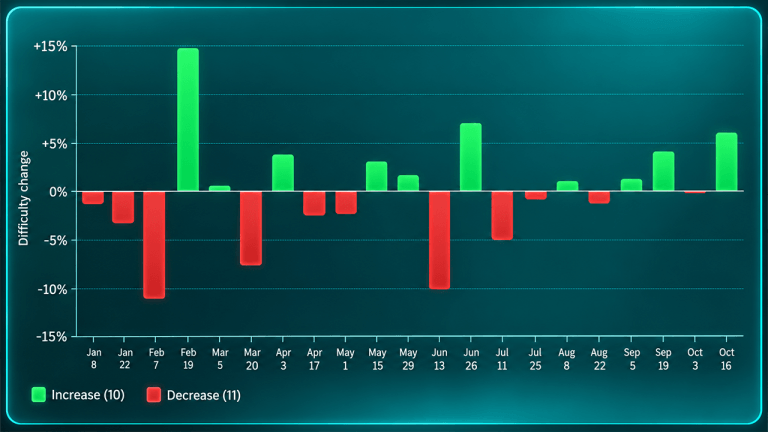
Bitcoin Mining Difficulty Jumps 5.92% in Third-Largest Hike of 2026
On Friday, at block height 971712, bitcoin mining grew considerably more demanding as the network’s latest difficulty adjustment c...

Fortitude surpasses 5 GSol/s of Zcash hashrate as expansion plans grow
Fortitude's rapid Zcash hashrate growth could centralize mining power, impacting network decentralization and competitive dynamics...

The 7 Best USDC on Solana to XMR Swap Platforms in 2026
Swapping USDC on Solana for Monero (XMR) offers a fast, low-cost route into a privacy-focused asset. Leading platforms in 2026 pro...
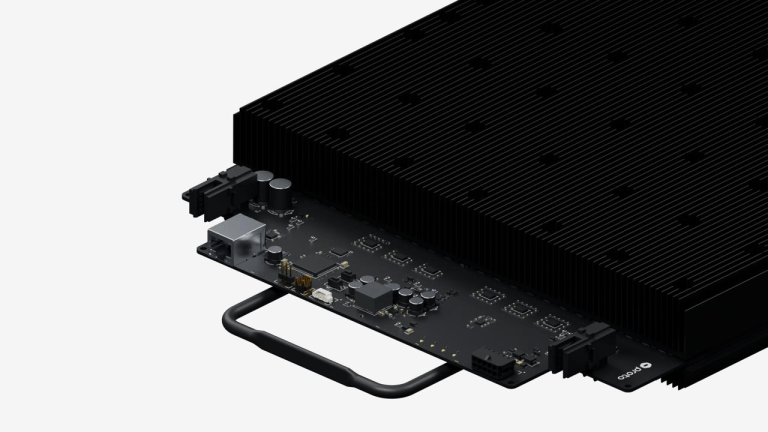
Block’s Proto Bitcoin Mining Hardware Now Available to Own via Sazmining
Bitcoin mining services provider Sazmining has launched a new offering that allows individual investors to purchase mining hardwar...

Aave V4 opens dollar-euro borrowing on Circle’s Arc network
Aave V4's new feature could enhance euro liquidity in DeFi, testing risk management and potentially influencing stablecoin market...

Hyperliquid CEO Jeff Yan lays out a US compliance plan that regulates operators, not the chain
Yan's regulatory model could reshape blockchain compliance, aligning it with traditional finance oversight and potentially influen...