Bitcoin Mining’s Sustainable Energy Usage Rises to 52%, Cambridge Study Finds
A new study from Cambridge University shows that sustainable energy now powers 52.4% of Bitcoin mining, a significant increase from 37.6% reported in 2022.The findings were published Monday by the Cambridge Centre for Al...
Archive context
Older archive item. Useful for background and entity history, but not a fresh market-moving signal.
A new study from Cambridge University shows that sustainable energy now powers 52.4% of Bitcoin mining, a significant increase from 37.6% reported in 2022.
The findings were published Monday by the Cambridge Centre for Alternative Finance (CCAF) through its Digital Mining Industry Report.
According to the report, 42.6% of Bitcoin mining’s sustainable energy comes from renewables like wind and hydropower, while 9.8% is sourced from nuclear energy.
Natural Gas Overtakes Coal as Top Energy Source for Bitcoin MiningNatural gas has now overtaken coal as the largest energy contributor to Bitcoin mining, with usage rising to 38.2%, compared to 25% in 2022.
Coal’s share, meanwhile, has fallen sharply to 8.9% from 36.6%.
The report is based on a survey of 49 mining companies operating in 23 countries, representing about 48% of the Bitcoin network’s total hashrate.
Participating firms included Bitfarms, CleanSpark, Hut 8, IREN, MARA, and Riot.
The study estimates Bitcoin’s total electricity consumption at 138 TWh annually—roughly 0.5% of global energy usage—and calculates carbon emissions at 39.8 megatonnes, with a 24% year-over-year improvement in hardware efficiency.
The study also found that miners are taking steps toward sustainability beyond energy sourcing.
52.4% of the electricity powering global Bitcoin mining is from zero emission sustainable energy sources, according to new research by Cambridge University. pic.twitter.com/Mwd0EUXh4f
— Documenting ₿itcoin (@DocumentingBTC) April 29, 2025About 86.9% of decommissioned mining hardware is either resold, repurposed, or recycled, with Bitcoin mining producing around 2.3 kilotonnes of electronic waste in 2024.
In terms of geography, North America dominates the sector, with the U.S. accounting for 75.4% of activity and Canada for 7.1%.
Electricity remains the primary cost driver for miners, making up over 80% of operational expenses, with a median reported power cost of $45 per MWh.
The report also noted that Bitcoin miners contributed to grid stability, curtailing 888 GWh of electrical load in 2023 to assist during peak demand periods.
Cambridge Calls for More Research on Bitcoin Mining ImpactsThe CCAF acknowledged that further research is needed into areas like methane mitigation, heat reuse, and broader social impacts such as employment effects.
“By offering data from nearly half the global mining network, we aim to ground policy discussions in transparent evidence,” said Alexander Neumueller, Research Lead at CCAF.
The report comes as Bitcoin mining’s environmental impact remains a hotly debated topic.
A recent Harvard-led study claimed U.S. Bitcoin mining worsened air pollution, but it has faced criticism from energy experts who argue it relied on flawed methodologies and outdated data.
The United States became a global leader in Bitcoin mining following China’s 2021 crackdown on the crypto industry.
With cheap electricity and strong capital markets, American mining firms quickly gained dominance, and the election of pro-crypto President Donald Trump initially fueled optimism for continued growth.
However, recent developments are casting a shadow over that momentum.
At the heart of the issue is the U.S. mining sector’s dependence on imported equipment from Southeast Asia.
Countries like Thailand, Malaysia, and Indonesia manufacture the majority of mining machines used in the U.S.
These machines are now facing steep tariffs of up to 36% under a new Trump administration trade policy, although the implementation has been temporarily paused for 90 days.
The post Bitcoin Mining’s Sustainable Energy Usage Rises to 52%, Cambridge Study Finds appeared first on Cryptonews.
Why this matters
This mining story adds another data point to the current market tape and is useful when read alongside nearby source coverage.
Original source
Read on CryptonewsRelated market context

Kalshi and Polymarket won’t be part of FTC sports gambling probe, report
Rival prediction markets Kalshi and Polymarket will reportedly be excluded from the Federal Trade Commission’s (FTC) probe into de...
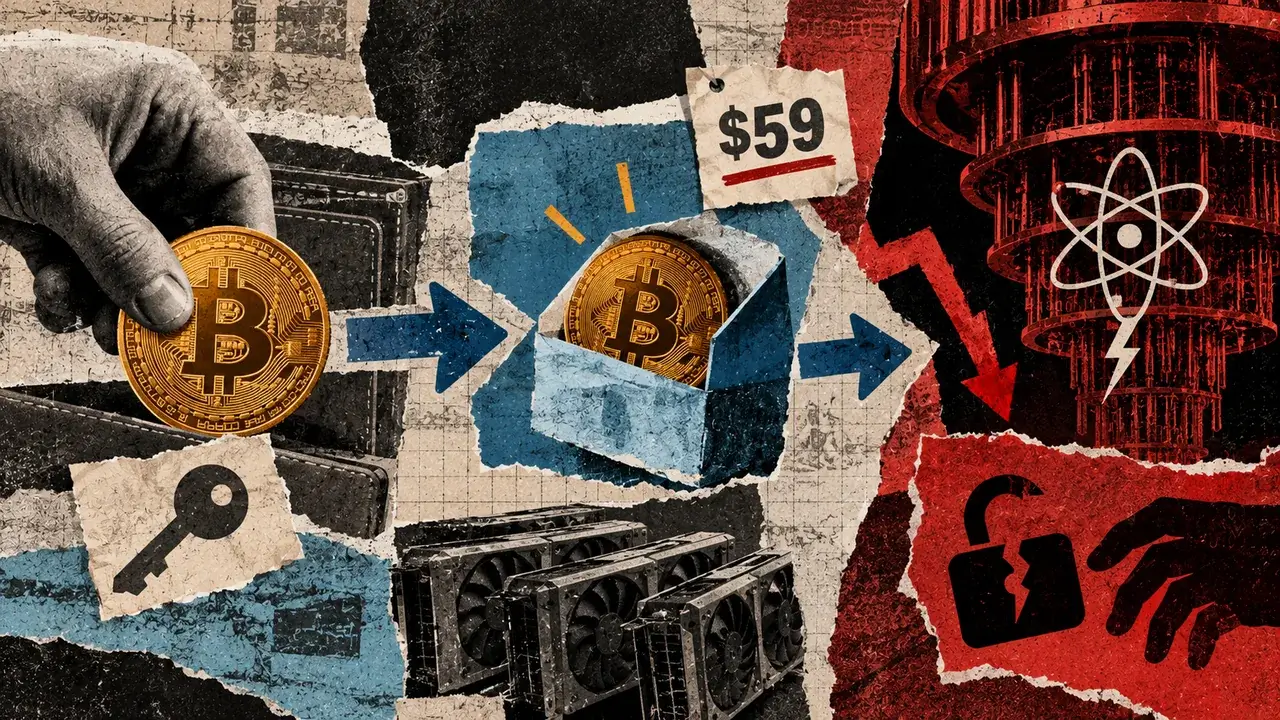
Bitcoin’s quantum-safe protection gets 82% cheaper as researchers race to secure 6 million exposed BTC
Researchers have cut the estimated computing cost of a specialized quantum-safe Bitcoin transaction by 82% to $59. Data from the Q...
Researchers Build First Working Post-Quantum Defense for Bitcoin’s Lightning Network
Bitcoin Magazine Researchers Build First Working Post-Quantum Defense for Bitcoin’s Lightning Network Whether or not quantum compu...

Binance Closes Its Mining Pool and Cloud Mining, Gives Miners Four Weeks to Move Hashrate
Binance announced on Tuesday that it will shut down Binance Pool, its cryptocurrency mining pool, along with a set of related prod...

TU Wien researchers work to formally prove the security of Bitcoin’s Ark protocol
Formal security proof of Bitcoin's Ark protocol could enhance trust and scalability, impacting future blockchain transaction syste...

Bitcoin whales accumulate ahead of crucial US inflation report as $744 million exits ETFs
Bitcoin whales are accumulating before Wednesday's US inflation report, despite $744 million in recent spot ETF withdrawals. Accor...