Can Government Regulation Incentivize Bitcoin Mining With Renewable Energy?
The Responsible Financial Innovation Act offers clarity around Bitcoin-related terms and could incentivize bitcoin mining with renewable energy.Listen To The Episode Here:AppleSpotifyGoogleLibsynOvercastIn this week’s ep...
Archive context
Older archive item. Useful for background and entity history, but not a fresh market-moving signal.
The Responsible Financial Innovation Act offers clarity around Bitcoin-related terms and could incentivize bitcoin mining with renewable energy.
Listen To The Episode Here:
In this week’s episode of “Bitcoin Bottom Line,” hosts C.J. Wilson and Josh Olszewicz are discussing the latest in the Bitcoin space and the bipartisan Responsible Financial Innovation Act.
Wilson begins by discussing the New York state bill that focuses on bitcoin mining, “It’s kind of weird because they singled out bitcoin mining as a target to say, ‘Hey, we need to limit bitcoin mining, or eliminate bitcoin mining, unless it is from totally renewable sources,’ which is kind of a weird catch all because I don't think there is any industry in America that has more renewable sources being applied to it than Bitcoin.”
Wilson then goes onto discussing inflation effects. “As inflation starts to hit more things, we’re seeing the things we need the most … Those industries are all the most impacted, so natural resources need to be managed a certain way and the best way to do that is to incentivize people to be innovative with the natural resources that are local.”
When discussing the bill, Wilson says, “The biggest problem that the government has is they have people interchanging words — crypto and bitcoin, blockchain and crypto, all these other things — so by clarifying the definitions, step one, we set the tone.”
Furthering the clarification conversation, Olszewicz explains, “It (bitcoin) is clearly closer to a commodity than a security … so it is great to see that in writing.”
Wilson adds on to say, “If you have hard measurements, meaning like factual, numerical measurements, you know what those thresholds are and you know if you can exceed those or how close you can get to them … in the same sense it's possible that by setting a line, you may have more people that try to get close to it, but at least at the same time you are setting a boundary.”
Applying this idea to stablecoins, Wilson explains, “With a stable definition, you might say, ‘Ok this is not allowed; this is frowned upon; this is not encouraged,’ so there are like gradients.”
They continue on with mining, when Wilson explains, “If you HODL your bitcoin mining revenues, they are not taxed … so if you are managing your treasury properly, you are going to HODL a majority of your bitcoin, which I think is going to increase mining focus and allow bigger miners to be more profitable and as they are publicly traded and stuff like that to normalize that thing.”
Olszewicz responds, “To see a de minimis rule, I think would increase transaction activity for Bitcoin would be great, so just having anything on the books is great, clarity on the miners, clarity on the transactional activity, clarity on stablecoins, in general this bill is good.”
He concludes, “It is not perfect, but it is something, and we have to start somewhere.”
Listen to the whole episode for more!
Why this matters
This mining story adds another data point to the current market tape and is useful when read alongside nearby source coverage.
Original source
Read on Bitcoin MagazineRelated market context

Strive’s Bitcoin Treasury Reaches 43,000 BTC as It Files a $1 Billion SATS ATM
Strive bought 6,182 bitcoin between Oct. 17 and Oct. 23 at an average price of about $82,732 each, including fees, lifting its hol...
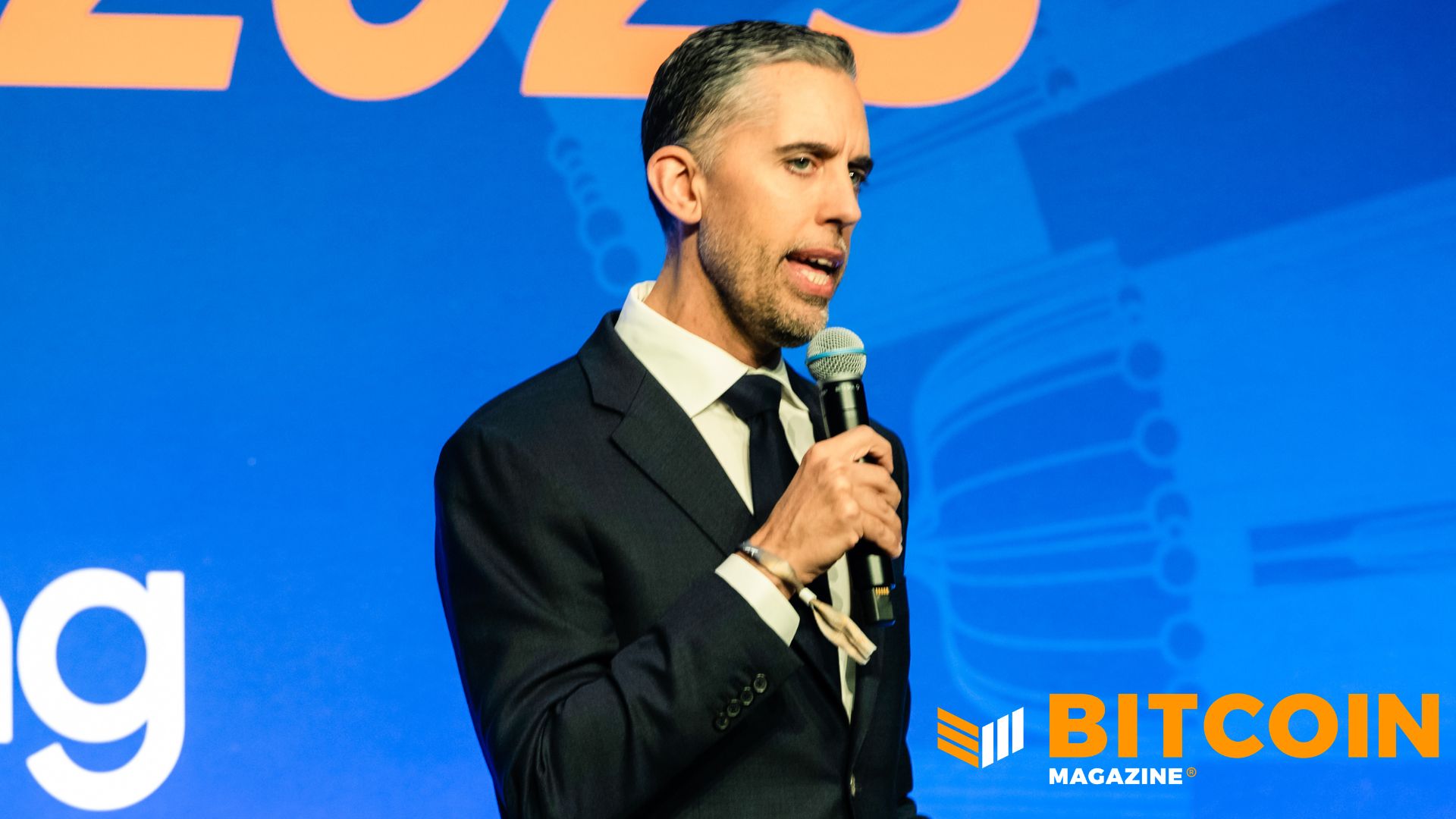
Strive Buys 6,182 Bitcoin For $511 Million, Lines Up $1 Billion ATM To Buy More
Bitcoin Magazine Strive Buys 6,182 Bitcoin For $511 Million, Lines Up $1 Billion ATM To Buy More Strive, Inc. (ASST) acquired 6,18...

BNB Chain leads all blockchains in tokenized fund growth, adding $3.7 billion
BNB Chain's rapid growth in tokenized funds highlights the increasing demand for blockchain-based financial products, reshaping tr...
Bitmine’s Holdings Value Dips to $15 Billion Despite 10,452 ETH Buy
Bitmine Immersion Technologies bought 10,452 ETH in the week through Oct. 25, lifting its holdings to 6,051,933 ETH, while a lower...

Kraken wins Fintech Company of the Year – Established at the National Fintech Awards 2026
TL;DR Kraken was named Fintech Company of the Year – Established at the Business Post’s National Fintech Awards 2026 in Dublin. Th...

War, Shutdowns, and Licensing Reshape MENA’s $443 Billion Crypto Economy
Summary MENA’s crypto economy was essentially flat at $443.3 billion in the 2026 reporting period, a 1.4% decline that tracks… The...