Cipher Mining Expands AI Data Center Push With ERCOT Capacity And Long-Term Lease
TL;DR Cipher Mining disclosed conditional ERCOT interconnection capacity for up to 300 MW. The company also reported a 15-year hyperscaler master lease tied to HPC data-center infrastructure. The SEC filing does not iden...
Archive context
Older archive item. Useful for background and entity history, but not a fresh market-moving signal.
- Cipher Mining disclosed conditional ERCOT interconnection capacity for up to 300 MW.
- The company also reported a 15-year hyperscaler master lease tied to HPC data-center infrastructure.
- The SEC filing does not identify the hyperscaler tenant by name.
Cipher Mining is pushing further into high-performance computing and AI infrastructure, using the power assets built around its mining business as a platform for longer-term data-center contracts.
A September 21 SEC filing outlines conditional ERCOT interconnection capacity for up to 300 MW alongside a 15-year hyperscaler master lease.
Cipher Looks Beyond Pure Bitcoin MiningThe combination matters because power access has become one of the most valuable assets in both Bitcoin mining and AI data centers.
Mining companies already control large power connections, land and electrical infrastructure. As demand from AI workloads increases, some operators are trying to convert part of that footprint into higher-value hosting arrangements.
Cipher’s filing places it firmly inside that trend.
The 300 MW figure refers to conditional ERCOT interconnection capacity, while the 15-year term applies to the disclosed hyperscaler master lease.
The Tenant Remains UndisclosedOne detail should not be filled in with speculation.
The SEC filing does not name the hyperscaler tenant, so attaching a specific technology company to the agreement would go beyond the source.
That leaves the strategic direction as the more useful part of the story: Cipher is building an infrastructure business that can serve computing demand beyond Bitcoin mining.
For miners, long-term data-center leases can also change the revenue profile by reducing dependence on Bitcoin price and network difficulty.
The September 21 filing does not mean mining disappears from Cipher’s business. It shows the company is increasingly trying to monetize the same power and site-development capabilities across both crypto and AI/HPC markets.
This article was written by the News Desk and edited by Samuel Rae.
Why this matters
Bitcoin is showing up inside the Regulation theme, so this story is worth tracking for follow-through rather than treating it as a one-off headline.
Original source
Read on NewsBTCRelated market context
FTX’s old Bitcoin-mining infrastructure gets a second life powering AI
The shift from crypto mining to AI workloads highlights the evolving landscape of digital infrastructure, emphasizing connectivity...
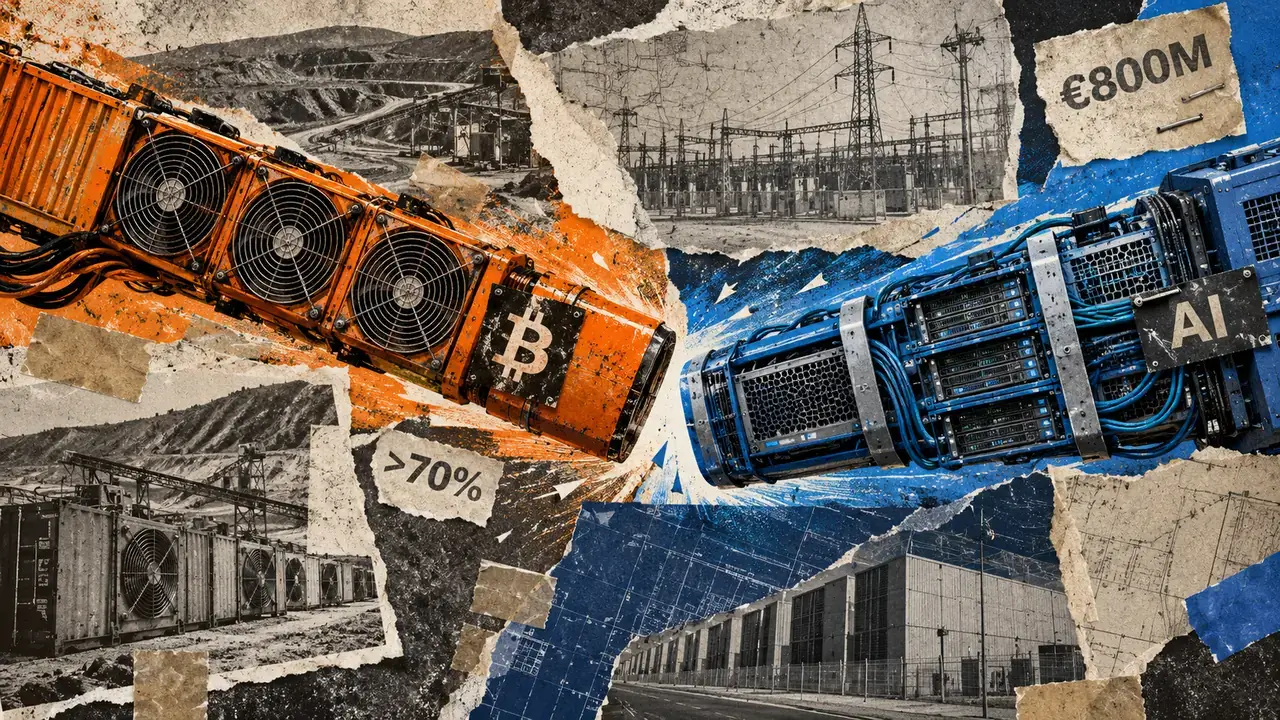
FTX’s former Bitcoin mining bet gets new life as parent raises €800 million for AI
SWI Group has raised €800 million to expand AI infrastructure, advancing its plan to repurpose FTX-backed Bitcoin miner Genesis Di...
SWI Turns FTX’s Former Bitcoin Mining Infrastructure Toward AI Boom
Genesis Digital Assets, once one of Sam Bankman-Fried’s largest crypto investments, is being repurposed for the artificial-intelli...

FTX Bitcoin Bet Takes an Unexpected Turn as SWI Group Raises $900 Million
SWI Group has raised €800 million from institutional investors at a €6.1 billion valuation. The Singapore-incorporated, Amsterdam-...

Crypto Regulation: UK Lands £3.8Bn Bitcoin Seizure as Korea Blocks KuCoin and MEXC
In recent crypto regulation news, The High Court in London has strengthened the UK authorities’ position in a dispute over roughly...

Binance to shut down crypto mining pool services in November
Binance will discontinue its mining pool and related services on Nov. 10, urging miners to move to alternative pools before the sh...