Current Block Times and Estimates Suggest Bitcoin’s Mining Difficulty Is About to Catapult Much Higher
As bitcoin is coasting along under the $20K region, the network’s hashrate is still riding high at 250.04 exahash per second (EH/s) following the all-time high (ATH) the hashrate tapped on October 5. At the time of writi...
Archive context
Older archive item. Useful for background and entity history, but not a fresh market-moving signal.

As bitcoin is coasting along under the $20K region, the network’s hashrate is still riding high at 250.04 exahash per second (EH/s) following the all-time high (ATH) the hashrate tapped on October 5. At the time of writing, the current speed at which blocks are processed is faster than the typical ten-minute average block intervals between the current block height (757,531) and the last difficulty adjustment. Statistics show that because block times have been much faster, the network could see the largest difficulty increase this year, as estimates show a possible jump between 9% to 13.2% higher.
Block Times and Hashrate Suggest a Notable Bitcoin Mining Difficulty Increase in the Cards
Bitcoin mining is looking to become a whole lot more difficult on the next retarget date which will occur on October 10, 2022. Two days ago, on October 5, the network’s total hashrate reached an ATH at 321 EH/s at block height 757,214. While the price of BTC is lower and the difficulty is near the last ATH, miners are relentlessly dedicating computational power to the BTC chain. At the moment, the hashrate is coasting along at 250 EH/s after the ATH was reached on Wednesday.
Currently, block times (the interval between each block mined) are faster than the ten-minute average, bitinfocharts.com data shows. Presently, at 9:00 a.m. (ET), metrics show block times are around 9:05 minutes but other dashboards show a much faster rate at 8:49 minutes. With the average bitcoin block interval between the current height (757,471) and the last difficulty epoch (756,000) at 8:49 minutes, it means BTC’s network difficulty is due for a notable rise. There’s a chance that the difficulty jump on October 10 could be the network’s highest difficulty rise this year.
Data from btc.com shows an increase of around 9.34%, which would surpass the network’s second-largest increase in 2022. If btc.com’s estimate is correct, BTC’s network difficulty will rise from 31.36 trillion to 34.29 trillion. Metrics from Clark Moody’s Bitcoin dashboard show the difficulty change could be a lot higher and at the time of writing, Moody’s dashboard indicates it could be around 13.2% higher than it is today. The Bitcoin network has roughly 400+ blocks to go until the next retarget.
It’s quite possible the hashrate will slow and block times increase back to the ten-minute range. If so the difficulty’s percentage increase could be a lot lower than even Btc.com’s 9% increase estimate. Every two weeks or when 2,016 blocks are discovered, the network’s difficulty adjusts to make it either harder or easier to find a BTC block depending on how fast the 2,016 blocks were discovered.
If the 2,016 blocks were found too fast, the network’s algorithm adjusts the difficulty higher and if the blocks are found at a much slower pace, the difficulty rating can decline. The last significantly large difficulty reduction took place on July 3, 2021, when the difficulty dropped by 27.94% at block height 689,472. That means it was 27% easier to find a BTC block subsidy than it was prior to block 689,472.
What do you think about the possibility that Bitcoin’s mining difficulty may see the largest jump this year? Let us know what you think about this subject in the comments section below.
Why this matters
This mining story adds another data point to the current market tape and is useful when read alongside nearby source coverage.
Original source
Read on Bitcoin NewsRelated market context

Blockstream Executive Peter Bain: Institutional Clients Say Bitcoin “Poised for a Big Bull Run”
▶Bitcoin Magazine Blockstream Executive Peter Bain: Institutional Clients Say Bitcoin “Poised for a Big Bull Run” Bitcoin is holdi...

China Sets 2030 Deadline for National Blockchain Network Despite Sweeping Crypto Ban
Key Takeaways: Under the new 5-year digital strategy, China aims to achieve a national blockchain network which will be largely co...

Akash Network proposal to leave Cosmos for Solana shows ~98% support, AKT to become SPL token
Akash Network's shift to Solana could boost AKT's liquidity and integration within a vibrant ecosystem, impacting DePIN sector dyn...

Lido Opens Higher-Balance Ethereum Validators With A Deliberately Small Start
Lido has opened a permissionless route to Ethereum validators that can hold much larger effective balances, but the first allocati...

How Solana Supports Fast Crypto Payments in Digital Gaming
Picture a SOL holder on a quiet evening, watching the token tick sideways on a chart that hasn’t done much all week. Rather than r...
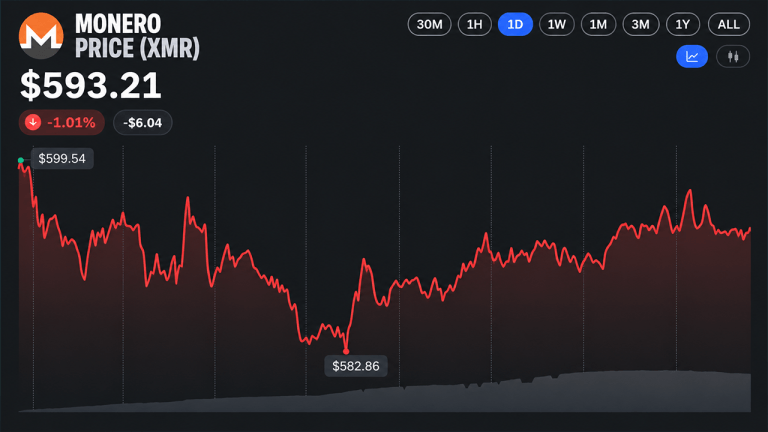
Monero Hashrate Nears Record Highs as XMR Price Gains 70% in a Year
Monero’s network hashrate is hovering near historic highs, but its mining distribution tells an equally compelling story. On Monda...