Draft Law Seeks to Oblige Kazakhstan’s Crypto Miners to Exchange Bulk of Income in Country
Cryptocurrency miners in Kazakhstan are to be required to convert up to three quarters of their income on locally registered exchanges, according to a new bill that’s advancing in the nation’s legislature. Lawmakers also...
Archive context
Older archive item. Useful for background and entity history, but not a fresh market-moving signal.
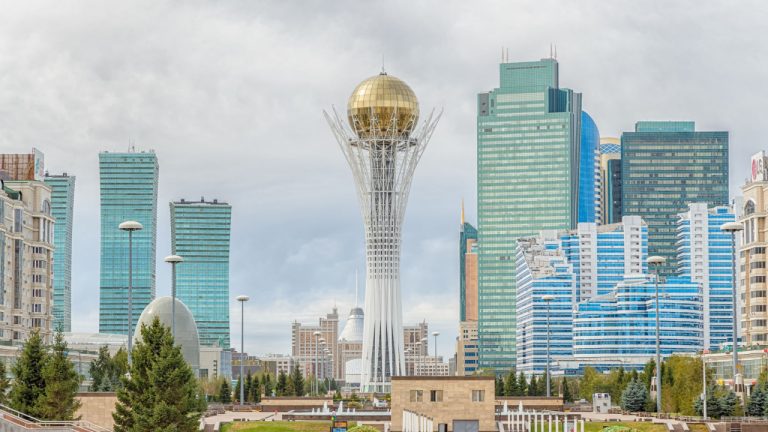
Cryptocurrency miners in Kazakhstan are to be required to convert up to three quarters of their income on locally registered exchanges, according to a new bill that’s advancing in the nation’s legislature. Lawmakers also want to make sure crypto companies pay their taxes and fees.
Parliament of Kazakhstan Votes on Bill Regulating Activities of Crypto Miners and ExchangesA draft law designed to create a regulatory framework for both the production and circulation of digital assets in Kazakhstan has been approved on first reading in the Mazhilis. The bill and other supporting documents were prepared and submitted recently to the lower house of parliament on request of the country’s president, Kassym-Jomart Tokayev.
One of the main purposes of the legislation is to establish rules for the operation of a new type of financial institution for Kazakhstan — licensed cryptocurrency exchanges. In order to support these trading platforms, the government plans to oblige crypto miners to exchange up to 75% of their income on them, starting from 2024.
The authorities also want mining pools to pay taxes on their profits and exchanges to pay fees. The authors of the bill intend to impose corporate tax on crypto companies, too. Currently, mining enterprises are only required to pay tax on the electricity they use at rates depending on the amount and price of energy consumed to mint digital coins.
With its subsidized electricity rates, Kazakhstan attracted many mining firms when China cracked down on the business in 2021. But the influx of miners caused a growing power deficit and breakdowns of the country’s aging infrastructure, which led to shutdowns of crypto farms. The Central Asian nation was forced to impose the levy and import electricity from neighboring Russia.
Introducing legal mechanisms to control the use of electricity in the sector is another major motive for the sponsors of the draft law, as indicated by Ekaterina Smyshlyaeva, member of the Mazhilis Committee for Economic Reform and Regional Development. She also said that the Ministry of Energy will determine energy quotas for mining to maintain the balance of the country’s energy supply system.
Quoted by the Russian news outlet RBC Crypto, the lawmaker expressed her opinion that Kazakhstan is being used as a “raw-material appendage of the blockchain industry.” However, the situation is going to change as a new licensing regime for crypto miners replaces the current voluntary registration. That means that those who want to mine would have to establish legal entities and be subjected to taxation.
“The bill provides connection between the production and circulation of digital assets in one ecosystem. At the same time, the activities of miners and mining pools will be regulated and licensed by the Ministry of Digital Development, Innovation and Aerospace Industry,” Ekaterina Smyshlyaeva further explained.
Do you think the upcoming stricter regulations and the increasing tax burden will force mining companies to leave Kazakhstan? Share your expectations about the future of the country’s mining industry in the comments section below.
Why this matters
This mining story adds another data point to the current market tape and is useful when read alongside nearby source coverage.
Original source
Read on Bitcoin NewsRelated market context

How Solana Supports Fast Crypto Payments in Digital Gaming
Picture a SOL holder on a quiet evening, watching the token tick sideways on a chart that hasn’t done much all week. Rather than r...

Canada’s Stablecoin Draft Allows Usage Rewards, Bars Issuers Paying Yield via Third Parties
Canada’s Department of Finance has published draft Stablecoin Regulations that spell out where a permitted reward ends and a banne...

South Korea Weighs Fourth Delay of Crypto Tax, With 2029 Start Tied to U.S. Data Sharing
Bitcoin Magazine South Korea Weighs Fourth Delay of Crypto Tax, With 2029 Start Tied to U.S. Data Sharing South Korea’s presidenti...

Strive Buys 6,182 Bitcoin For $511 Million, Lines Up $1 Billion ATM To Buy More
Bitcoin Magazine Strive Buys 6,182 Bitcoin For $511 Million, Lines Up $1 Billion ATM To Buy More Strive, Inc. (ASST) acquired 6,18...
Tether Wins Mining Industry Support For Its Open Automation Toolkit
Tether is trying to make Bitcoin mining equipment easier to operate as one system. Its October 24 announcement brings 15 industry...
New York Seeks $1.3 Billion From NovaTech Founders In Crypto Fraud Case
TL;DR: New York’s attorney general is seeking $1.3 billion in monetary relief in the NovaTech case and has announced nearly $6 mil...