ECB Calls for Urgent Regulation of Stablecoins and Defi, Won’t Rule Out Bitcoin Mining Ban
A new report by the European Central Bank (ECB), presented as a “deep dive into crypto financial risks,” calls for “appropriate” regulation and oversight of stablecoins and decentralized finance (defi). It also addresses...
Archive context
Older archive item. Useful for background and entity history, but not a fresh market-moving signal.
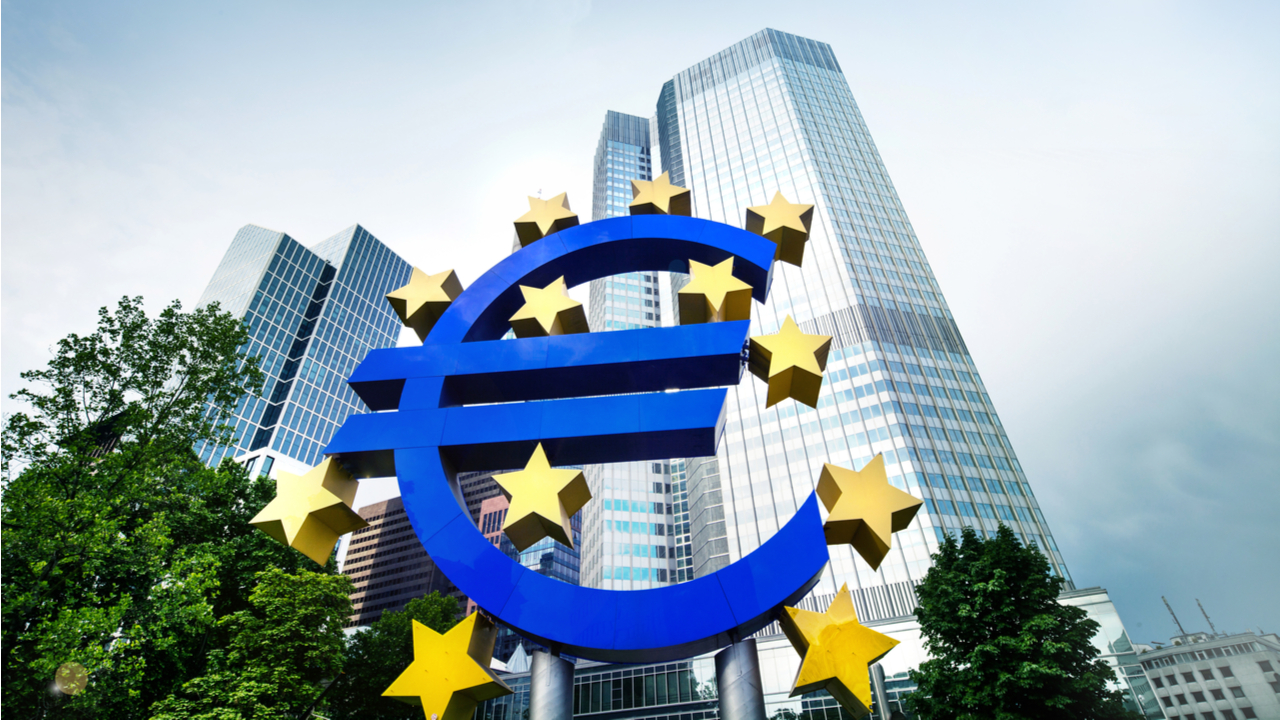
A new report by the European Central Bank (ECB), presented as a “deep dive into crypto financial risks,” calls for “appropriate” regulation and oversight of stablecoins and decentralized finance (defi). It also addresses the hot topic of Bitcoin’s carbon footprint in Europe, suggesting a ban on proof-of-work mining is probable.
Growth of Stablecoins, Defi Warrants Regulation and Supervision, ECB SaysCrypto-related financial risks, those associated with stablecoins and defi platforms in particular, as well as the threat to climate transition goals blamed on energy-intensive methods of crypto mining, are in the focus of the latest edition of the Macroprudential Bulletin issued by the European Central Bank (ECB). Key moments in the report published in July were highlighted this week by Patrick Hansen, crypto venture advisor at Presight Capital.
Exploring the policy implications of these segments of the crypto market, the authors of the paper insist that the growth and increasing use of stablecoins around the world require immediate implementation of the necessary regulatory, supervisory, and oversight frameworks, such as the MiCA legislation, before the interconnection between these digital currencies and the traditional financial system deepens further.
Recognizing the important role of stablecoins for the crypto ecosystem in one of the three articles in the bulletin, the ECB experts point out that their critical function could have contagion effects for the financial system, if unbacked crypto assets pose a risk to financial stability in the future. Reminding of May’s collapse of the terrausd (UST) algorithmic stablecoin, they comment:
Recent developments show that stablecoins are anything but stable, as exemplified by the crash of terrausd and the temporary de-pegging of tether.
Initially serving mainly as a “relatively safe ‘parking space,’” the use cases for stablecoins have multiplied in recent years, the eurozone’s monetary authority notes, even more so with the rise of defi applications, which represent another rapidly expanding segment of the crypto market, especially over the past year.
While acknowledging that defi platforms employ technology-enabled innovation and differ in certain aspects such as how assets are held, trust is generated and systems governed, the ECB claims they do not create novel financial products but rather mimic those offered by traditional financial providers. At the same time, “defi is in many ways subject to the same vulnerabilities as traditional finance,” the central bank says, elaborating:
Defi protocols or platforms claim to have a decentralized governance structure, although in reality governance is often concentrated.
The ECB believes that efforts are needed to regulate and supervise the defi space effectively, despite the challenges that stem from its decentralized and anonymous nature, that make the task harder for policymakers and respective authorities. The European Central Bank urges for a coordinated approach on the international level and common standards to identify and fill the regulatory gaps.
Ban on Proof-of-Work Mining Deemed ProbableECB’s Macroprudential Bulletin comes as the European Union progresses towards adopting and implementing the comprehensive MiCA regulatory package. Key EU institutions recently reached an agreement on the legislation. A controversial proposal to prohibit the provision of services for cryptocurrencies using the power-hungry proof-of-work (PoW) mining was dropped from the draft.
Members of the crypto industry and community had warned that such a measure would have amounted to a ban on Bitcoin. But the ECB article asking the question “Is climate risk priced into crypto assets?” argues that authorities can incentivize the proof-of-stake (PoS) consensus mechanisms, described as “the crypto version of the electric vehicle,” and restrict or ban the PoW mechanisms, referred to as “the crypto version of the fossil fuel car.”
“So, while a hands-off approach by public authorities is possible, it is highly unlikely, and policy action by authorities (e.g. disclosure requirements, carbon tax on crypto transactions or holdings, or outright bans on mining) is probable,” the authors think. In their opinion, it’s also unlikely that the EU will restrict or ban fossil fuel cars by 2035, but not take action against crypto assets with their carbon emissions which they say are enough to negate most euro area countries’ greenhouse gas emission savings.
Do you think the EU will introduce strict regulations for crypto assets and ban bitcoin mining? Share your expectations in the comments section below.
Why this matters
This mining story adds another data point to the current market tape and is useful when read alongside nearby source coverage.
Original source
Read on Bitcoin NewsRelated market context

Netanyahu Floats Blockchain as a Sanctions Workaround; Israel’s Central Bank Objects
Israeli Prime Minister Benjamin Netanyahu said in a Channel 10 interview on Friday, Oct. 23, that Israel has to get ready for poss...

SoFi’s tokenized deposits put banks in competition with stablecoins, Truth Ventures CEO says
SoFi's tokenized deposits may drive innovation in banking, challenging stablecoins and prompting regulatory and consumer protectio...

Robinhood Chain Nears $30B DEX Volume While $1.1B DeFi Base Fuels Fresh Tease
Key Takeaways: As reported by DefiLlama, Robinhood Chain has now surpassed $30 billion in 30-day decentralized exchange volume. DE...

Kraken wins Fintech Company of the Year – Established at the National Fintech Awards 2026
TL;DR Kraken was named Fintech Company of the Year – Established at the Business Post’s National Fintech Awards 2026 in Dublin. Th...

Quant Crypto Soars 18% as QNT Charges Toward $250
Quant crypto is back in the spotlight after QNT climbed to $216, gaining 18.7% in 24 hours. The move puts the blockchain interoper...

Ripple National Trust Bank receives final OCC approval for crypto custody
Ripple's OCC approval enhances regulatory confidence in stablecoins, intensifying competition in crypto custody and fiduciary serv...