Eskom Eyes Bitcoin Mining & AI to Tackle $22.7B Debt – Can the Lights Stay On?
South Africa’s struggling power utility Eskom is considering Bitcoin mining, artificial intelligence (AI), and data centres as part of its long-term strategy to stay afloat, according to group CEO Dan Marokane.Speaking e...
Archive context
Older archive item. Useful for background and entity history, but not a fresh market-moving signal.

South Africa’s struggling power utility Eskom is considering Bitcoin mining, artificial intelligence (AI), and data centres as part of its long-term strategy to stay afloat, according to group CEO Dan Marokane.
Speaking earlier this year at the BizNews Conference, Marokane said the utility is exploring new ways to repurpose its excess electricity capacity as the energy market shifts.
He pointed to growing demand in the U.S. from Bitcoin miners and data centres as an indication of where the future might be heading.
Inside Eskom’s Strategy to Survive a $22.7 Billion Debt LoadEskom is undergoing a major strategic rethink as it confronts declining electricity sales and a mounting R403 billion ($22.7 billion) debt load.
Eskom CEO Dan Marokane recently acknowledged the severity of the crisis, describing it as a “structural decline” driven by the growing adoption of self-generation and independent power producers (IPPs).
In 2023 alone, Eskom’s electricity sales dropped by 4%, and the utility anticipates that this downward trend will persist for another three to five years.
“The business has to reinvent itself and use part of this baseload in a way that can help it manage the remainder of its debt pile,” Marokane said, hinting at the need to reimagine Eskom’s commercial model.
Eskom employees are involved and generating and selling fraudulent prepaid electricity tokens worth billions, causing higher tariffs and likely contributing to past load-shedding.https://t.co/fhGlQQMoNu
— MyBroadband (@mybroadband) June 30, 2025Beyond operational challenges, Eskom faces a deepening financial crisis. The utility’s municipal customers owe an additional R90 billion, and South Africa’s Electricity Minister Kgosientsho Ramokgopa has warned that Eskom’s total debt could balloon to R3.1 trillion by 2050 if left unchecked.
Eskom is exploring alternative uses for its surplus generation capacity. Among the unconventional options being considered are energy-intensive industries such as artificial intelligence data centers and even Bitcoin mining.
“We have to be looking at alternatives, and there are exciting opportunities around AI and data centres, but also within the space of Bitcoin,” Marokane noted.
Bitcoin mining, though controversial, offers a potential outlet for surplus electricity. In countries like the U.S., crypto miners and AI firms have become major energy consumers.
The U.S. Energy Information Administration (EIA) said in 2024 that large-scale computing facilities, including Bitcoin mining operations, are now among the fastest-growing sources of electricity demand, especially in Texas.
These facilities often strike deals to reduce usage during high-demand periods, similar to Eskom’s load curtailment program. In one case, Texas-based mining firm Riot Platforms was paid $32 million in 2023 for voluntarily cutting consumption during a heatwave.
Eskom said it is looking to replicate this model. But while it plans for an integrated energy-intensive future, South Africa’s grid is reportedly under pressure.
Between June 13 and 19 this year, Eskom reported average unplanned outages of 15,076 megawatts, above the 15,000 MW threshold that triggers Stage 2 load-shedding.
The utility has so far avoided rotational blackouts but has relied heavily on costly diesel-powered open-cycle gas turbines (OCGTs). Eskom’s OCGT load factor has more than doubled year-over-year, from 5.78% to 11.73%.
To date, Eskom has spent R4.51 billion on diesel this financial year, generating 768.64 GWh of electricity. That’s more than double the 378.75 GWh generated during the same period last year.
Eskom says diesel usage will likely drop as more power units come back online following long-term maintenance.
But for now, it continues to burn fuel to keep the lights on while weighing long-term solutions, including Bitcoin mining and AI, to secure its financial survival.
Global Bitcoin Mining Faces Growing Scrutiny Over Energy and EmissionsAs Eskom prepares a $22.7 billion debt relief plan to stabilize South Africa’s power utility, the global spotlight on energy use, particularly from Bitcoin mining, is intensifying.
A 2024 peer-reviewed study in Nature Communications revealed that U.S. Bitcoin mining facilities emit harmful fine particulate matter (PM2.5) across state lines, affecting nearly 2 million people.
The 34 largest mining sites consumed 32.3 TWh of electricity, 33% more than Los Angeles, mostly powered by fossil fuels. Pollution hotspots now stretch from New York to Texas, exposing regulatory gaps and health risks.
This has reignited global scrutiny on crypto mining’s power demands. While a Cambridge report showed a positive trend—52.4% of Bitcoin mining now uses sustainable energy—natural gas has overtaken coal as the dominant source, showing uneven progress.
Meanwhile, the U.S. sector faces new hurdles. Tariffs of up to 36% on imported mining machines, proposed under Trump’s trade policies, have sent shockwaves through the industry.
The post Eskom Eyes Bitcoin Mining & AI to Tackle $22.7B Debt – Can the Lights Stay On? appeared first on Cryptonews.
Why this matters
This mining story adds another data point to the current market tape and is useful when read alongside nearby source coverage.
Original source
Read on CryptonewsRelated market context

FTX’s old Bitcoin-mining infrastructure gets a second life powering AI
The shift from crypto mining to AI workloads highlights the evolving landscape of digital infrastructure, emphasizing connectivity...
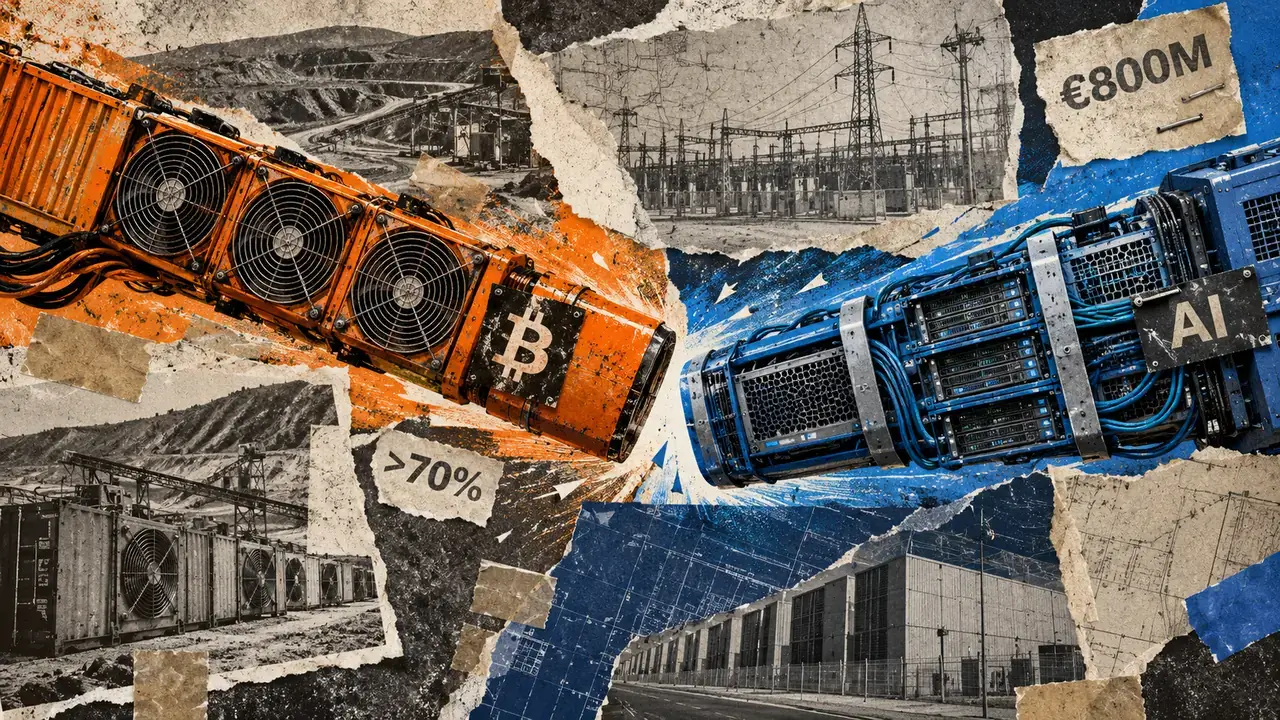
FTX’s former Bitcoin mining bet gets new life as parent raises €800 million for AI
SWI Group has raised €800 million to expand AI infrastructure, advancing its plan to repurpose FTX-backed Bitcoin miner Genesis Di...

Senegal eyes Bitcoin mining as it restructures its debt
Senegal's Bitcoin mining pilot highlights the potential for innovative solutions to economic challenges but underscores the risks...

Thailand wants a piece of the $120 billion Bitcoin and Ethereum ETF market, but on its own terms
Thailand has finalized rules allowing domestic Bitcoin and Ethereum ETFs while restricting retail access to competing overseas inv...

FTX Bitcoin Bet Takes an Unexpected Turn as SWI Group Raises $900 Million
SWI Group has raised €800 million from institutional investors at a €6.1 billion valuation. The Singapore-incorporated, Amsterdam-...
IMF Warns $65 Billion Tokenization Market Has a Dangerous Catch
Tokenized assets have climbed to $65 billion, but the technology promising to make Wall Street faster and cheaper carries an uncom...