Ethereum Miner Returns ‘Erroneously High’ $22 Million Gas Fee to Bitfinex’s Wallet
Yesterday, a transaction stemming from a crypto wallet attached to the exchange Bitfinex mistakenly paid a fee of around $22.3 million, or 7,626 Ethereum, for a $100,000 transaction. Shortly after, the mining pool has re...
Archive context
Older archive item. Useful for background and entity history, but not a fresh market-moving signal.
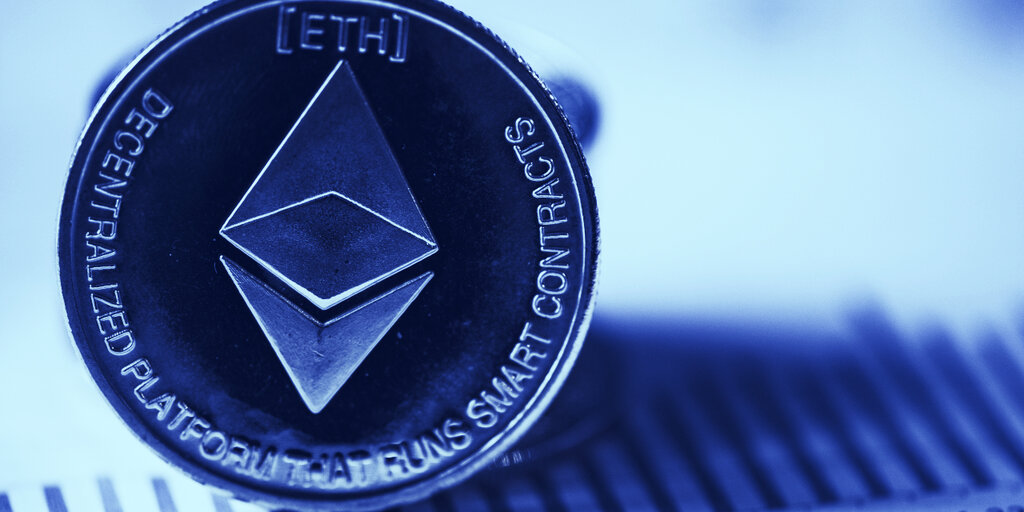
Yesterday, a transaction stemming from a crypto wallet attached to the exchange Bitfinex mistakenly paid a fee of around $22.3 million, or 7,626 Ethereum, for a $100,000 transaction.
Shortly after, the mining pool has returned the erroneous fee back to Bitfinex’s wallet via three transactions of 1 ETH, 7,385 ETH, and 240 ETH, respectively.
While the mining pool that received the enormous gas fee is anonymous, it is currently ranked 9th among the largest Ethereum miners and is responsible for roughly 3.1% of the network’s hash rate, according to Etherscan.
“Thank you to the miner of block 13307440 who we can confirm is returning 7,626 ETH that were incorrectly paid today as a tx fee,” decentralized crypto exchange (DEX) DeversiFi tweeted.
The blockchain is immutable.
But the revolution we are part of is defined by our values as humans.⁰⁰
Thank you to the miner of block 13307440 who we can confirm is returning 7626 ETH that were incorrectly paid today as a tx fee.
A post mortem will follow tomorrow. https://t.co/FqkEZ9DK8P
— DeversiFi (@deversifi) September 27, 2021
DeversiFi was previously known as Ethfinex, a sister exchange of crypto trading platform Bitfinex. In 2019, the two firms parted company via a “management buyout” and Ethfinex was rebranded into DeversiFi. Notably, the three co-founders of the DEX also worked at Bitfinex in the past, as per Bloomberg.
The connection doesn’t stop there, however.
Due to yesterday’s events, it has now become clear that the DEX also has access to at least one of Bitfinex’s crypto wallets to help subside transaction costs for users.
Ethereum-based exchange DeversiFi gets an upgrade, targets pro traders Transaction error: Bitfinex or DeversiFi?“At 11:10 UTC on the 27th September a deposit transaction was made using a hardware wallet from the main DeversiFi user interface with an erroneously high gas fee,” the DEX later acknowledged on Twitter.
At 11:10 UTC on the 27th September a deposit transaction was made using a hardware wallet from the main DeversiFi user interface with an erroneously high gas fee.https://t.co/OpSHkkFiBo
— DeversiFi (@deversifi) September 27, 2021
A spokesperson for Bitfinex also confirmed to Decrypt that the transaction in question “belongs to DeversiFi.”
“This transaction was a transaction to deposit funds on the DeversiFi L2 solution. These transactions are extremely rare and third-party companies cover the costs of such integrations. DeversiFi confirmed that they will take care of it,” a Bitfinex representative told Decrypt.
Why this matters
This mining story adds another data point to the current market tape and is useful when read alongside nearby source coverage.
Original source
Read on DecryptRelated market context

Solana outshines XRP with higher transactions and stablecoin usage: Motley Fool
Solana's superior network metrics and stablecoin usage may boost investor confidence, potentially impacting its market valuation a...
Bitdeer Reports 1,355 Bitcoin Mined In September While Building AI Capacity
TL;DR: Bitdeer says its September Bitcoin production reached 1,355 BTC, highlighting the miner’s expanding hash rate alongside sep...
NIP Group Signs Bitcoin Miner Purchase To Add 4.47 Exahash Of Capacity
TL;DR: NIP Group has agreed to purchase already deployed Bitcoin mining machines with about 4.47 EH/s of hash rate, subject to clo...

Austin Griffith Demonstrates How Fast Bots Can Drain Weak Ethereum Keys
Austin Griffith of the Ethereum Foundation put about $1 in an Ethereum wallet whose private key was the number 6969, and bots went...
Solayer Pay Adds Five Blockchain Networks For Direct Stablecoin Card Deposits
TL;DR: Solayer Pay says its card app now accepts supported stablecoin deposits from Solana, Ethereum, Arbitrum, BNB Chain and Base...
SoFi Launches Yield-Bearing Tokenized Bank Deposit With Stablecoin Conversion
TL;DR: SoFi says its new SOFIE tokenized deposit represents money held at SoFi Bank, advertises 4.40% APY subject to terms, and ca...