Is Bitcoin Mining Still Profitable?
While Bitcoin’s price has dropped to around $20,000 from the all-time highs of $69,000, mining difficulty hasn’t dropped much. During the same time, mining revenues have also fallen to $18 million from the peak of $62 mi...
Archive context
Older archive item. Useful for background and entity history, but not a fresh market-moving signal.

While Bitcoin’s price has dropped to around $20,000 from the all-time highs of $69,000, mining difficulty hasn’t dropped much. During the same time, mining revenues have also fallen to $18 million from the peak of $62 million.
The anomaly is because miners have refused to cease operations, keeping the computing power intact.
But, why?
Bitcoin Mining EconomicsBitcoin mining is profitable only when the mining costs remain below the value of BTC rewards. The Bitcoin hash rate, a measure of total computing power or calculations made each second on the network, depends on several factors and helps in determining mining costs.
As more miners enter the networks, the protocol automatically adjusts every two weeks to make the calculations more difficult, thus, increasing the hash rate. Miners must bring in more efficient systems and electricity to achieve the same output. These conditions result in increased costs.
When some miners or computation power leave the network, the hash rate and difficulty fall. With the reduced network load and hash rate drop, the electricity consumption drops as fewer machines are now required. Costs start moving downwards as well due to less electricity expenditure.
Therefore, the lesser the competition or the number of miners in the network, the more the profit.
The correlation between hash rate and energy use makes hash rates a good indicator of costs. In addition, other factors like GPU efficiency, location, maintenance, electricity rates and scale all play a role in determining overall costs.
However, the costs were justifiable when Bitcoin was trading above $50,000. With the fall in the price of Bitcoin, the value of BTC rewards for miners has plummeted.
Leveraged MiningOne of the factors that have substantially increased costs is debt. When Bitcoin was at its peak, miners used their BTC and mining equipment as collateral to finance high-interest loans. An estimated $4 billion of these loans have been given out.
Babel Finance, Foundry Networks, BlockFi and many more readily dispatched loans with mining rigs as collateral. Publicly listed firms have borrowed around $2.16 billion in loans, including a credit line of $37 million secured by Bitfarms.
Financing pressures mining operations as interest payments eat up the top line. Miners with rigs as collateral are under the added pressure of being unable to scale down during a market decline.
The precarious situation has forced some to liquidate their BTC holdings or throw in the towel altogether. As a result, there has been a minor fall in the hash rate, which hit an all-time high on June 12.
ASCI prices have also witnessed a decline. The $80 price per terahash (TH) of mining power is now available under the $60/TH range.
So, even if the lenders decide to take back ASCIs on collateral, neither will they be able to recoup the same amount by selling those nor use it at a hosting site because those facilities are running at full capacity.
ProfitabilityWith more people in the mining business, this is possibly the worst time for the industry. Interest rates are rising, and fuel prices are skyrocketing, which puts a strain on the profitability margins.
According to Blockchain.com, revenues paid to miners are at the lowest since the bull run started.
However, not all mining operations are running unprofitably. Public-listed firms’ profits have decreased drastically, but some still make money. Conversely, individual miners and smaller organizations are facing the blunt.
Companies with strong balance sheets are better positioned. As the situation worsens, the expectation is that less efficient miners will automatically be weeded out, bringing the hash rate down.
Irrespective of the number of participants, the BTC reward pool stays constant. Therefore, it would mean a more significant share for those who survive. Also, since Bitcoin has been historically an appreciating asset, the miners who continue holding are predicted to enjoy the compounding effect.
This article was written by Liam Peak at www.financemagnates.com.Why this matters
This mining story adds another data point to the current market tape and is useful when read alongside nearby source coverage.
Original source
Read on Finance MagnatesRelated market context
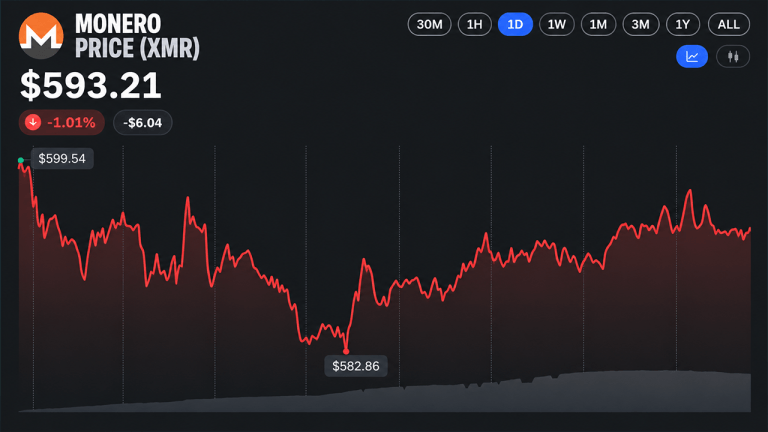
Monero Hashrate Nears Record Highs as XMR Price Gains 70% in a Year
Monero’s network hashrate is hovering near historic highs, but its mining distribution tells an equally compelling story. On Monda...

Akash Network to migrate from Cosmos to Solana with 98% approval
Akash's migration to Solana may enhance Solana's ecosystem appeal, potentially influencing developer interest and investor confide...

BNB New Layer 1 Puts CZ’s Ecosystem Strategy in Focus as ASTER Builds Its Own Chain
Changpeng Zhao’s vision for a multi-chain crypto ecosystem is coming into sharper focus as BNB Chain develops a new Layer 1 blockc...

Ault Blockchain – Silver First, Then Everything Else
Why you should listen Most new layer ones are built to trade perpetual futures. Ault thinks the bigger gap is in spot commodities....

Elon Musk’s Grok AI Predicts When Bitcoin Will Finally Hit its Ultimate Price Target
X and SpaceX CEO Elon Musk’s Grok AI predicts something potentially historic could be brewing for Bitcoin by January 1, 2027. This...

How Solana Supports Fast Crypto Payments in Digital Gaming
Picture a SOL holder on a quiet evening, watching the token tick sideways on a chart that hasn’t done much all week. Rather than r...