Kenya’s Largest Power Provider To Offer Geothermal Energy To Bitcoin Miners
KenGen, Kenya’s largest energy producer, plans to deliver excess geothermal energy to bitcoin miners in the region.Kenya’s largest producer of electricity intends to deliver excess geothermal energy to bitcoin miners. Ge...
Archive context
Older archive item. Useful for background and entity history, but not a fresh market-moving signal.
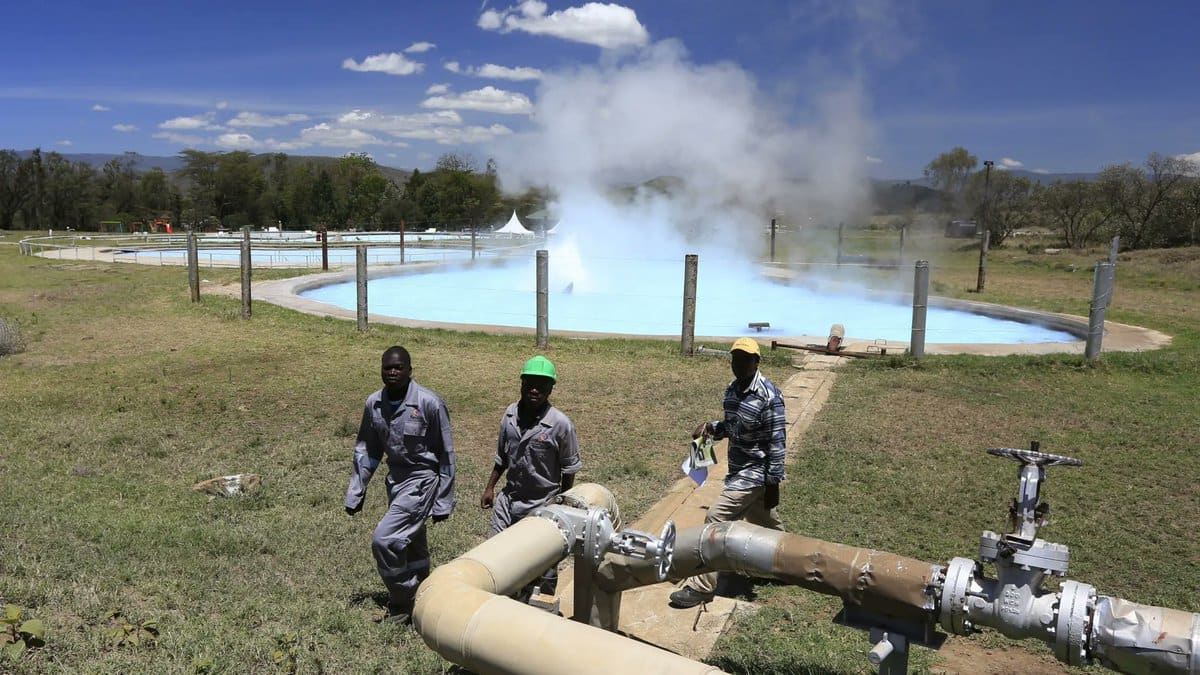
KenGen, Kenya’s largest energy producer, plans to deliver excess geothermal energy to bitcoin miners in the region.
- Kenya’s largest producer of electricity intends to deliver excess geothermal energy to bitcoin miners.
- Geothermal energy in the region is estimated to be above 14,000 MW with 10,000 MW located along the Rift Valley circuit.
- Over 80% of KenGen’s power is renewable energy, but it does not openly disclose excess capacity.
KenGen (Kenya Electricity Generating Company PLC), the leading supplier of electricity in Kenya, wants to provide excess geothermal power to bitcoin mining companies, according to a report from Quartz Africa.
“We have the space and the power is near, which helps with stability,'' KenGen's geothermal development director, Peketsa Mwangi reportedly explained in an interview.
Kenya is the top producer of geothermal energy in Africa delivering over 14,000 megawatts (MW) of power with the equipment capacity of only 863 MW. Along the Rift Valley circuit alone, an estimated 10,000 MW of geothermal energy lies largely dormant.
Miners looking to take advantage of this offering have already approached KenGen to discuss the offer and “Some have requested to start with 20 MW and upscale later,” said Mwangi.
Considering there are no bitcoin mining firms currently in Africa, it is reported that those interested in the offering are expected to be mainly from the U.S. or Europe.
Currently over 80% of KenGen’s produced power is provided from renewable energy sources like hydro and wind, in addition to geothermal usage. However, KenGen does not openly disclose its excess power capacity.
The publication reported KenGen stated that by offering clean energy, the company hopes to contribute to the reduction of carbon emissions often associated with mining bitcoin. However, the government of Kenya has taken a completely different approach to bitcoin and digital currency due to its fear of scams in the broader market.
Previously, the central bank of Kenyareleased a document detailing its desire to research a central bank digital currency (CBDC). However, the central bank did note that through the success of M-Pesa, a mobile banking service, Kenya’s recent experience in innovation may be put at risk if they create a CBDC without good cause.
“The usefulness of technology does not lie in its uniqueness but in its ability to solve a pressing societal problem. A case in point has been the rise of mobile money in Kenya that has placed our country as a cradle of innovation in Africa.”
Why this matters
This mining story adds another data point to the current market tape and is useful when read alongside nearby source coverage.
Original source
Read on Bitcoin MagazineRelated market context
SEC Examiners Set Sights on Tokenization at Clearing Agencies for Fiscal 2027
The SEC’s Division of Examinations has named tokenization among the “high-risk areas” its staff will focus on when examining clear...

Strive is 1,001 Bitcoin away from surpassing Metaplanet as second-largest Bitcoin treasury
Strive's aggressive Bitcoin acquisition strategy highlights the intensifying competition among corporate treasuries, impacting mar...

Strive lifts Bitcoin holdings to 43,000 BTC after largest-ever purchase
Strive's increased Bitcoin holdings highlight growing corporate interest in cryptocurrency as a strategic asset, influencing marke...

Aviva Investors tokenizes its largest fund on XRP Ledger
Aviva's tokenization on XRPL could revolutionize fund management, enhancing liquidity and accessibility while aligning with regula...

Bitdeer Reports 1,355 Bitcoin Mined In September While Building AI Capacity
TL;DR: Bitdeer says its September Bitcoin production reached 1,355 BTC, highlighting the miner’s expanding hash rate alongside sep...

Interpol Africa Sweep Nets 1,462 Arrests, Exposes Crypto Laundering
An Interpol-coordinated cybercrime crackdown focused on Africa led to 1,462 arrests and recovered more than $105 million. A Nigeri...