Malaysia’s Crypto Mining to Soar 110% in 2025 as $100 Million Power Theft Persists
A new report by the ACCESS Blockchain Association of Malaysia predicts a sharp rise in legal mining activity, driven by infrastructure investment, expanding data center capacity, and increased institutional interest.Yet,...
Archive context
Older archive item. Useful for background and entity history, but not a fresh market-moving signal.
A new report by the ACCESS Blockchain Association of Malaysia predicts a sharp rise in legal mining activity, driven by infrastructure investment, expanding data center capacity, and increased institutional interest.
Yet, electricity theft tied to illegal mining operations continues to erode grid stability and investor confidence.
According to the report, the national utility provider Tenaga Nasional Berhad (TNB) stated that Malaysia suffered power losses exceeding RM441 million ($100M) between 2020 and 2024, largely due to unauthorized mining setups siphoning electricity directly from the grid.
These illicit operations, often concealed in residential or commercial buildings, not only endanger public safety but also place additional stress on the country’s power infrastructure.
The ACCESS report notes that Malaysia has the potential to benefit economically from crypto mining, but must first resolve internal regulatory and infrastructural challenges to fully realize that opportunity.
Malaysia’s Mining Growth Potential Undermined by Regulatory Gaps and Illicit ActivityMalaysia’s persistent regulatory ambiguity and hidden illegal operations continue to stall the progress of its cryptocurrency mining industry, according to a new report by the ACCESS Blockchain Association.
The report estimates that formalizing the sector could lead to RM700 million in hardware and infrastructure investments this year alone, creating up to 4,000 jobs and contributing approximately RM150 million in annual tax revenue.
Despite these prospects, many legal operators remain under the radar due to security concerns and policy uncertainty.
Source: ACCESS Blockchain AssociationMalaysia currently ranks among the top 10 countries globally by Bitcoin hash rate share. The country’s competitive industrial electricity rates, particularly in East Sarawak, have made it an attractive destination for crypto mining.
However, the absence of a mining-specific license continues to hamper broader industry development.
While the Securities Commission (SC) oversees digital asset trading and custody, no regulatory body governs the mining process.
This has left industry participants facing unclear electricity tariffs, licensing requirements, and environmental compliance standards.
“Crucially, while the SC regulates the digital assets that miners produce, if deemed securities and traded or offered in Malaysia—its current guidelines do not appear to provide a specific regulatory framework or licensing regime for the act of mining itself,” the report noted.
“The focus remains on the exchange, offering, and safekeeping of assets post-creation. This lack of a dedicated mining framework is a major source of regulatory uncertainty.”
Urgent Need for Reform to Tackle Illegal Mining and Build a Sustainable IndustryMalaysia’s mining industry mirrors a regional pattern. Countries like Thailand and Indonesia are also grappling with illegal operations and infrastructure abuse.
According to a report, incidents of power theft linked to unauthorized mining operations jumped nearly 300% between 2018 and 2024, with 2,397 cases recorded.
The spike has drawn concern from Tenaga Nasional Berhad (TNB), the national utility provider, and threatens to undercut investor confidence in the digital asset sector’s long-term viability.
There were 610 detected cases of power thefts in 2018, linked to illegal crypto mining, which surged to 2,397 in 2024, Malaysia TNB noted.#MalaysiaCryptoMining #BitcoinMining #ElectricityConsumptionhttps://t.co/Xmnl4pXXhx
— Cryptonews.com (@cryptonews) May 12, 2025The ACCESS report recommends a coordinated strategy that includes the introduction of dedicated mining licenses, reforms to landlord liability laws, and energy pricing models tied to sustainability metrics.
While TNB has initiated efforts to roll out smart meters and deploy data analytics tools to detect unauthorized consumption, enforcement remains fragmented across multiple government bodies, weakening overall deterrence.
One of the report’s key proposals is the development of Shariah-compliant mining models. Given Malaysia’s leadership in Islamic finance, the report suggests leveraging this advantage by creating ethical mining operations that prioritize transparent governance and renewable energy.
The post Malaysia’s Crypto Mining to Soar 110% in 2025 as $100 Million Power Theft Persists appeared first on Cryptonews.
Why this matters
This mining story adds another data point to the current market tape and is useful when read alongside nearby source coverage.
Original source
Read on CryptonewsRelated market context

FTX’s former Bitcoin mining bet gets new life as parent raises €800 million for AI
SWI Group has raised €800 million to expand AI infrastructure, advancing its plan to repurpose FTX-backed Bitcoin miner Genesis Di...
SWI Turns FTX’s Former Bitcoin Mining Infrastructure Toward AI Boom
Genesis Digital Assets, once one of Sam Bankman-Fried’s largest crypto investments, is being repurposed for the artificial-intelli...

State of TRON Q3 2026 Report Highlights $2.21 Trillion in Stablecoin Settlement Amid Network Activity Growth
Geneva, Switzerland, October 12, 2026 — TRON DAO, the community-governed DAO dedicated to accelerating the decentralization of the...
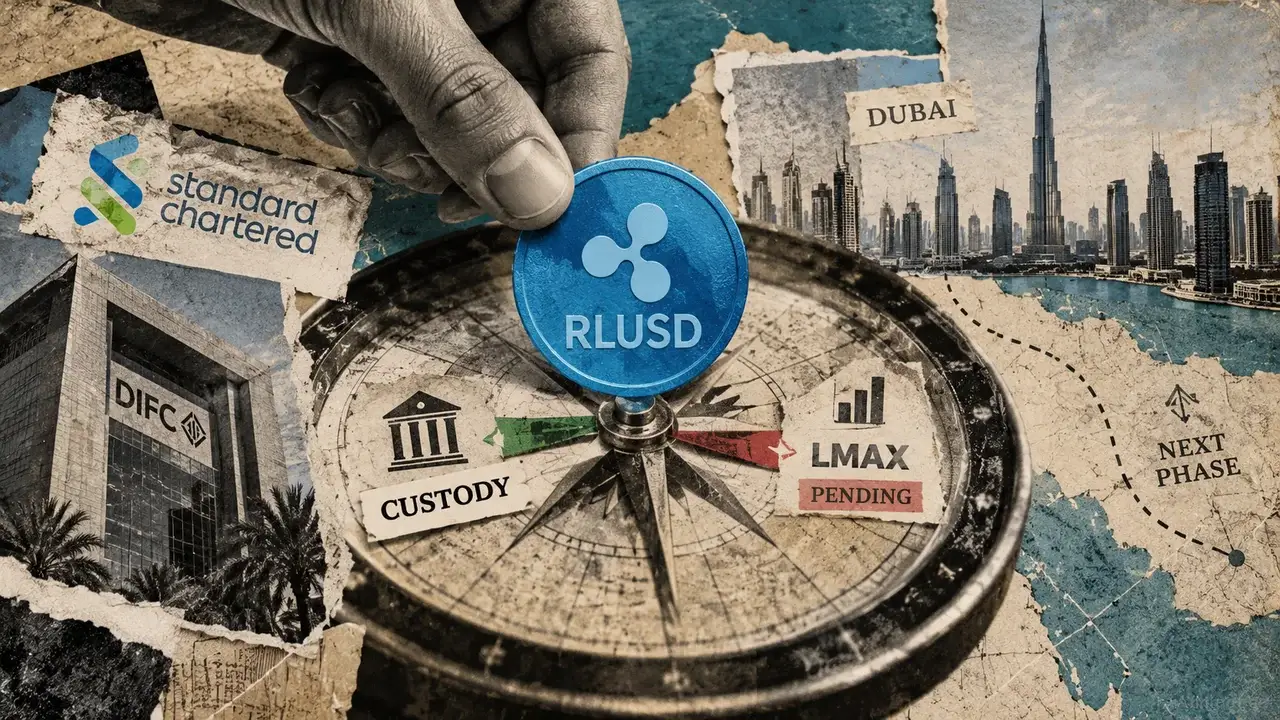
Standard Chartered brings Ripple’s RLUSD into banking custody after $765 million quarterly surge
Standard Chartered has launched custody for Ripple's RLUSD stablecoin as it prepares to expand its use as collateral for instituti...

EU targets MiCA loophole that lets crypto exchanges serve 27 countries with one license
EU finance ministers agreed to shift oversight of major crypto companies to a central watchdog, reshaping supervision under MiCA....
Binance to shut down Binance Pool and related mining services on November 10
The shutdown of Binance Pool may drive miners to diversify their operations, potentially impacting the competitive landscape of mi...